
Planting
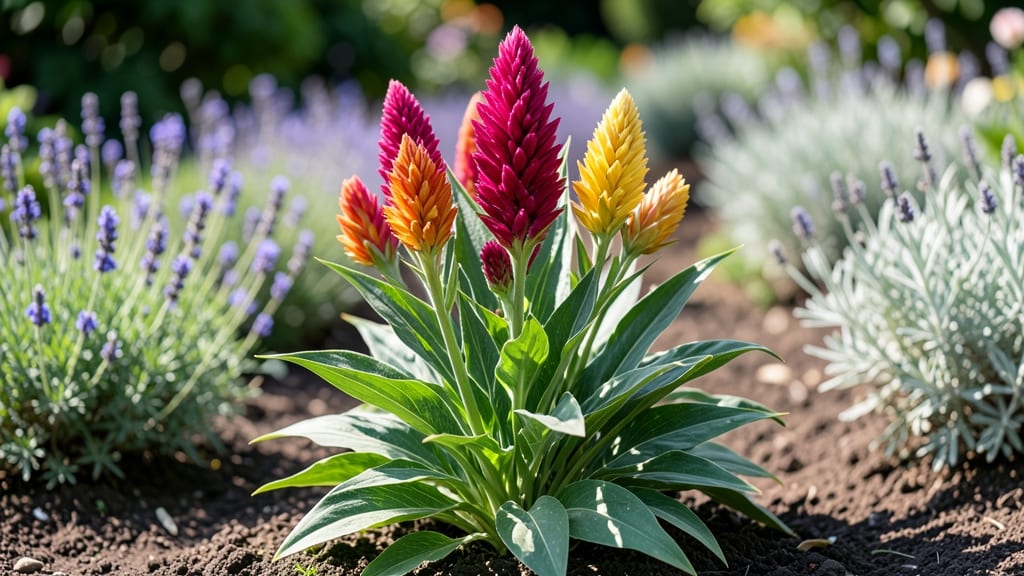
Celosia plants are not true perennials in most climates, though some varieties can regrow in frost-free zones (USDA 10-12) or with proper winter protection. Most gardeners plant them yearly for their striking seasonal blooms.
Celosia's tropical origins explain why it struggles in colder climates. 🌱 The plant's delicate stems and leaves freeze at temperatures below 30°F, causing irreversible damage even if roots survive. In zones 10-12, where winters rarely drop below 40°F, celosia often returns naturally after mild winters.
For cooler regions, gardeners typically treat it as an annual, replanting each spring for its vibrant plumes that last through summer and fall.
What makes celosia particularly challenging is its sensitivity to frost—unlike hardy perennials that can regenerate from protected roots, celosia's foliage and stems die back completely in freezing conditions.
This is why even in borderline zones (like USDA 9), gardeners often need to take active steps like mulching heavily or bringing potted plants indoors before the first frost. The trade-off? When successful, overwintered celosia can produce even more dramatic blooms the following season.
💡 In This Article
- Why Celosia Dies in Cold Climates
- Extending Celosia’s Life: Overwintering Tips for Cold Regions
Why celosia dies in cold climates
Celosia's tropical heritage is the root cause of its cold sensitivity. Originating in Africa and Asia, this plant evolved in regions where temperatures rarely dip below 50°F—far above the freezing thresholds of most U.S. gardens.
The plant's cellular structure lacks the antifreeze proteins found in hardy perennials like lavender or coneflower, making its tissues vulnerable to ice crystal formation at 32°F or lower. 🌡️ When frost hits, the plant's water content expands, rupturing cell walls and causing irreversible damage to stems and leaves.
The damage isn't uniform—roots may survive in mild winters (especially in zones 9-10), but the above-ground growth dies back completely. This is why celosia often looks "dead" after frost: the stems turn black and brittle, while the roots remain dormant underground.
In contrast, true perennials like hostas or daylilies can regenerate from protected root systems even after complete top dieback. Celosia's lack of this resilience means it typically requires full replanting each season in colder climates.
What's especially interesting is how celosia's growth habit differs from true perennials. While perennials allocate energy to underground storage organs (rhizomes, tubers), celosia invests heavily in its vibrant above-ground blooms during its short growing season.
This energy allocation strategy works beautifully in warm climates but becomes a liability when winter arrives. The plant simply doesn't have the biological infrastructure to survive prolonged cold periods.
USDA hardiness zones provide a clear threshold: celosia thrives as a perennial only in zones 10-12, where winter temperatures rarely drop below 40°F. In these frost-free areas, celosia can often self-seed or regrow from protected roots.
For example, in Hawaii (zone 12) or southern Florida (zone 11), gardeners frequently see celosia return year after year without intervention. The contrast with zone 5 gardens—where even light frosts can kill celosia—illustrates just how sensitive this plant is to temperature shifts.
There's also a physiological explanation for why celosia can't adapt to cold. Unlike deciduous trees that enter dormancy and produce protective compounds, celosia lacks these cold-acclimation mechanisms. Its metabolic processes remain active until temperatures drop, making it particularly vulnerable to sudden freezes.
This is why even a single night below 30°F can be fatal to established plants, regardless of their size or maturity.
The plant's vibrant colors—ranging from fiery reds to deep purples—are actually a clue to its tropical origins. These pigment concentrations require warm temperatures to develop properly, another reason why celosia struggles in cooler climates.
In colder regions, the plant may produce some foliage but rarely achieves its signature floral displays without careful overwintering strategies. 🌺