
Aphids
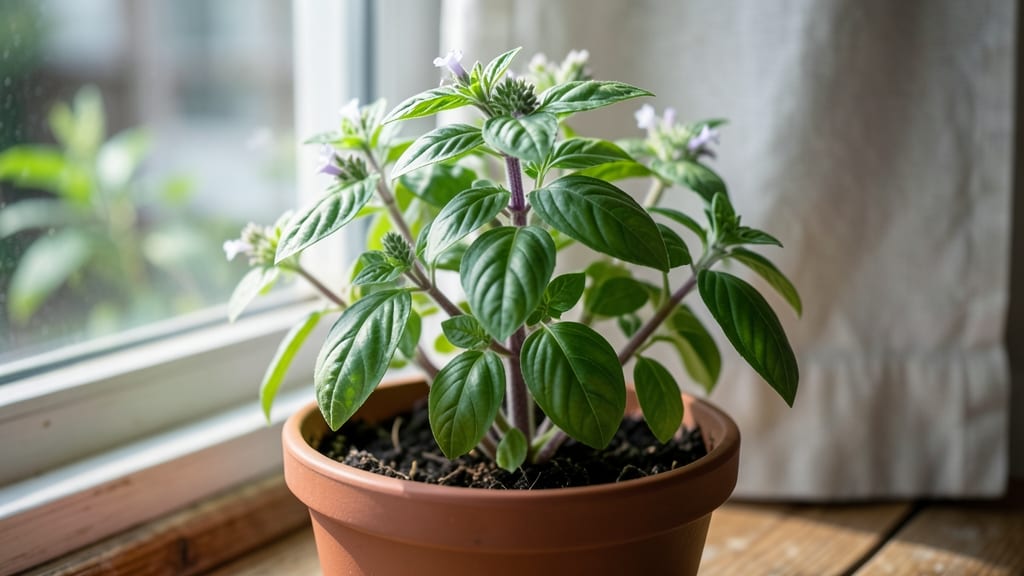
Sweet basil is not a true perennial in most climates, as it dies back with frost but can regrow from roots or seeds if protected or replanted each spring. Its hardiness depends on winter temperatures and growing conditions.
Sweet basil's survival strategy is fascinating—while it may appear dead after frost, its roots often stay alive underground, ready to sprout when temperatures warm up. 🌱 This behavior makes it a tender perennial in milder regions (USDA zones 8-10), where it can persist year-round with minimal care.
In colder climates, though, gardeners must treat it like an annual unless they take proactive steps to protect it through winter.
What sets sweet basil apart from true perennials like rosemary is its sensitivity to freezing temperatures—even a light frost can kill the above-ground growth. The good news? With proper overwintering techniques like bringing potted plants indoors or using thick mulch, you can coax it back to life each spring.
This dual nature explains why some gardeners swear by replanting seeds annually while others successfully extend their basil's lifespan for years.
💡 In This Article
- Why Sweet Basil Dies in Winter: Climate and Temperature Factors
- How to Overwinter Sweet Basil for Next Year’s Harvest
Why sweet basil dies in winter: climate and temperature factors
Sweet basil's winter dieback stems from its classification as a tender perennial, meaning it survives through mild winters but succumbs to freezing temperatures. The plant's cells contain water that expands when frozen, causing irreversible damage to stems and leaves at temperatures below 20°F (-6°C).
This threshold explains why basil thrives in USDA hardiness zones 8-10 but struggles in colder regions like zones 5-7, where winter lows often drop below -10°F (-23°C).
The key difference between basil and true perennials like lavender lies in their root systems. While lavender develops deep, cold-resistant roots, basil's fibrous roots are more delicate and only tolerate brief exposure to light frost.
When temperatures dip below 32°F (0°C) for extended periods, the plant's metabolic processes slow dramatically, halting photosynthesis and eventually killing the above-ground growth. 🌡️ What remains alive underground are the roots and crown, which can regenerate when spring warmth returns.
In colder climates, this behavior explains why gardeners often treat basil as an annual despite its perennial nature. The plant's inability to withstand prolonged freezing means it won't survive winter outdoors in most northern regions without protection.
Even in milder zones, sudden cold snaps can kill basil plants, requiring gardeners to monitor weather forecasts and take preventive measures like covering plants with frost cloth when temperatures are forecasted to drop below 35°F (2°C).
Interestingly, sweet basil's sensitivity to cold is balanced by its remarkable resilience in warm conditions. The plant thrives in temperatures between 70-85°F (21-29°C), which explains why it's commonly grown as an annual in temperate climates.
This dual nature—vulnerable to cold but adaptable to heat—makes basil a fascinating study in plant physiology, where its survival strategies are finely tuned to specific temperature ranges.
What often surprises gardeners is how basil's growth cycle mirrors that of true perennials in warmer climates. In zones 9-10, basil can grow year-round with proper care, producing new leaves continuously.
The plant's ability to regenerate from roots explains why some gardeners in these regions report having basil plants that live for multiple years without replanting. This behavior blurs the line between annual and perennial classifications.
Understanding these temperature thresholds helps explain why basil plants often appear dead after winter but can surprise gardeners by sprouting new growth when spring arrives.
The key is recognizing that while the above-ground parts may be lost, the plant's survival mechanisms remain active below the soil surface, ready to take advantage of warmer conditions. 🌱