
Flowers
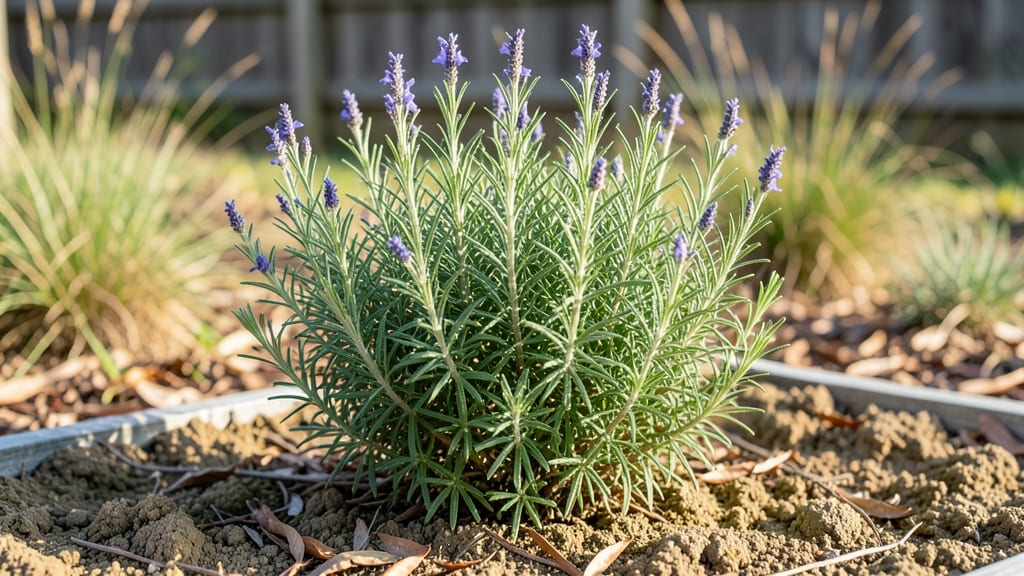
Rosemary is a perennial in warm climates but behaves as a tender perennial in colder regions, dying back to the ground in frost before regrowing from its woody base each spring. Its hardiness depends on USDA zones and winter protection.
Rosemary's classification as a perennial comes down to its woody stem base and how it responds to cold.
In zones 8-10, it thrives year-round, but in colder areas (zones 5-7), it acts like a short-lived perennial, often dying back to the ground when temperatures drop below 20°F. 🌿 The key difference?
True perennials like lavender survive winter damage with their roots intact, while rosemary's above-ground growth typically freezes but can regrow from its protected base if protected properly.
What sets rosemary apart is its ability to regenerate from its woody base after frost, even if the foliage dies.
This makes it a semi-perennial in marginal climates—it won't survive repeated hard freezes without protection, but with proper care (like moving pots indoors or mulching heavily), it can bounce back year after year.
That's why gardeners in colder zones often treat it as a seasonal herb rather than a true winter-hardy perennial.
💡 In This Article
- How Rosemary’s Growth Cycle Defines Its Perennial Status
- Growing Rosemary as a Perennial in Cold Climates
How rosemary’s growth cycle defines its perennial status
Rosemary's perennial nature stems from its woody stem base, which acts as a protected growth point that can survive even when the rest of the plant dies back.
Unlike annuals that complete their life cycle in one season, rosemary's lignified (wooden) stems store nutrients and allow regrowth from the base when conditions improve. This woody structure is what classifies it as a perennial in USDA zones 8-10, where winter temperatures rarely drop below 20°F.
The key difference between rosemary and true perennials like lavender lies in their cold tolerance.
Lavender's roots can withstand -15°F to -20°F with proper mulching, while rosemary's foliage typically freezes at 20°F or below. 🌱 What makes rosemary unique is its ability to regenerate from its woody base even after complete dieback—something annual herbs like basil cannot do.
This regenerative capacity is why rosemary is considered a semi-perennial in marginal climates.
In colder climates (zones 5-7), rosemary's growth cycle changes dramatically. The plant may appear dead after winter but can often regrow from its protected base if the roots remain intact and undisturbed. This behavior contrasts with true perennials that maintain some green foliage or protected buds through winter.
The woody stems serve as a biological "memory" of the plant, storing carbohydrates that fuel regrowth when temperatures rise above 40°F.
What most gardeners don't realize is how light exposure affects this cycle. Rosemary thrives in full sun (6-8 hours daily) which helps it develop stronger woody stems. In shaded conditions, the stems become softer and more susceptible to frost damage.
The plant's natural dieback strategy is actually an adaptation to Mediterranean climates where summer droughts and winter rains create seasonal stress—similar to how some desert plants conserve water during dry periods.
Botanically, rosemary belongs to the Lamiaceae family, which includes other perennial herbs like thyme and oregano. However, its higher cold sensitivity (compared to hardy herbs) makes it behave more like a tender perennial—a plant that can survive multiple growing seasons but requires protection from freezing temperatures.
This is why many gardeners in colder regions treat rosemary as an annual or biennial rather than a true perennial.
Consider this comparison: In zone 9, rosemary grows continuously with minimal protection, while in zone 6, it may need 3-4 inches of mulch or container overwintering to survive.
The same plant species demonstrates completely different growth patterns based solely on climate—a perfect example of how environmental factors determine perennial behavior. 🌿