
Shrubs
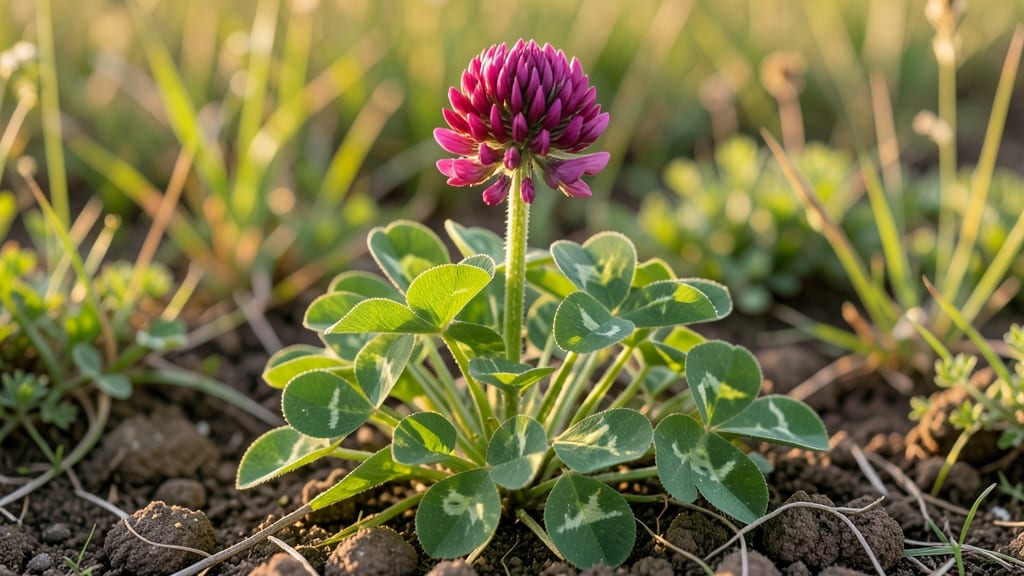
Red clover is a perennial because it survives multiple growing seasons through its deep root system, even though it dies back to the ground each winter and regrows annually.
This might seem confusing at first glance because red clover looks like it disappears entirely each fall, but its underground roots stay alive and dormant through winter. 🌱 Unlike true annuals that complete their entire lifecycle in one season, red clover's roots store energy to fuel new growth when conditions improve.
Many gardeners notice this behavior in late spring when vibrant purple flowers reappear where they planted it just a few months earlier.
What makes this particularly interesting is how red clover adapts to different climates. In warmer regions, it may spread aggressively through self-seeding, giving the appearance of an annual plant. However, botanically it remains classified as a perennial because of its persistent root system.
This dual nature makes red clover both a practical ground cover and a valuable forage crop for livestock.
💡 In This Article
- Why Red Clover’s Annual Dieback Doesn’t Disqualify It as a Perennial
- Growing Red Clover as a Perennial: Planting and Care Tips
Why red clover’s annual dieback doesn’t disqualify it as a perennial
The key difference between perennials and annuals lies in their root systems and lifecycle strategies. True annuals like marigolds complete their entire growth cycle—seed, flower, produce seed—in just one season, then die completely.
Red clover, however, develops a robust taproot system that can extend 3-5 feet deep, storing carbohydrates and nutrients during dormancy. This underground network allows it to survive winter's freeze-thaw cycles and regenerate above-ground growth when temperatures rise above 40°F in spring.
What makes red clover unique is its hemicryptophyte growth habit—it dies back to the ground each winter but maintains living buds at the soil surface or just below.
These buds contain meristematic tissue that can quickly resume growth when conditions improve. 🌱 Compare this to true annuals like basil, which have no persistent structures and must be replanted each year.
Red clover's root system can even produce new shoots from nodes along the stem if cut back, demonstrating its perennial resilience.
Climate plays a crucial role in how red clover manifests its perennial nature. In cooler northern regions, it typically behaves as a true perennial with clear annual dieback. However, in warmer southern climates, its vigorous self-seeding habit can make it appear annual-like—especially when it spreads aggressively through seed production.
The USDA Hardiness Zones 3-10 range reflects this adaptability, with some varieties even overwintering as living plants in mild winters.
Botanists classify plants based on their long-term survival strategy, not just their visible growth pattern. Red clover's ability to regenerate from its root crown each spring—often producing flowers within 60-90 days of emergence—clearly distinguishes it from annuals.
This regrowth capability is particularly valuable for pollinators, as it provides continuous blooming periods from early summer through fall in many regions.
Consider the practical implications for gardeners: while red clover may appear to "disappear" each winter, its persistent root system means you don't need to replant it annually. This makes it an excellent low-maintenance ground cover that improves soil fertility through nitrogen fixation.
The plant's ability to regenerate from both seeds and roots also explains why it can become invasive in some landscapes—its perennial classification isn't just theoretical but directly impacts its ecological behavior.
What most people don't realize is that red clover's dieback cycle actually enhances its ecological value. The annual dieback prevents disease buildup in the soil, while the persistent roots maintain soil structure and moisture retention.
This dual strategy explains why it's valued both as a forage crop and as a pollinator magnet in sustainable agriculture systems.