
Flowers
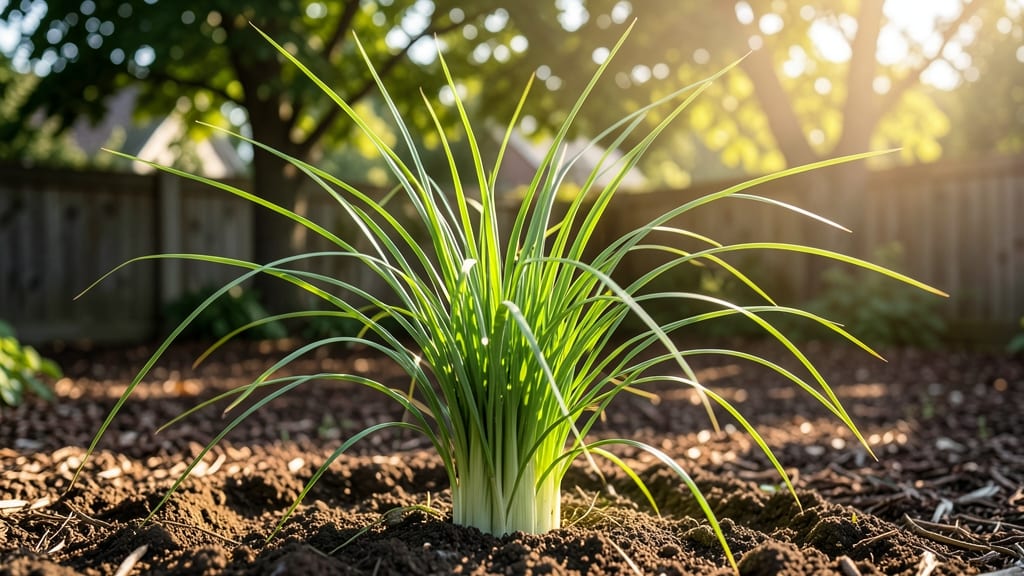
Lemongrass is a perennial plant in warm climates where its underground rhizomes survive year-round, but it behaves more like an annual in colder regions since frost kills the plant back to the ground.
This tropical grass thrives as a true perennial in USDA zones 10 and above, where its thick, fibrous roots store enough energy to regrow after winter dormancy. 🌱 However, in colder zones, the above-ground stalks freeze and die, forcing gardeners to replant from cuttings or seeds each spring.
The key difference lies in those rhizomes—when temperatures drop below 30°F, even the roots struggle to survive without protection.
For gardeners in frost-prone areas, the solution often involves growing lemongrass in containers that can be moved indoors during winter. This simple technique lets you maintain the plant year-round by simulating tropical conditions.
The trade-off? Without proper care, even container-grown lemongrass may decline after 1-2 years, making annual replanting the most reliable method for consistent harvests.
💡 In This Article
- How Lemongrass Roots Determine Its Perennial Nature
- Growing Lemongrass as a Perennial in Different Climates
How lemongrass roots determine its perennial nature
The secret to lemongrass's perennial behavior lies in its specialized underground rhizomes—thick, horizontal stems that function like nature's energy banks. These fibrous roots store carbohydrates (up to 30% of their dry weight) produced through photosynthesis, which fuels regrowth after seasonal stress.
Unlike true perennials that develop woody stems or deep taproots, lemongrass relies entirely on these rhizomes to survive, making them its most critical survival mechanism.
In tropical zones (USDA 10+), temperatures rarely drop below 40°F, allowing rhizomes to remain active year-round.
The plant's growth cycle continues uninterrupted because the roots maintain metabolic activity even during dry periods. 🌿 What's fascinating is how these rhizomes can sprout new shoots from multiple nodes—sometimes producing 3-5 stalks per rhizome segment—which explains why a single clump can rapidly expand into a dense patch.
This regenerative capacity is why lemongrass can recover from harvesting or damage in warm climates.
The real challenge begins when temperatures fall below 30°F. Cold causes rhizomes to enter a state of dormancy, but unlike hardy perennials (such as asparagus or hostas), lemongrass rhizomes lack protective insulating layers. The plant's tropical origins mean its cells lack the antifreeze proteins found in cold-hardy species.
When frost penetrates, the rhizomes either rot or become too weak to regenerate, forcing the plant to start over from new growth.
Here's the botanical paradox: lemongrass exhibits perennial-like behavior in ideal conditions but lacks the cold resistance of true perennials. Its rhizomes store energy efficiently (comparable to ginger's storage capacity), but without temperature stability, the system fails.
This explains why you'll see lemongrass thriving as a perennial in Florida or Thailand but requiring annual replanting in New York or London.
What most gardeners overlook is how rhizome depth plays a role. In tropical soils, lemongrass rhizomes spread 12-18 inches wide but only penetrate 6-12 inches deep, making them vulnerable to shallow frost penetration.
In contrast, cold-hardy perennials like peonies develop roots 2-3 feet deep, insulating them from surface temperature fluctuations. This shallow root system is both lemongrass's strength (fast regrowth) and weakness (frost susceptibility).
The science of rhizome storage is particularly interesting. These underground stems contain high concentrations of soluble sugars that act as antifreeze agents, but only up to a point. When temperatures drop below 28°F for extended periods, even these natural cryoprotectants fail, leading to cellular damage.
This is why lemongrass grown in USDA zone 9 may survive mild winters but typically dies back in zone 8 or colder without protection.
Understanding this root behavior explains why lemongrass behaves like a perennial in warm climates but requires annual care elsewhere. The plant's entire lifecycle revolves around its rhizomes' ability to store and regenerate—making them both its greatest asset and its Achilles' heel in colder environments. 💡