
Flowers
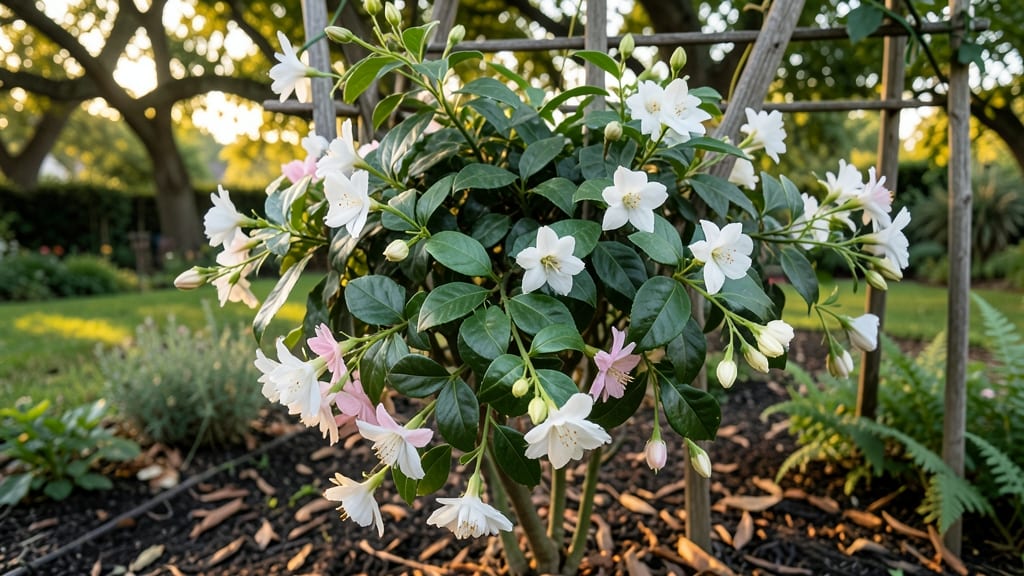
Jasmine is a perennial in warm climates but dies back in cold winters, often requiring winter protection or replanting each spring in colder regions like USDA zones 7 and below.
Jasmine's perennial nature depends entirely on your climate.
In frost-free regions like USDA zones 8-11, these fragrant vines thrive year-round, returning stronger each spring. 🌸 However, when temperatures dip below 20°F, most varieties—especially Jasminum officinale (common jasmine) and Jasminum sambac (Arabian jasmine)—suffer severe damage, often dying back to the ground. The good news?
With proper winter care, many can regrow from their roots when warmer weather returns.
This dieback behavior isn't a failure—it's a survival strategy. Many gardeners in colder zones treat jasmine like a semi-perennial, using techniques like heavy mulching or container growing to protect the roots.
Even in harsh winters, the plant's hardy root system often survives, ready to burst back to life with the first warm days of spring.
💡 In This Article
- Jasmine Plant Hardiness Zones and Cold Tolerance
- Winter Care Tips for Cold-Climate Jasmine Plants
Jasmine plant hardiness zones and cold tolerance
Jasmine plants thrive as perennials in warmer climates because their growth cycle is tied to temperature sensitivity. Most varieties, like Jasminum officinale (common jasmine) and Jasminum sambac (Arabian jasmine), are native to tropical and subtropical regions where they experience consistent temperatures above 40°F.
When exposed to prolonged freezing (20°F or below), their tender stems and leaves suffer irreversible damage, causing the plant to appear dead until spring. The root system, however, often remains viable, allowing regrowth once temperatures rise.
The USDA hardiness zones provide a clear framework for understanding jasmine's cold tolerance. Jasminum officinale typically survives in zones 8-11, while Jasminum sambac is even more sensitive, thriving only in zones 9-11.
In zone 7, where winters occasionally drop below 0°F, these plants may survive with heavy winter protection, but their growth is stunted.
The key factor is how quickly the plant can recover from cold stress—some varieties regrow from roots within 2-4 weeks of spring warmth, while others may take longer or fail entirely.
What makes jasmine's cold sensitivity so pronounced is its tropical origin. These plants lack the internal antifreeze proteins found in hardier perennials like roses or hydrangeas, which allow them to survive sub-freezing temperatures. Instead, jasmine relies on rapid regrowth from protected roots.
This is why gardeners in colder zones often treat jasmine as a semi-perennial, using techniques like mulching or container growing to shield the roots from extreme cold. The plant's ability to regenerate from its root crown is what keeps it alive year after year, even in harsh winters.
For example, in USDA zone 6, where winters can drop to -10°F, jasmine plants may need to be dug up and stored indoors during winter. The roots can survive in a cool, dark place (like a garage) with minimal soil moisture, ready to be replanted in spring.
This strategy ensures the plant's perennial nature is preserved despite the cold. Without protection, the roots can suffer freeze damage, leading to permanent die-off.
Another critical factor is the plant's growth rate. Jasmine grows aggressively in warm conditions, producing new stems and leaves within 4-6 weeks of spring. This rapid regrowth is possible because the root system stores energy and nutrients during the dormant winter months.
However, if the roots are damaged by cold, the plant's ability to regrow is compromised, which is why winter care is essential for maintaining its perennial status in colder climates.
Understanding these mechanisms helps gardeners make informed decisions about where and how to grow jasmine. While it may not be a true perennial in colder zones, its ability to regrow from roots makes it a rewarding plant for those willing to provide the necessary care.
The key takeaway is that jasmine's survival depends on protecting its root system—whether through mulching, containers, or indoor storage—rather than relying on its stems to withstand freezing temperatures.