
Flowers
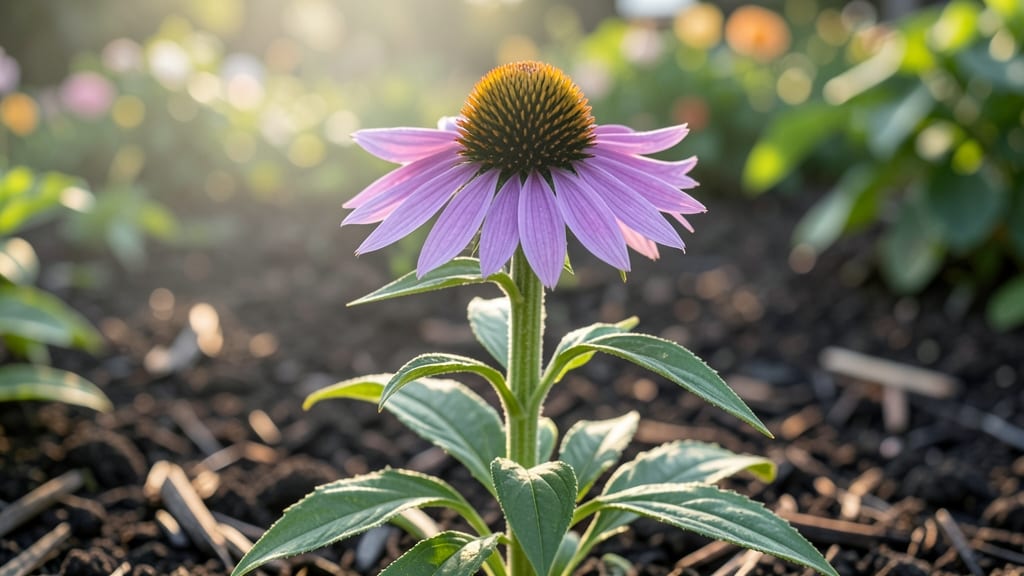
Echinacea is a perennial plant that thrives through winter dormancy, dying back to its roots before regrowing each spring with proper care. Its deep root system allows it to survive multiple growing seasons in USDA zones 3-9.
This hardy nature comes from echinacea's unique biology—its taproot stores energy underground while the foliage yellows and falls in cold months. 🌱 Unlike annuals that complete their life cycle in one season, echinacea conserves nutrients until spring, when it bursts back with vibrant blooms.
The key to long-term success lies in mimicking its natural cycle: cutting back dead stems in late winter (but never the roots) and feeding it lightly in early spring. Some varieties like purple coneflower even become more robust with age, proving their true perennial status.
What sets echinacea apart is its adaptability—whether you're growing it for medicinal properties or pollinator gardens, its perennial nature means less replanting and more consistent beauty year after year. Just remember: winter mulch helps protect those vital roots during harsh freezes, while spring's gentle thaw signals the plant's dramatic comeback.
💡 In This Article
- Echinacea’s Root System and Overwintering Survival
- Year-Round Care for Echinacea Perennials
Echinacea’s root system and overwintering survival
Echinacea’s perennial survival hinges on its specialized root structure: a deep taproot that extends 12-18 inches below the soil surface, paired with dense fibrous roots that spread horizontally. This system acts like a natural battery, storing carbohydrates and nutrients during dormancy.
Studies show these roots can contain up to 30% more starch reserves than annual plants, fueling regrowth when temperatures rise above 50°F in spring. The taproot’s depth also protects it from freeze-thaw cycles that could damage shallower roots.
The dormancy process begins when daylight hours shorten in fall, triggering the plant to halt photosynthesis. Leaf chlorophyll breaks down, revealing the iconic purple or white petals before they too wither.
What most gardeners don’t realize is that the crown (where stem meets root) remains alive underground, maintaining a 5-10°F warmer microclimate than surface soil. This biological insulation explains why echinacea survives winters in zones 3-9 without protection—though mulch still helps in marginal areas like zone 4.
Cold hardiness varies significantly between species: Echinacea purpurea (purple coneflower) handles -30°F easily, while Echinacea pallida (pale purple coneflower) prefers slightly milder winters (-20°F). The difference lies in their native ranges—Purple coneflower evolved in northern prairies where winters are harsher.
Interestingly, both species share the same root architecture but differ in antioxidant compound concentrations that may contribute to their cold tolerance.
What’s fascinating is how echinacea’s roots actually grow larger each year, unlike many perennials that maintain steady root biomass. This expansion explains why established plants (3+ years old) produce 25-50% more blooms annually.
The trade-off? Older roots become more vulnerable to crown rot if soil stays waterlogged during winter—a common issue in heavy clay soils where drainage is poor.
Here’s the science behind the regrowth: As soil temperatures rise above 45°F in spring, the roots begin converting stored starches into sugars that trigger bud formation. New shoots emerge from the crown’s axillary buds, which are protected by the insulating root mass.
This process explains why you’ll often see fresh green shoots pushing through 2-4 inches of mulch before you’ve even removed winter protection.
For gardeners, this means timing is everything: cutting back dead foliage in late winter (February-March) prevents fungal spores from overwintering in the debris, but removing it too early can expose tender new shoots to -10°F temperature spikes.
The root system’s resilience makes echinacea one of the most forgiving perennials—even if you forget to mulch, it’ll likely bounce back with proper spring care.