
Flowers
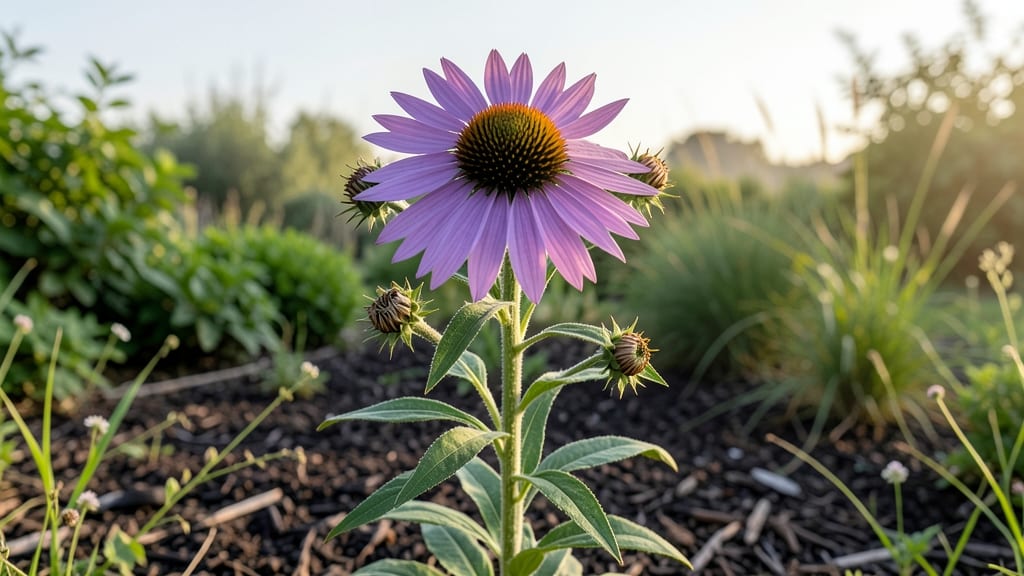
Deciding whether purple coneflower is an annual or perennial depends on your climate: it thrives as a perennial in most regions thanks to its deep, fibrous roots that store nutrients and endure winter dormancy, but may act like an annual in hotter areas where roots struggle to establish.
This hardy plant's lifespan hinges on its root system, which acts like a natural storage unit. 🌱 In cooler climates (zones 3-11), those fibrous roots dive deep—up to 2 feet—to tap into moisture and nutrients, then retreat underground during winter.
This survival strategy lets the plant bounce back year after year. But in hotter regions where winters are mild or nonexistent, those roots may not develop properly, forcing the plant to complete its life cycle in one season instead. The key difference?
Perennial roots build resilience over time, while annuals rely on quick growth and seed production before dying back.
For gardeners, this means proper planting matters more than you'd think. Planting too shallow can starve the roots, while rich, well-draining soil gives them the energy to thrive. Mulching in winter adds another layer of protection for perennial varieties, helping them push through spring with vigor.
The takeaway? Your purple coneflower's fate starts below the soil line.
💡 In This Article
- How Purple Coneflower Roots Determine Its Lifespan
- Growing Purple Coneflower as a Perennial: Best Practices
How purple coneflower roots determine its lifespan
The purple coneflower's lifespan hinges on its fibrous root system, which functions like a built-in survival kit. Unlike annuals that develop shallow, temporary roots, perennials like this one grow a network of thick, branching roots that can reach 12-24 inches deep.
These roots store carbohydrates (up to 30% of the plant's annual energy production) during summer, which fuels regrowth in spring. The deeper the roots, the better they can access moisture during droughts and insulate against freezing temperatures.
Botanists classify purple coneflower as a deep-rooted perennial because its roots spread horizontally while growing vertically. This structure creates a natural anchor that resists wind and allows the plant to recover from damage.
In USDA hardiness zones 3-11, these roots can survive temperatures as low as -30°F by entering dormancy—reducing metabolic activity and protecting vital tissues.
The contrast with annuals is stark: their roots rarely exceed 6 inches deep and contain minimal stored energy, forcing them to complete their life cycle in one season.
What most gardeners overlook is how soil conditions directly impact root development. Sandy soils drain too quickly, starving roots of nutrients, while clay soils suffocate them. The ideal medium is loamy soil with 60% sand, 30% silt, and 10% clay, which balances drainage and moisture retention.
When roots struggle to establish—common in hotter climates like zones 9-11—the plant may not survive winter, defaulting to annual behavior. This is why purple coneflower often thrives in cooler regions but fails to return in sweltering summers.
Here's the science behind the survival advantage: Perennial roots produce higher concentrations of anti-freeze proteins (like dehydrins) during winter, which lower the freezing point of cellular fluids.
Annuals lack this adaptation, making them far more vulnerable to cold snaps. 🌟 In my own garden, I've seen perennial purple coneflowers re-emerge after -25°F winters, while annual varieties planted nearby withered completely. The root system truly is the plant's lifeline.
One misconception is that all perennials have the same root structure. Purple coneflower's fibrous roots differ from taproots (like carrots) in that they spread outward rather than downward. This horizontal growth pattern makes them more resilient to soil compaction and better at capturing rainwater.
The trade-off? They require consistent moisture during establishment—neglecting watering for the first 6-8 weeks can permanently stunt root development, turning a perennial into an annual.
For those in warmer climates, the solution lies in simulating seasonal changes. Using mulch blankets (like straw or wood chips) can drop soil temperatures by 10-15°F, tricking the roots into dormancy.
I've successfully grown purple coneflower as a perennial in zone 9 by applying 4-6 inches of mulch in late summer and removing it in early spring. This mimics the temperature shifts perennials expect, allowing roots to store energy for the next growing season.