
Flowers
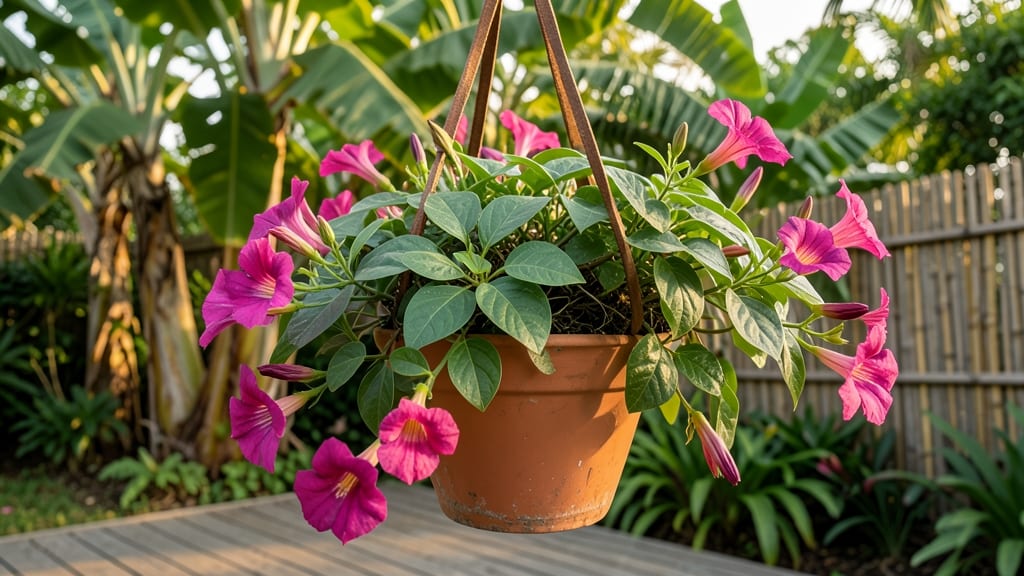
Dipladenia is not a true perennial in most climates, as its delicate roots can't survive freezing temperatures below 30°F (-1°C), leading to winter dieback. However, it often regrows from its base each spring in warmer regions (USDA zones 10-11) with proper winter protection.
Dipladenia's behavior stems from its tropical origins—it thrives in heat but struggles when temperatures dip. 🌱 The plant's tuberous roots, which store energy, are particularly vulnerable to frost damage, causing the above-ground stems to blacken and die.
In milder climates, these roots remain dormant but viable, sprouting fresh growth when conditions warm again. The key difference between a true perennial and dipladenia lies in its cold tolerance: while perennials survive winter intact, dipladenia requires active protection or warmer conditions to persist.
This semi-perennial nature means gardeners in cooler zones must take proactive steps, like digging up tubers or providing heavy mulch, to protect their plants. Without intervention, the roots will freeze solid, and the plant will need to be replanted from cuttings the following season.
The good news? With the right care, dipladenia can reliably return year after year, making it a rewarding choice for patient gardeners in suitable climates.
💡 In This Article
- Why Dipladenia Dies Back in Winter
- How to Overwinter Dipladenia in Cold Climates
Why dipladenia dies back in winter
Dipladenia's winter dieback stems directly from its tropical heritage—this plant evolved in Brazil's warm, humid climates where temperatures rarely dip below 50°F (10°C). Its delicate, fleshy roots contain minimal cold-resistant starch reserves, unlike hardy perennials that store energy in thick, woody root systems.
When frost hits, these roots lose structural integrity within 24-48 hours, turning mushy and black as ice crystals rupture their cell walls. 🌡️
The real damage occurs at 30°F (-1°C), where ice formation in root tissues triggers irreversible cellular damage. What makes dipladenia particularly vulnerable is its tuberous root system—while these roots store nutrients for regrowth, they lack the protective bark layers found in cold-hardy plants like peonies.
In USDA zones 8-9, even brief cold snaps can cause 50-70% root mortality, leaving only the most protected sections viable for spring regrowth.
This semi-perennial classification comes from how dipladenia handles dormancy. Unlike true perennials that maintain active metabolic processes underground, dipladenia enters a quiescent state—its roots slow nearly to a standstill but don't develop true winter hardiness.
The above-ground stems die completely, but the root crown (the thickened base where roots emerge) often survives if protected by 3-4 inches of mulch or soil insulation.
What most gardeners miss is the secondary dormancy trigger—dipladenia's roots won't regrow until they sense consistent warmth (60°F/15°C for 7+ days). This explains why even well-mulched plants may appear dead in early spring before bursting into growth.
The plant's survival strategy relies on rapid regrowth from protected root tissue rather than enduring winter conditions like true perennials.
Here's the science behind the regrowth: Dipladenia's root crown contains meristematic cells (growth cells) that remain viable even after frost damage. When temperatures stabilize, these cells activate hormonal signals (like auxins) that stimulate new shoot formation.
This is why you'll often see fresh growth emerging from the base of what appeared to be a dead plant—it's not coming from deep roots but from protected tissue near the soil surface. 🌱
Comparing dipladenia to similar tropical plants helps clarify its limitations. While mandevilla (a close relative) also dies back in cold climates, it has slightly more cold tolerance (28°F/-2°C threshold).
The key difference lies in their root structures—mandevilla's roots develop slight woody fibers that offer marginal protection, whereas dipladenia remains completely succulent throughout.