
Flowers
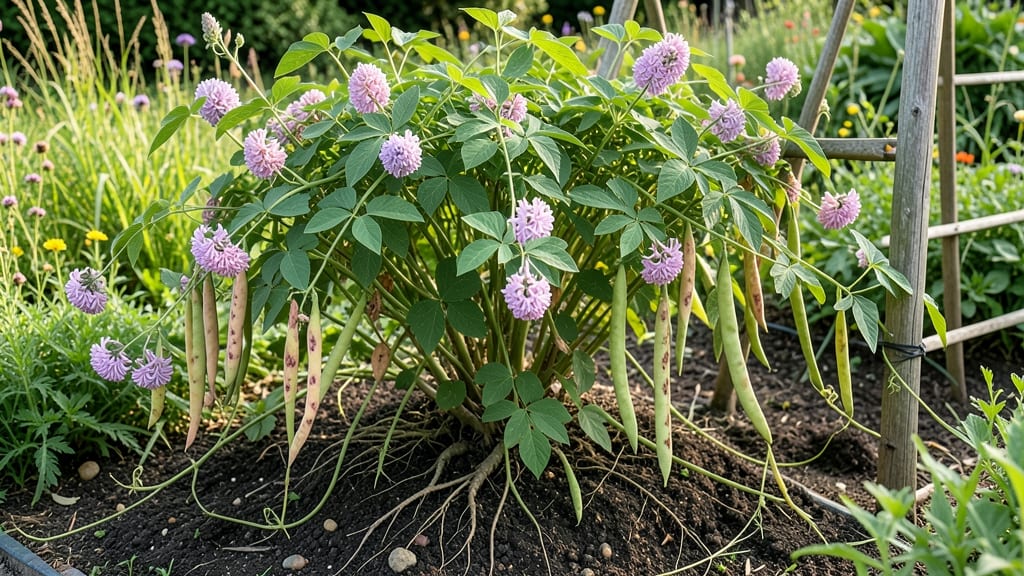
The hyacinth bean vine is an annual or perennial plant, completing its life cycle in one growing season before dying back with frost—but it often self-seeds aggressively for new growth the following year. While some cultivars tolerate light frosts, most won't survive winter without protection in colder zones.
The hyacinth bean vine's annual or perennial nature stems from its tropical origins, where frost simply doesn't exist. 🌱 Unlike true perennials that regrow from roots, this vine relies on warm seasons to mature quickly, producing vibrant flowers and edible pods before cold weather halts its growth.
However, its prolific self-seeding means you'll often see fresh sprouts popping up each spring without any effort on your part—just be prepared for a potential takeover in your garden!
If you're in a cooler climate, you can still enjoy this vine by choosing cold-tolerant varieties or growing it in containers that you can move indoors during winter. Mulching heavily around the base can also help protect the roots from early frost.
The key is understanding that while it won't come back year after year from the same plant, its ability to reseed makes it feel almost perennial in behavior.
💡 In This Article
- Hyacinth Bean Vine Life Cycle: Why It Dies Back Each Year
- Extending Hyacinth Bean Vine Growth in Cold Zones
Hyacinth bean vine life cycle: why it dies back each year
The hyacinth bean vine's annual nature traces back to its tropical roots, where frost never occurs. 🌿 This vine evolved to complete its entire life cycle—from seed germination to flowering and pod production—in just one warm season.
Unlike true perennials that develop deep, insulating root systems to survive winter, the hyacinth bean vine prioritizes rapid above-ground growth during its 90-120 day growing season, allocating energy to flower and seed production rather than root storage.
Its frost sensitivity stems from cell membrane composition. Tropical plants like this vine have thinner cell walls and higher water content in their tissues, which freeze and rupture at temperatures below 32°F. The vine's shallow root system (typically only 6-12 inches deep) provides minimal insulation against cold ground temperatures.
When frost hits, the entire plant—roots and all—will die back because it lacks the cold-hardy adaptations found in true perennials like asparagus or raspberries.
What makes this vine feel almost perennial is its aggressive self-seeding strategy. 🌱 Each plant produces hundreds of seeds in its pods, which scatter prolifically when ripe. These seeds remain viable in the soil for up to 2 years, waiting for warm conditions to germinate.
The vine's growth pattern mirrors that of many tropical annuals: rapid vertical growth (up to 10-15 feet in ideal conditions), followed by immediate seed production before the first frost, ensuring genetic continuity.
The key difference from true perennials lies in its reproductive strategy. Perennials invest in root systems that store energy for regrowth, while the hyacinth bean vine bets everything on seed production.
This is why you'll see it disappear completely in winter only to reappear with vigor the following spring—it's not coming back from the same plant, but from thousands of new seedlings emerging from last year's seeds.
Interestingly, some gardeners report that if you leave the vine's foliage intact until late fall, the roots may survive light frosts (down to 28°F for brief periods), but this is more an exception than the rule.
The plant's true survival mechanism remains its prolific seeding rather than any winter hardiness. This tropical adaptation explains why it thrives in USDA zones 9-11 but requires special care in cooler climates.
Understanding this life cycle helps explain why some gardeners mistake it for a perennial. The vine's ability to self-seed so aggressively creates the illusion of returning growth, but botanically, it's a classic annual that relies on reproduction through seeds rather than vegetative regrowth. 🌱