
Size
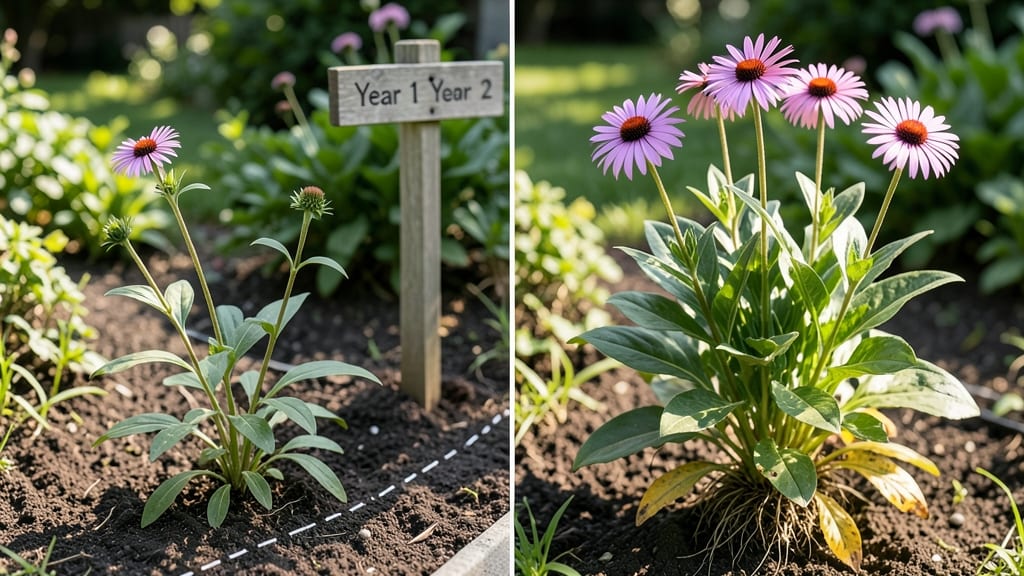
Perennials do grow back every year from their established root systems, unlike annuals that die after one growing season. Their underground structures store energy and nutrients, enabling new shoots to emerge each spring with proper care.
This annual regrowth happens because perennials store carbohydrates in their roots, bulbs, or tubers during the growing season. 🌱 When winter arrives, these hardy plants enter dormancy but keep their root systems alive—ready to push out fresh leaves and blooms as soon as temperatures rise.
Unlike annuals that complete their entire life cycle in one season, perennials like coneflowers or black-eyed Susans develop deep root systems that anchor them in the soil year after year.
What sets perennials apart is their ability to adapt to seasonal changes. Many species, such as peonies or hostas, produce specialized underground stems called rhizomes that act as energy reserves. These structures not only survive freezing temperatures but also regenerate foliage and flowers when conditions improve.
The key to their longevity lies in this built-in survival mechanism, which makes them ideal for gardeners seeking low-maintenance, long-term beauty.
💡 In This Article
- How Perennial Roots Survive Winter Dormancy
- Caring for Perennials to Ensure Yearly Regrowth
How perennial roots survive winter dormancy
Perennials rely on specialized underground structures—like rhizomes, tubers, and crowns—to store energy and survive harsh winters. These root systems act as biological batteries, converting sunlight into stored carbohydrates (like starches) during the growing season.
For example, peonies store energy in thick, fleshy roots that can withstand -20°F temperatures, while daylilies use fibrous rhizomes that regenerate even after freezing. The key is their ability to reduce metabolic activity during dormancy, preserving energy until spring warmth triggers regrowth.
The science behind this survival involves cellular adaptations. Perennial roots produce antifreeze proteins that lower their freezing point, similar to how some animals survive subzero temperatures. 🌱 In hostas, for instance, the crown (where leaves meet roots) contains meristem cells—undifferentiated cells that can differentiate into new shoots when conditions improve.
This cellular "memory" ensures the plant knows exactly where to regrow, even after months of dormancy. The deeper the root system (often 12-18 inches deep), the better it can access moisture and nutrients during regrowth.
Seasonal changes trigger this cycle. As temperatures drop below 50°F, perennials slow photosynthesis and redirect energy to their roots. Mulch (like straw or wood chips) acts as insulation, protecting roots from extreme temperature swings that could damage delicate cells.
Without this dormancy period, perennials would exhaust their energy reserves and fail to regenerate. Think of it like hibernation—except instead of animals, it's plants conserving energy until the right moment to bloom again.
Not all perennials use the same survival strategy. Some, like asparagus, grow from thick, woody crowns, while others (such as irises) rely on rhizomes that spread horizontally underground. The choice of root type determines how well a plant tolerates cold and drought.
For example, daylilies with their fibrous rhizomes bounce back quickly after frost, whereas bearded iris rhizomes need well-draining soil to prevent rot during winter thaws. This diversity is why perennials thrive in gardens across climates.
What most gardeners overlook is how soil health impacts dormancy. Well-draining soil prevents waterlogged roots, which can suffocate cells during winter. Adding organic matter (like compost) improves root resilience by enhancing nutrient storage.
Without proper soil prep, even hardy perennials struggle to regenerate. For instance, a peony planted in clay soil may produce fewer blooms because its roots can't access oxygen efficiently during dormancy.
Spring regrowth begins when roots detect rising temperatures and moisture. The stored carbohydrates fuel the production of auxin—a plant hormone that signals new shoot growth. This is why perennials often emerge before annuals: their roots are already primed and ready.
For example, coneflowers can push through snowpack in early spring, while black-eyed Susans wait for soil temperatures to reach 55°F before sending up shoots. This precise timing is nature's way of ensuring survival in unpredictable climates.