
Orchid Care
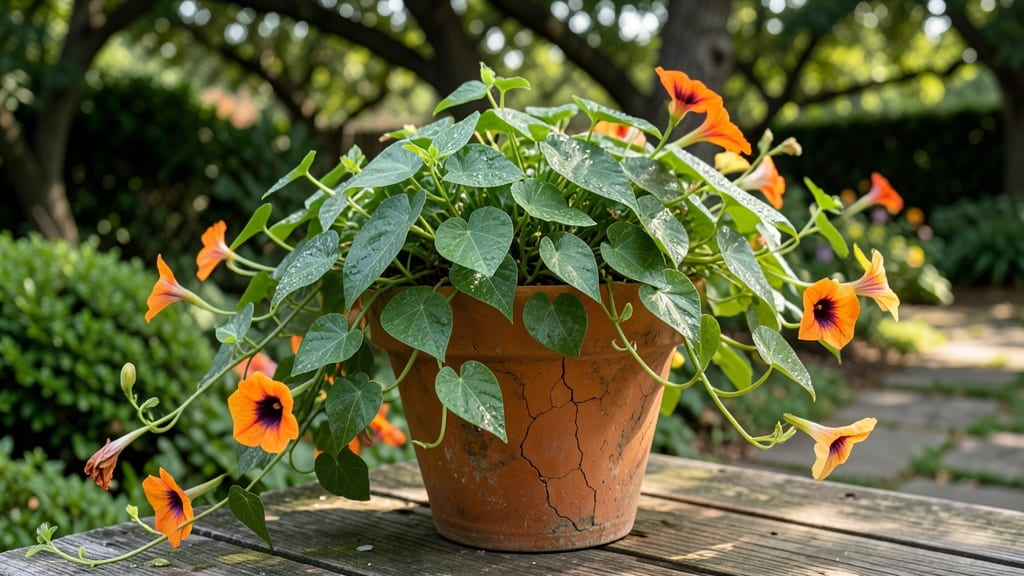
Determining whether black-eyed Susan vine (Thunbergia alata) is annual or perennial depends on your climate: in most regions, it grows as an annual, completing its lifecycle in one season. However, in frost-free zones (USDA 10-11), it can persist as a tender perennial through self-seeding or careful winter protection, though most varieties succumb below 30°F without intervention.
This tropical vine's behavior hinges on temperature—its native frost-free habitats explain why it thrives as a perennial there. 🌿 In cooler zones, gardeners often treat it as an annual, but with container growing or mulching, you can coax repeat seasons.
The key difference lies in how quickly it responds to cold: while some varieties tolerate brief dips to 25°F, prolonged frost will kill even the hardiest plants. I've seen gardeners in Zone 9 successfully overwinter tubers by digging them up and storing them in dry peat moss.
What's fascinating is how this vine adapts—its growth habit shifts based on seasonal cues. In warmer climates, it may self-seed aggressively, creating dense ground cover year after year.
The USDA zone map becomes your best friend when planning: Zone 10 gardeners can often leave plants in place, while those in Zone 8 need to take protective measures like row covers or indoor overwintering. The trade-off? More care equals longer vines, but less intervention means more annual replanting.
💡 In This Article
- Black-Eyed Susan Vine Growth Cycle: Annual vs. Perennial Behavior
- Extending Black-Eyed Susan Vine Lifespan in Cold Climates
Black-eyed Susan vine growth cycle: annual vs. perennial behavior
The black-eyed Susan vine (Thunbergia alata) follows a growth pattern dictated by its tropical origins. As an annual in most climates, it completes its lifecycle in one season—sprouting from seed, flowering prolifically, and setting new seeds before dying back when temperatures drop below 30°F.
This behavior mirrors other tropical plants like impatiens or hibiscus, which rely on warm weather to thrive. The key difference lies in its native habitat: in frost-free zones (USDA 10-11), it behaves more like a tender perennial, persisting year-round through self-seeding or vegetative growth.
Botanically, this vine's annual vs. perennial behavior hinges on its response to temperature cues. When nighttime temperatures consistently drop below 50°F, the plant's metabolic processes slow, and it enters a state of dormancy or death.
In warmer climates, however, the vine continues growing and may even produce tubers—thickened underground stems that store energy for regrowth. These tubers can survive mild winters, allowing the vine to regenerate in spring.
Some varieties, like 'Tropical Sun,' are more likely to form tubers, giving them a slight edge in perennial-like persistence.
What most gardeners don't realize is how quickly this vine responds to cold stress. Even in Zone 9, where winters are mild, a sudden cold snap below 28°F can kill the foliage and tubers if left unprotected.
The vine's cold tolerance varies by variety, with some hybrids tolerating brief exposure to 25°F but still requiring protection. This explains why gardeners in cooler zones often treat it as an annual—it's a survival strategy rather than a limitation of the plant itself. 🌱
Here's where the USDA zone map becomes your gardening compass: in Zones 10-11, black-eyed Susan vine can thrive as a perennial with minimal intervention, while in Zones 8-9, you'll need to provide winter protection like mulch or row covers.
In Zones 7 and below, it's almost always treated as an annual, though some adventurous gardeners have successfully overwintered tubers in containers. The trade-off is clear: more care in colder climates equals longer vine lifespan, but less intervention means more annual replanting.
Consider this growth pattern: in its native tropical habitats, Thunbergia alata grows continuously, producing flowers for months at a time. When transplanted to cooler climates, this continuous growth becomes seasonal—spring to fall—because the plant's internal clock is hardwired to respond to temperature changes.
This is why you'll see such dramatic differences in vine behavior from one region to another. In Florida, for example, black-eyed Susan vine may flower year-round, while in California's coastal areas, it might go dormant in winter but regrow from tubers.
For gardeners in transitional zones (like Zone 9), the key to perennial-like behavior lies in protecting the tubers. When temperatures drop, the vine's foliage will die back, but the tubers can remain dormant underground until spring. This is similar to how dahlias or cannas overwinter in colder climates.
The difference is that black-eyed Susan vine tubers are smaller and less robust, making them more vulnerable to cold and dry conditions. Proper mulching with straw or leaves can provide the insulation needed to survive winter.