
Orchid Care
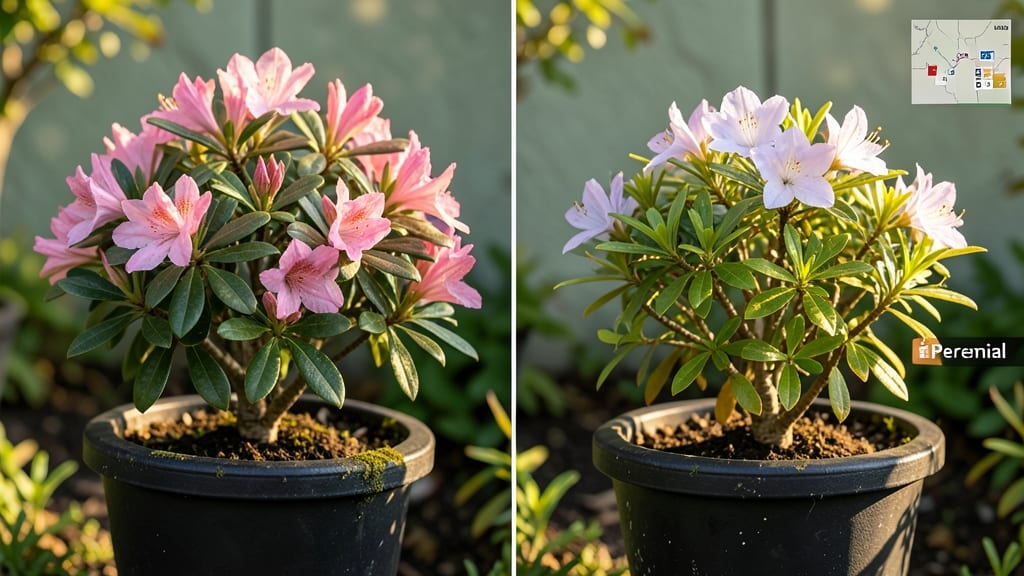
Azaleas are perennial plants that thrive year-round in the right climate zones, though some varieties act as annuals in colder regions where frost kills them back to the ground annually. Proper cold-hardy selection and winter care extend their lifespan beyond a single season.
Most azaleas naturally return every spring if they survive winter, but their lifespan depends entirely on your local climate. 🌱 In warmer USDA zones (7-9), these shrubs establish deep root systems that regrow leaves annually, while in colder zones (4-6), only hardy varieties like 'Girard's Pink' or 'Hino Crimson' reliably persist—others die back to the ground each frost.
The key difference lies in their root resilience: perennials store energy underground to regenerate, while annuals lack that capacity in harsh winters.
What makes this distinction practical is how you choose and care for your plants. For instance, in zone 5 where I garden, I select late-blooming azaleas that finish flowering before hard frosts—this gives their roots more time to harden off.
Mulching with 3-4 inches of shredded bark in late fall creates an insulating blanket that protects roots from temperature swings, while avoiding winter pruning prevents stress that could weaken their cold resistance.
💡 In This Article
- Cold-Hardiness Zones for Azalea Perennials
- Winterizing Azaleas for Long-Term Survival
Cold-hardiness zones for azalea perennials
Azalea cold-hardiness depends on their genetic origin and USDA zone compatibility. Most azaleas originate from East Asia and the southeastern U.S., where they evolved to withstand 10-25°F temperatures during dormancy.
The key difference between annual and perennial azaleas lies in their root systems—perennials develop deep, fibrous roots that store carbohydrates (like starch) to fuel regrowth in spring, while tender varieties lack this resilience.
For example, Rhododendron molle (a common species) thrives in zones 7-9, where winters rarely drop below 10°F, but struggles in zone 5 where -15°F can kill back unprotected plants.
The science behind dormancy explains why timing matters. Azaleas enter dormancy when daylight shortens and temperatures drop, but their ability to survive depends on how well they've hardened off.
Cold-hardy varieties like 'Bounce' series (zone 5) can tolerate -20°F because their cells produce antifreeze proteins that prevent ice crystal formation in tissues.
In contrast, non-hardy types like 'Girard's Pink' (zone 6) may survive 5°F but often die back if exposed to prolonged 0°F conditions. 🌡️ This is why late-season bloomers often fare better—they finish flowering before frost sets in, allowing roots to prepare for winter.
Top growth resilience varies dramatically between varieties. Some azaleas lose all foliage in winter but regrow from protected buds near the stem base, while others (like evergreen types) maintain leaves year-round.
The evergreen varieties rely on thick, waxy cuticles to prevent moisture loss, but this adaptation only works in milder climates. In zone 4, even evergreen azaleas may suffer winter burn from desiccating winds, making them functionally annuals unless heavily protected.
This is why gardeners in colder zones often choose deciduous types—they shed leaves to conserve energy during dormancy.
Temperature extremes trigger different survival mechanisms. Azaleas can handle brief cold snaps better than prolonged exposure because their cells gradually acclimate through a process called "cold acclimation." This involves increasing cell membrane stability and producing protective sugars like glucose that act as antifreeze.
However, rapid temperature swings (like 50°F days followed by -10°F nights) disrupt this process, which is why mulching becomes critical in marginal zones. The ideal mulch depth of 3-4 inches maintains soil temperatures within 5°F of air temperature, creating a buffer zone for roots.
Consider these zone-specific survival strategies:
- Zones 7-9: Most azaleas thrive perennially with minimal protection—focus on consistent moisture and occasional pruning
- Zones 5-6: Select late-blooming, cold-hardy varieties and use 6+ inches of mulch in exposed areas
- Zones 4 and below: Treat as annuals unless using microclimate protection (e.g., south-facing walls) or container growing with winter wraps
What most gardeners overlook is how soil type affects cold tolerance. Sandy soils drain quickly and can't retain heat like loamy soils, making azaleas more vulnerable to freeze-thaw cycles. Amending with 30% organic matter improves moisture retention and insulates roots during winter.
In my zone 5 garden, I've found that container-grown azaleas in 15-gallon pots with insulating wraps survive 5°F colder than in-ground plants because the pot acts as a thermal mass. 💫