
Vegetables
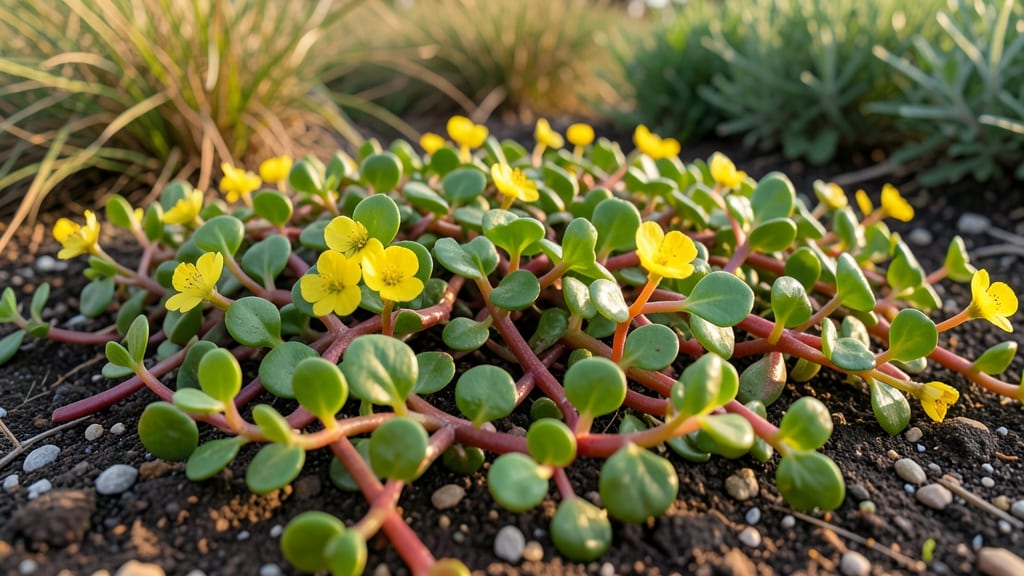
Purslane isn't a true perennial but acts like one in warm climates, where it dies back in winter only to resprout from seeds or roots when spring warmth returns. Its persistence relies on climate and proper care.
This succulent groundcover tricks you into thinking it's a true perennial because of its tenacity in the right conditions. 🌱 Unlike hardy perennials like thyme that survive winter's chill, purslane's survival hinges on temperature cues—it goes dormant when nights get cold but revives quickly when soil warms above 50°F.
In cooler climates, it behaves more like a winter annual, completing its life cycle each season unless you protect it. What's fascinating is how its thick, fleshy stems store moisture, giving it a head start when conditions improve.
This survival strategy explains why some gardeners swear by purslane's reliability while others struggle with it disappearing overnight. The key difference from true perennials is that purslane doesn't maintain living tissue through winter—it's essentially playing the long game through seeds and stored energy.
That's why proper winter mulching (with straw or leaves) can make all the difference in extending its lifespan.
💡 In This Article
- Why Purslane Dies Back but Returns Strongly
- How to Encourage Purslane’s Persistent Growth
Why purslane dies back but returns strongly
Purslane's survival strategy relies on a clever biological adaptation called seasonal dormancy, where the plant shuts down its metabolic processes during cold periods. Unlike true perennials like thyme that maintain underground rhizomes or roots year-round, purslane's thick, fleshy stems store water and nutrients to sustain it through winter's dormancy.
When soil temperatures drop below 50°F, the plant's growth halts, and its leaves yellow and crisp—this isn't death, but a calculated energy-saving mode.
The real magic happens when spring warmth returns. Purslane's seeds, which can remain viable in the soil for 5-10 years, germinate quickly when temperatures rise above 60°F.
This rapid regrowth is possible because the plant's native habitat in dry, warm climates (like the Mediterranean and Middle East) has conditioned it to capitalize on brief favorable periods.
In cooler regions, it behaves more like a winter annual, completing its life cycle in one season unless you intervene with protective measures.
What sets purslane apart from true perennials is its lack of persistent woody stems or underground storage organs. Instead, it relies on its ability to produce thousands of tiny seeds (up to 50,000 per plant) that create a dense seed bank in the soil.
This seed-based strategy ensures that even if the plant dies back completely, new growth will emerge when conditions improve. The trade-off? It requires more consistent warmth to maintain its presence year after year compared to hardy perennials.
This dormancy mechanism isn't just about survival—it's also about timing. Purslane's life cycle is perfectly synchronized with its environment: it grows rapidly during warm months, stores energy in its stems, and goes dormant before frost.
This adaptation explains why it thrives in hot, dry climates where other plants might struggle—its thick leaves reduce water loss through transpiration, and its shallow root system allows it to quickly take advantage of brief moisture availability.
In cooler climates, the challenge becomes maintaining that seed bank and protecting any remaining roots. Without intervention, purslane may disappear entirely between seasons, leaving gardeners wondering where it went.
The key difference from true perennials is that purslane doesn't maintain living tissue through winter—it's essentially playing the long game through seeds and stored energy in its stems, which can swell to hold up to 90% water content during dry periods.
This survival strategy has practical implications for gardeners. While purslane won't survive harsh winters like true perennials, its ability to regenerate from seeds means it can become a persistent weed in favorable conditions.
In fact, this is why it's often considered an invasive species in some regions—its seeds can lie dormant for years, waiting for the perfect moment to sprout when conditions align. 🌱