
Flowers
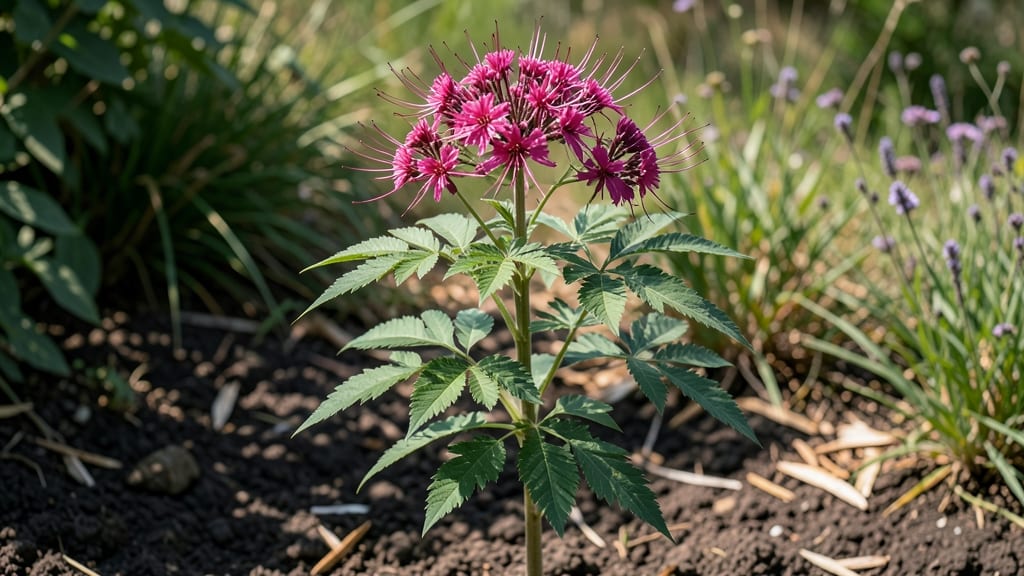
Cleome plants are not perennials in most climates—they grow as annuals, dying back after producing seed pods. However, in frost-free zones like USDA Hardiness Zone 10+, they may self-seed prolifically, creating a perennial-like appearance over multiple seasons.
Cleome plants thrive as annuals because they're highly sensitive to frost, which kills their tender stems and leaves. 🌱 In colder regions, they complete their life cycle in a single growing season, producing striking seed pods before winter.
What's fascinating is their ability to self-sow—when conditions are right, they'll reseed themselves year after year, mimicking perennial behavior without actually being one. This makes them perfect for gardeners who want long-lasting color with minimal effort.
While they won't survive winter in most climates, their rapid growth and prolific seeding mean you can often enjoy them for multiple seasons with little intervention. The key is protecting the seed pods from frost so they can drop and germinate naturally in spring.
💡 In This Article
- Why Cleome Dies Back Annually in Most Regions
- How to Extend Cleome’s Lifespan in Your Garden
Why cleome dies back annually in most regions
Cleome plants (like the popular Spider Flower) are classified as annuals because their life cycle is tightly linked to temperature sensitivity. Their tender stems and leaves can't tolerate frost—even a light freeze at 32°F or below triggers cellular damage through ice crystal formation in their tissues.
This frost sensitivity is hardwired into their genetics, inherited from tropical and subtropical ancestors that evolved in warm climates like those found in Central and South America.
The botanical mechanism is straightforward: cleome plants prioritize reproduction over survival. Once they sense shortening daylight (12-14 hours of light), their energy shifts from leaf growth to flower and seed production. This photoperiod response is similar to many annuals like marigolds but more pronounced in cleome.
What's unique is their seed pod development—these elongated, papery pods contain hundreds of tiny seeds that disperse when mature, ensuring the next generation's survival even if the parent plant dies.
Contrast this with true perennials like lavender or coneflowers, which have specialized underground structures (rhizomes, tubers) that store energy and regrow each spring. Cleome lacks these adaptations—its entire energy budget goes into above-ground growth and reproduction.
In frost-free zones like USDA Zone 10+, they can continue this cycle year-round, but in colder areas, they complete their life cycle in just 90-120 days, producing seeds before winter arrives.
Here's the fascinating part: while cleome dies back annually, its seeds remain dormant until conditions are perfect for germination. This natural reseeding creates the illusion of perennials—if you leave seed pods in place, they'll often produce new plants next season without any gardener intervention.
The key difference is that true perennials regrow from existing roots, while cleome relies entirely on seed propagation.
For gardeners, this means cleome's lifespan depends entirely on climate and management. In Zone 5-9, they'll typically live just one season unless you collect and replant seeds.
But in Zone 10, where winters stay above 40°F, they can self-sow continuously, creating dense stands that bloom for multiple years. This climate-dependent behavior explains why cleome is often mistaken for a perennial in warmer regions.
The science behind this involves a trade-off: cleome invests heavily in seed production rather than survival structures. Each seed pod contains 100-300 seeds, with germination rates up to 80% when conditions are ideal.
This prolific seeding strategy ensures genetic diversity and adaptation to local conditions—exactly what you'd expect from a plant that's evolved to thrive in variable environments.