
Flowers
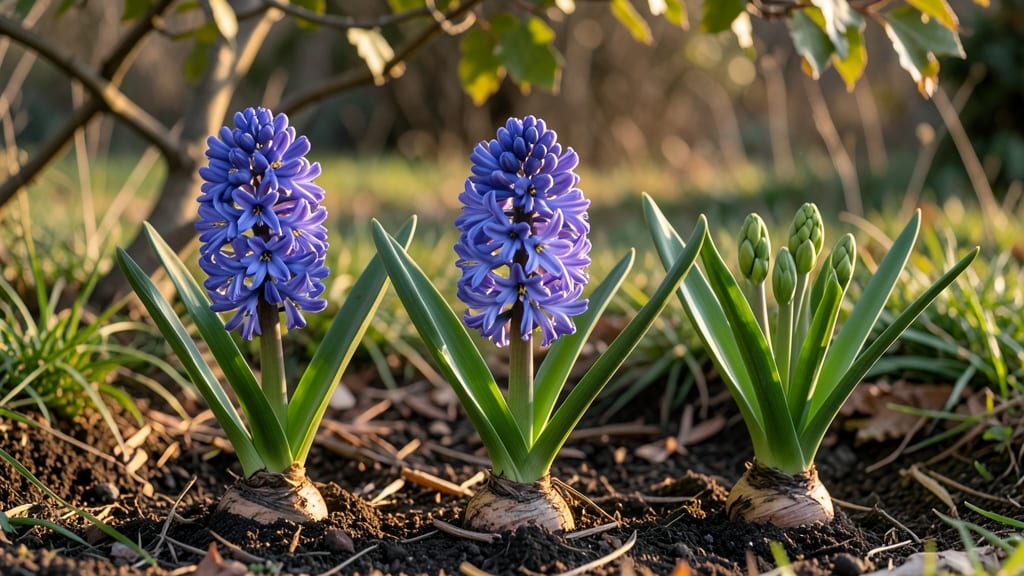
Hyacinths are perennials in warm climates but often treated as annuals in colder zones, as their bulbs may not survive freezing winters without protection. Digging and storing bulbs indoors extends their lifespan in frost-prone areas.
Hyacinths thrive as perennials in regions where winter temperatures rarely drop below 20°F, thanks to their natural dormancy cycle. 🌱 In colder climates, though, their delicate bulbs often succumb to frost without proper care—this is why gardeners in USDA zones 3-7 typically dig them up before the first freeze.
The key to their survival lies in understanding each variety's cold tolerance, as some hybrids handle chill better than others.
What sets hyacinths apart is their ability to store energy in their bulbs during dormancy, preparing for spring's return. This biological adaptation explains why even a single degree of frost can be fatal for unprotected bulbs.
For gardeners in marginal zones, overwintering techniques like mulching with straw or lifting bulbs into containers filled with dry peat moss make all the difference between a thriving spring display and a disappointing loss.
💡 In This Article
- How Hyacinth Bulbs Survive Winter in Different Climates
- Protecting Hyacinth Bulbs Through Winter: A Gardener’s Guide
How hyacinth bulbs survive winter in different climates
Hyacinth bulbs enter a natural dormancy cycle when temperatures drop, a survival mechanism that allows them to conserve energy and protect their delicate structures.
In their native Mediterranean climate, these bulbs experience mild winters with temperatures rarely falling below 20°F, which triggers just enough chill to break dormancy in spring. The bulb's outer layers contain specialized cells that convert stored starches into sugars during dormancy, sustaining the plant until warmer conditions return.
What makes hyacinths fascinating is their varied cold tolerance among varieties. For example, the 'Delft Blue' cultivar can handle brief exposures to 15°F temperatures, while 'Anna Marie' struggles below 25°F without protection.
This variation occurs because different hybrids have been bred for specific climate adaptations—some prioritizing frost resistance while others focus on vibrant color intensity. The chilling requirement (typically 6-8 weeks below 45°F) is also critical: insufficient cold exposure prevents proper dormancy, leading to weak or no blooms in spring.
In tropical climates where winters never drop below 50°F, hyacinths behave as true perennials, returning reliably each year. Their bulbs continue growing underground, gradually expanding their energy reserves.
In contrast, temperate climates force gardeners to intervene—either by providing insulation or removing bulbs entirely—because the natural dormancy cycle gets interrupted by prolonged freezing. This biological difference explains why you'll see hyacinths thriving as perennials in California gardens but requiring special care in New England.
The bulb's unique structure plays a key role in survival. Each bulb contains concentric layers of fleshy scales that act like natural insulation, protecting the central growth point from freezing. However, when exposed to prolonged sub-freezing temperatures, these scales can rupture, releasing stored nutrients and killing the bulb.
This is why gardeners in USDA zones 3-6 face higher risks—the ground often stays frozen for months, exceeding the bulbs' natural cold tolerance.
Consider the 'Woodstock' variety, which produces fragrant white blooms but requires 10-12 weeks of chilling to flower properly. If planted in a climate with only 6 weeks below 45°F, the bulb may produce leaves but no flowers—a common disappointment for gardeners who don't understand these chilling requirements.
This biological nuance is why some gardeners use refrigeration to supplement natural cold periods in marginal climates.
Here's what happens when bulbs get too cold: Ice crystals form within the cells, damaging their structure and preventing regrowth. The ideal winter storage temperature for lifted bulbs is 35-45°F—cool enough to maintain dormancy but not cold enough to cause cellular damage.
This delicate balance explains why hyacinths can't simply be left in the ground everywhere—they need either perfect climate conditions or human intervention to survive.