
Orchid Care
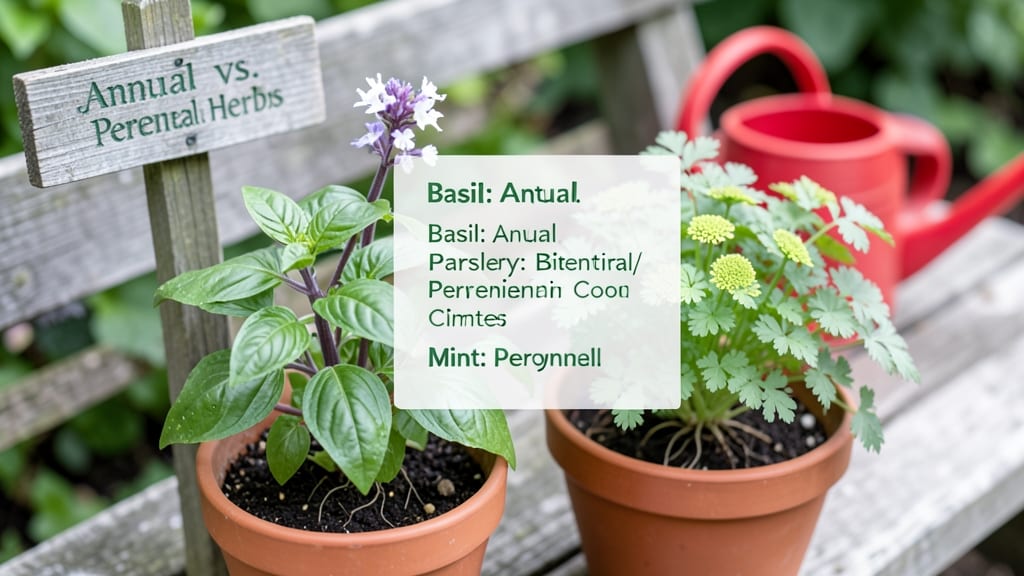
Herbs are classified as annuals or perennials based on their root systems and growth cycles: annuals like basil complete their life cycle in one season, perennials like rosemary return yearly from deep roots, and biennials like parsley take two years to mature.
Whether an herb thrives for one season or multiple years depends entirely on its root structure and resilience to environmental stress.
Annuals like basil have shallow roots that store minimal energy, forcing them to complete their life cycle quickly. 🌱 Perennials, however, develop extensive root systems that store nutrients and survive winter dormancy—think rosemary's woody stems or thyme's creeping growth.
Even biennials like parsley follow a different pattern, storing energy in their first year to bloom and set seed in the second.
This classification isn't just botanical trivia—it directly impacts how you care for your herbs. Annuals need fast-growing conditions and quick harvesting, while perennials reward patience with years of regrowth. Understanding these differences helps you choose the right herbs for your climate and gardening goals.
💡 In This Article
- How Root Systems Classify Herb Lifespans
- Gardening Tips for Extending Herb Lifespans
How root systems classify herb lifespans
The key difference between annual and perennial herbs lies in their root structures and how they store energy. Annual herbs like basil develop shallow, fibrous root systems that store minimal carbohydrates.
These roots prioritize rapid growth and seed production over winter survival, which is why basil bolts and dies after its first harvest season.
The science here is straightforward: annuals complete their life cycle in one growing season, typically 60-90 days, because their energy reserves are too limited to sustain them through winter's dormancy.
Perennial herbs, on the other hand, invest heavily in deep, woody root systems that act like underground energy banks.
Take rosemary as an example—its roots can extend 3-5 feet deep and store enough starches to regenerate new growth each spring, even after freezing temperatures. 🌿 The fibrous roots of thyme spread horizontally, creating a dense network that protects against soil temperature fluctuations.
This root structure allows perennials to survive winters in zones 5-10 (depending on the species) by entering dormancy while maintaining viable root systems. Biennials like parsley take this concept further by storing energy in their first year to fuel flowering and seed production in year two.
Cold hardiness plays a crucial role in this classification. Annuals simply can't tolerate freezing temperatures—their cells lack the protective mechanisms found in perennials. For instance, cilantro's roots contain minimal antifreeze proteins, while rosemary produces high levels of these proteins plus thick cuticles that reduce water loss during winter.
The temperature threshold for survival varies: most annuals die at 28°F, while hardy perennials like oregano can survive down to -20°F with proper mulching.
Another fascinating distinction is how these root systems interact with soil nutrients. Annuals like dill have taproots that quickly absorb available nitrogen, while perennials like sage develop mycorrhizal relationships with soil fungi that enhance nutrient uptake over multiple seasons.
This is why perennial herbs often taste more complex—their roots gradually accumulate flavor compounds through years of growth. The texture difference is also telling: annual leaves tend to be softer and more delicate, while perennial leaves develop thicker, waxier coatings that protect against environmental stress.
Let's examine three classic examples to illustrate these differences:
- Annual: Basil (Ocimum basilicum) - Shallow roots, completes life cycle in 60-90 days, dies with first frost
- Perennial: Thyme (Thymus vulgaris) - Deep fibrous roots, survives winters in zones 5-9, regrows yearly
- Biennial: Parsley (Petroselinum crispum) - Stores energy first year, blooms second year, then dies
Understanding these root structures helps explain why some herbs thrive in containers while others need in-ground planting. Annuals like cilantro can be grown in pots for one season, while perennials like rosemary need deep containers (12+ inches) to accommodate their extensive root systems.
The choice between these growth patterns ultimately determines whether you're planting for quick harvests or long-term garden investments.