
Plants
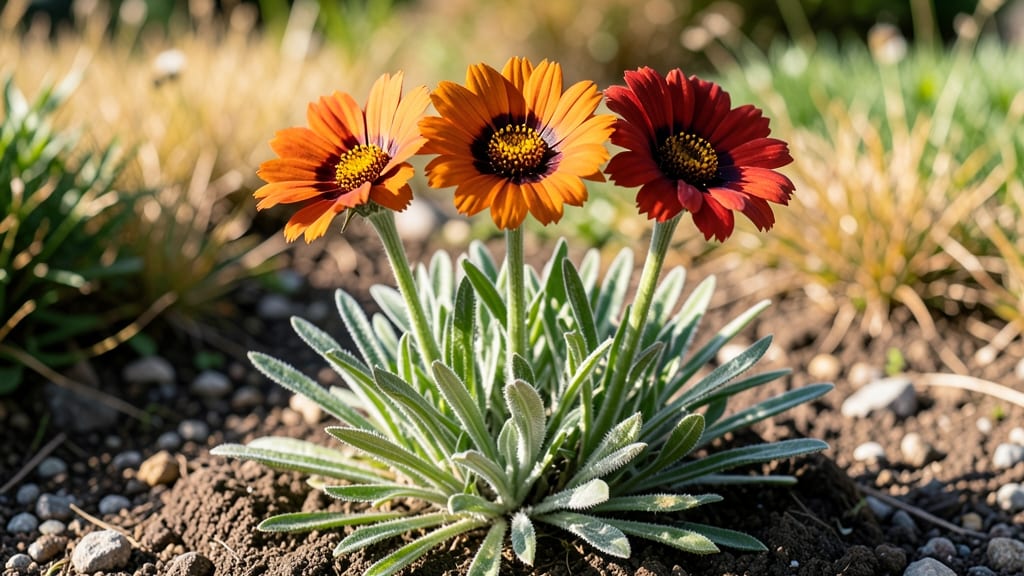
Gazanias are not true perennials in most climates because they die back during winter but reliably reseed themselves each spring. Only in frost-free zones (USDA 8+) might they persist year-round, though they typically rely on seed propagation rather than true regrowth.
Are gazanias perennials? They thrive as what gardeners call "self-seeding annuals"—they complete their life cycle in one season but leave behind seeds that sprout fresh plants the following year. 🌱 Unlike true perennials like lavender, which regrow from their roots, gazanias prioritize seed production as their survival strategy. This means they’ll vanish when frost hits but return with vigor if conditions allow. In colder regions, even winter mulch won’t guarantee survival, though it may extend their lifespan slightly by protecting shallow roots.
What sets gazanias apart is their adaptability—whether you treat them as annuals or let nature handle reseeding, they’ll reward you with bold blooms year after year. The key is deadheading spent flowers to encourage new seed production and choosing well-draining soil to prevent rot.
In warmer climates, they might even surprise you by lingering between seasons, but don’t count on them behaving like traditional perennials.
💡 In This Article
- Why Gazanias Die Back in Cold Weather
- How to Grow Gazanias as Annuals or Self-Sustaining Plants
Why gazanias die back in cold weather
Gazanias belong to the Aizoaceae family, native to South Africa’s dry, frost-free regions. Their shallow root systems—typically only 6-12 inches deep—lack the energy reserves to survive freezing temperatures. When frost hits, the plant’s cellular structure ruptures due to ice crystal formation, a process called cryodamage.
Unlike true perennials like lavender, which store nutrients in woody stems or deep roots, gazanias prioritize rapid growth and seed production over winter survival. 🌡️
Their life cycle is finely tuned to warm climates: they bolt (flower and set seed) within 60-90 days of germination, ensuring seeds mature before cooler weather arrives. In colder zones, even a light frost can kill the foliage, but the seeds remain dormant until spring’s warmth triggers germination.
This adaptation explains why gazanias thrive as annuals—they complete their lifecycle in one season but leave behind a seed bank for next year.
True perennials like lavender or rosemary rely on persistent root systems to regrow each spring, while gazanias use a r-selected strategy—maximizing seed output to ensure genetic survival. Their bright orange, red, or yellow blooms are nature’s way of attracting pollinators to spread seeds widely.
In frost-free zones (USDA 8+), they may linger between seasons, but their survival depends more on seed viability than root hardiness.
What most gardeners overlook is how gazanias’ succulent leaves store minimal moisture compared to drought-tolerant perennials. Their water content freezes easily, accelerating cell death.
Even in marginal climates, winter mulch (like 3-4 inches of straw) may protect shallow roots slightly, but it won’t replicate the frost-free conditions they evolved for. 🌿
Consider this comparison: a gazania’s root system is like a delicate taproot with fine lateral branches, while a lavender’s roots form a dense, fibrous network. The difference explains why gazanias retreat to seeds while lavender regrows from the same root base.
This biological trade-off is why they’re classified as short-lived perennials in botanical terms—technically not annuals, but not true perennials either.
Here’s the science: gazanias’ germination rate drops below 50°F, and their metabolic processes slow dramatically in cooler temps. Their survival hinges on seeds, which can remain viable for 2-3 years in the soil. This seed-based strategy ensures their persistence even when adult plants perish. 🌱