
Plants
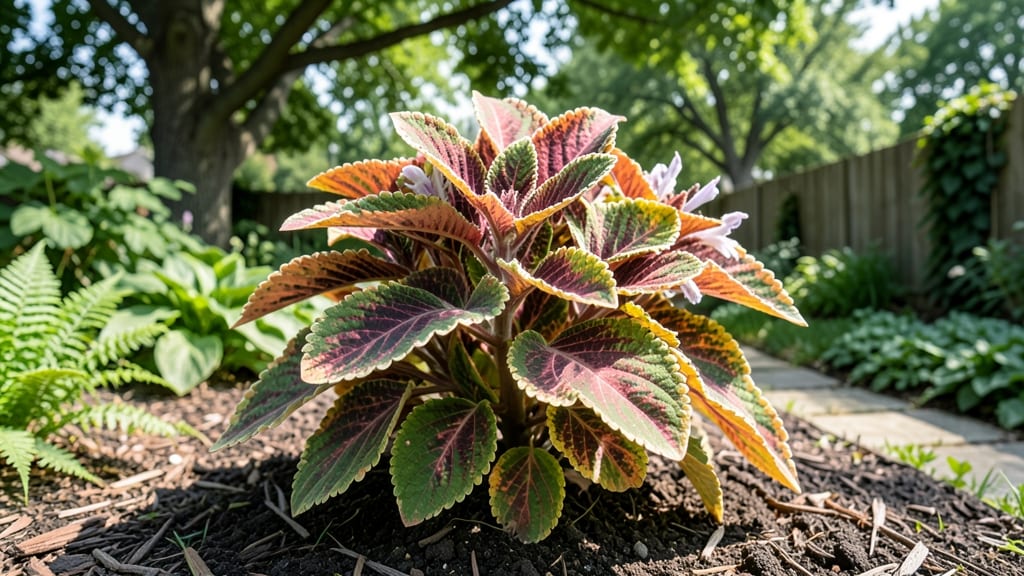
Coleus plants aren't true perennials in cold climates—they die back to the ground each frost, though their roots or rhizomes can survive to regrow when temperatures warm. In milder zones (USDA 9-11), they may act like semi-perennials, but most gardeners grow them as seasonal annuals.
This dieback cycle happens because coleus originates from tropical regions, making it highly sensitive to freezing temperatures. 🌱 Unlike hardy perennials that survive winter above ground, coleus prioritizes protecting its root system, which can regenerate foliage when conditions improve.
In colder areas, gardeners often overwinter cuttings indoors or dig up root clumps to restart growth in spring, effectively treating them as annuals despite their biological resilience.
What's fascinating is how this behavior contrasts with other popular perennials like hostas or heucheras, which maintain their foliage year-round in similar climates.
The key difference lies in coleus's tropical heritage—its survival strategy focuses on underground storage rather than cold tolerance, which is why most gardeners opt to replant fresh starts each season rather than struggle with overwintering.
💡 In This Article
- Why Coleus Die Back in Cold Weather
- Extending Coleus Growth in Cooler Climates
Why coleus die back in cold weather
Coleus plants originate from tropical regions like Indonesia, Malaysia, and the Philippines, where temperatures rarely drop below 50°F (10°C). This tropical heritage explains their cold sensitivity—they lack the genetic adaptations for frost tolerance found in hardy perennials like hostas or heucheras.
When temperatures fall below 32°F (0°C), the above-ground foliage freezes and dies back completely, a process called "topkill." 🌱
The real magic happens underground. Coleus stores energy in its fibrous roots or rhizomes, which can survive winter if protected by mulch or soil insulation. These underground structures contain dormant buds that remain viable even after frost damage, allowing regrowth when spring temperatures return to 55-60°F (13-15°C).
This survival mechanism is similar to how daylilies or peonies overwinter, but coleus lacks the same level of cold hardiness.
What sets coleus apart is its temperature-triggered regrowth cycle. Unlike true perennials that maintain some foliage through winter, coleus prioritizes complete dormancy above ground. This strategy conserves energy in its roots until warm soil temperatures signal safe regrowth.
In colder climates (USDA zones 3-8), this cycle typically repeats annually, which is why gardeners often treat them as seasonal plants despite their biological resilience.
Consider the contrast with hostas: they maintain evergreen foliage through winter in zone 5, while coleus would suffer severe damage. The difference lies in coleus's tropical DNA—its survival depends on rapid regrowth from protected underground structures rather than cold tolerance.
This is why you'll rarely see coleus surviving winter outdoors in zones colder than USDA 9 without human intervention.
Even in milder zones (USDA 9-11), coleus may not behave like a true perennial. While some varieties might persist year-round, they often produce weaker growth the following season due to accumulated stress from marginal cold snaps.
This is why professional growers and dedicated gardeners take extra steps to preserve coleus through winter, treating them more like semi-perennials than true hardy plants.
Here's what happens at the cellular level: cold temperatures cause ice crystals to form in coleus cells, damaging membranes and halting photosynthesis. The plant's survival strategy shifts to protecting its meristematic tissue (growth centers) in the roots, which remain insulated by soil.
This biological response explains why you can often see new shoots emerging from the ground even after a hard freeze, as long as the roots survived.