
Flowers
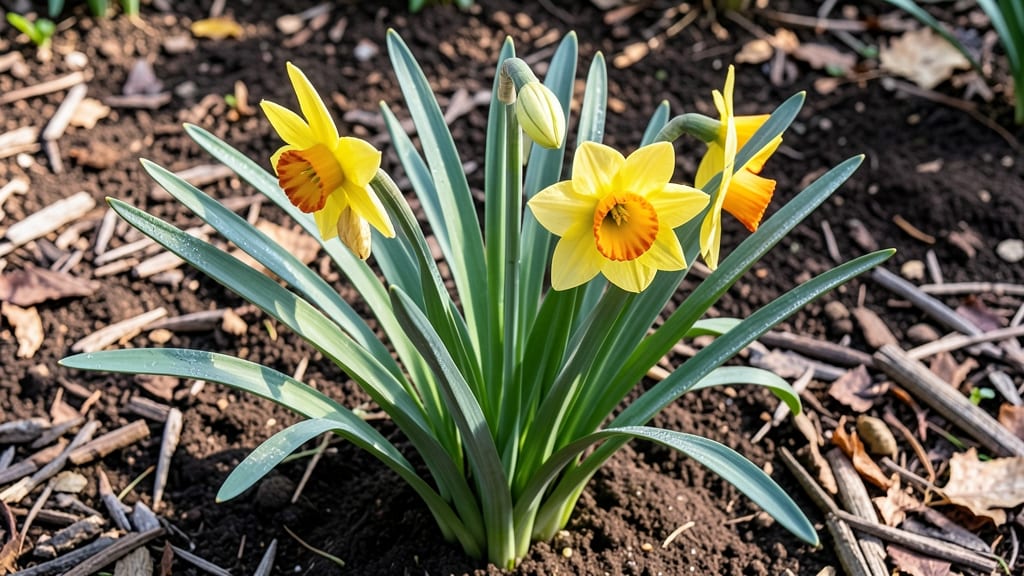
Yes, daffodils are perennials because their tough underground bulbs store nutrients year-round, letting them push through soil each spring after winter dormancy. This built-in resilience means they keep blooming for years with almost no upkeep once planted.
That hardiness comes from their bulb structure, which acts like a natural survival kit. 🌱 Unlike annuals that die after one season, daffodils store energy underground during cold months, then burst back to life when temperatures rise.
Their deep roots also help them resist frost damage, while their natural toxins deter pests—making them low-maintenance garden stars. Many gardeners love them because they multiply over time, creating cheerful patches that spread effortlessly.
For best results, plant bulbs in fall when soil temps drop below 60°F, giving roots time to establish before winter. They thrive in full sun to partial shade and need minimal watering once established—just enough to keep soil moist during their first growing season.
This combination of toughness and beauty is why daffodils remain a top perennial choice worldwide.
💡 In This Article
- How Daffodil Bulbs Survive Winter Dormancy
- Planting and Caring for Daffodils as Perennials
How daffodil bulbs survive winter dormancy
Daffodil bulbs are nature's perfect survival machines, designed to endure harsh winters through a clever biological process. Their layered structure—comprising a tough outer skin, fleshy scales packed with starches, and a basal plate where roots emerge—acts like a fortified bunker.
During dormancy, these bulbs convert stored carbohydrates into sugars that protect cellular membranes from freezing, while their low moisture content prevents ice crystal formation that could rupture tissues. This adaptation allows them to survive temperatures as low as -20°F with minimal damage.
The key to their winter resilience lies in their deep root systems, which can extend 12-18 inches below soil level. These roots tap into warmer underground layers while anchoring the bulb firmly, preventing frost heave that could expose it to cold air.
Unlike annuals that complete their entire life cycle in one season, daffodils enter a state of metabolic slowdown where growth hormones remain inactive until soil temperatures rise above 40°F in spring. Their natural toxins (like lycorine) also deter burrowing animals and fungal pathogens that might otherwise exploit dormant plants.
What makes daffodils stand out compared to other perennials is their ability to regenerate from just a small portion of their bulb. Even if the top growth dies back completely, the basal plate can produce new shoots from remaining meristematic cells.
This redundancy ensures survival even after severe frost or drought. For example, while tulips (also bulb perennials) often need replanting every few years, daffodils can thrive for decades in the same spot, multiplying naturally through offsets that form around the parent bulb.
Light exposure plays a crucial role too. Daffodils require a period of cool temperatures (typically 40-50°F for 12-16 weeks) to break dormancy—a process called vernalization. Without this chilling period, stored nutrients remain dormant, preventing spring regrowth.
This explains why daffodils planted in warm climates may require artificial chilling or take longer to establish compared to their northern counterparts.
Consider the contrast with annuals like marigolds: their entire life cycle—germination, growth, flowering, and seed production—must occur within a single growing season. Daffodils, however, spread their energy demands across multiple years.
Their bulbs store enough nutrients to fuel both the previous year's flower production and the next season's growth, while simultaneously producing new offsets. This triple duty makes them far more efficient survivors than both annuals and many other perennials.
Their winter strategy extends to water management too. Daffodil bulbs enter dormancy when soil moisture drops below 30% saturation, triggering a protective response that prevents dehydration.
This drought tolerance is another reason they thrive in diverse climates, from Mediterranean regions to northern Europe, where they can lie dormant for months without supplemental watering.