
Plants
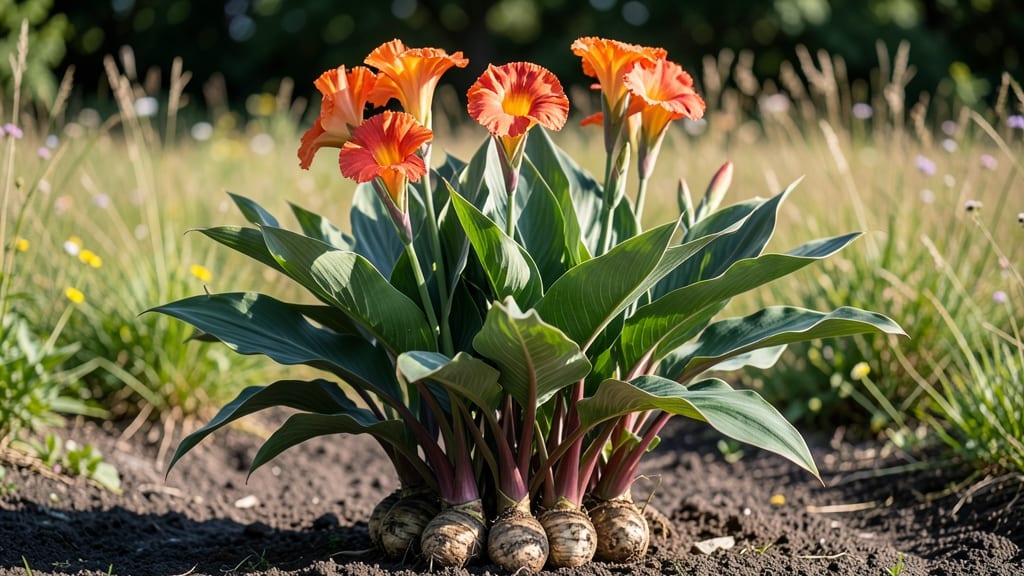
Canna plants act as perennials in frost-free zones (USDA 8-11), where their underground rhizomes naturally regrow each spring. In colder regions, they die back seasonally but can be preserved through proper overwintering techniques.
Canna plants earn their perennial reputation through their remarkable underground storage system.
These tropical natives rely on thick, energy-packed rhizomes that store nutrients and moisture, allowing them to push new shoots when conditions warm up. 🌱 In regions without freezing temperatures, they'll reliably return year after year without any intervention from gardeners.
The key difference comes when winter arrives—while they won't survive outdoor freezing, their rhizomes can be carefully stored to bring them back the following season.
What makes this particularly useful for gardeners is how these plants adapt to their environment. The rhizome system acts like a built-in survival mechanism, storing enough energy to sustain the plant through dormant periods while maintaining its vigor.
This biological advantage explains why cannas thrive so consistently in warm climates while still offering gardeners in cooler areas a chance to enjoy their dramatic foliage and vibrant blooms season after season.
💡 In This Article
- How Canna Rhizomes Ensure Year-Round Growth
- Overwintering Canna Plants in Cold Climates
How canna rhizomes ensure year-round growth
Canna plants rely on their specialized underground rhizomes to function as perennials in frost-free regions. These thick, horizontal root structures store carbohydrates, proteins, and water—essentially acting like a built-in battery for the plant.
When temperatures drop below 50°F, the above-ground foliage dies back, but the rhizomes remain dormant while preserving their energy reserves. This biological adaptation allows them to push new shoots within 2-4 weeks once spring warmth returns, typically around 60-65°F soil temperatures.
The rhizome's structure is what makes cannas so resilient. Unlike annuals that complete their life cycle in one season, canna rhizomes contain specialized cells called meristems that can regenerate shoots year after year. These meristems remain protected 3-6 inches below the soil surface, where they're shielded from temperature fluctuations.
In USDA zones 8-11, this natural process occurs annually without human intervention, explaining why cannas return with vigor each spring—often reaching 4-6 feet in height by midsummer.
What's fascinating is how these rhizomes balance growth and storage. During the growing season, they absorb 30-40% more nutrients than the plant's foliage, converting sunlight into stored energy through photosynthesis in their green stems. This energy reservoir isn't just for survival—it fuels rapid regrowth after dormancy.
Gardeners in warm climates often notice their cannas emerge 2-3 weeks earlier than newly planted tubers because the established rhizomes have a head start on energy mobilization.
The plant's ability to adapt its dormancy cycle based on temperature is another survival advantage. While most perennials have fixed dormancy periods, cannas can extend or shorten their dormant phase by 2-4 weeks depending on local climate patterns.
This flexibility explains why established plants in zone 8 often survive mild winters without additional protection, while those in zone 9 might need minimal care during brief cold snaps.
For visual gardeners, the rhizome's growth pattern creates a fascinating underground network. Each year's growth forms concentric rings around the original rhizome, with new shoots emerging from the most recent growth nodes.
This radial expansion explains why mature canna clumps can spread 1-2 feet wider annually—creating dramatic foliage displays while maintaining their perennial nature in suitable climates.
What most gardeners don't realize is how this rhizome system affects water needs. The stored moisture in these underground structures allows cannas to tolerate 2-3 weeks of drought during their dormant period—a crucial adaptation for their tropical origins.
This water storage capacity is why established cannas often require 30-50% less irrigation once established compared to annual plants with similar foliage demands.