
Orchid Care
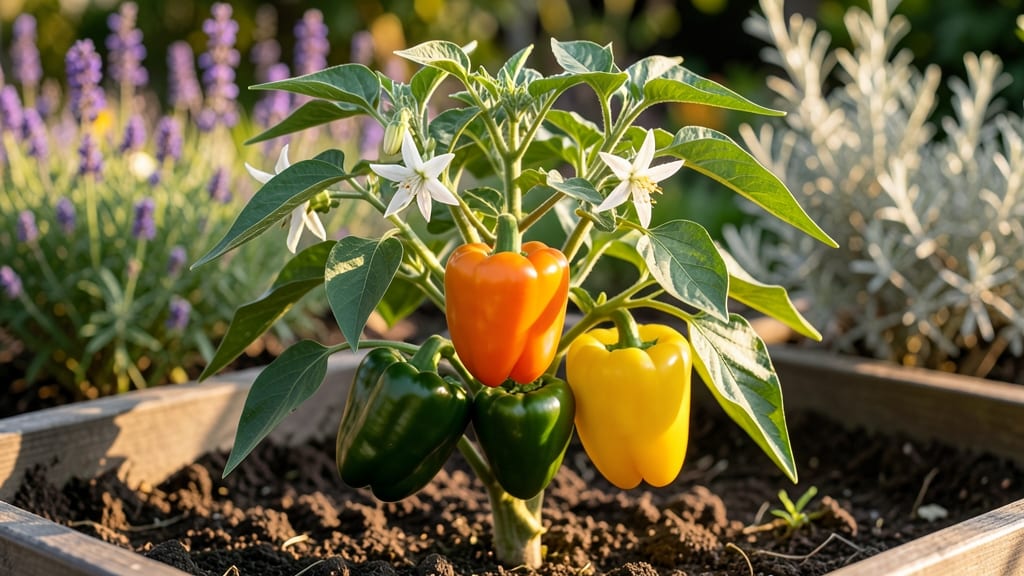
Whether bell peppers are annuals or perennials depends on your climate: they complete their life cycle in one season in most regions, but can thrive as perennials in warmer zones like USDA Hardiness Zones 9-11 with proper protection. Their shallow root systems and frost sensitivity dictate this classification.
Bell peppers act as annuals in cooler climates because they can't withstand freezing temperatures, which damage their delicate root systems and foliage. 🌱 In milder zones, however, their ability to regrow from the same roots means they can persist for multiple seasons with careful winter protection.
The key difference lies in temperature resilience—while most gardeners treat them as annuals, tropical growers often coax them into perennial behavior through mulching and container gardening.
This dual nature makes bell peppers fascinating for gardeners: they offer both the convenience of annual planting and the satisfaction of perennial growth when conditions allow. The varieties you choose also play a role—some hybrids are hardier than others, making them better candidates for overwintering experiments.
💡 In This Article
- Why Bell Peppers Die as Annuals in Cold Climates
- How to Grow Bell Peppers as Perennials in Warm Climates
Why bell peppers die as annuals in cold climates
Bell peppers are classified as annuals in most regions because their delicate biological systems simply can't survive freezing temperatures. Their shallow, fibrous root systems—typically spreading just 12-18 inches wide and reaching only 12-18 inches deep—lack the depth to insulate against frost.
When temperatures drop below 32°F, these roots begin to die back, cutting off the plant's water and nutrient supply. 🌱 The foliage, which thrives in 70-85°F daytime temperatures, also suffers from cold shock, leading to blackened leaves and stem collapse.
The real damage happens when moisture freezes in plant tissues—a process called cryogenic injury. Water expands by 9% when frozen, rupturing cell walls in pepper stems and leaves.
This is why even a light frost (30-32°F) can kill a bell pepper plant within 24-48 hours, unlike hardier perennials that can regenerate from protected root crowns.
The plant's energy reserves, stored primarily in the roots, deplete rapidly during cold stress, leaving nothing to fuel regrowth in spring.
Seasonal growth patterns also play a role. Bell peppers are warm-season crops that require 90-120 days of frost-free growing conditions to mature. In temperate climates, this window closes before the plant can establish enough energy reserves to survive winter dormancy.
Unlike perennials that store carbohydrates in woody stems or deep roots, bell peppers store minimal reserves in their herbaceous stems, which freeze solid in winter. 🥶 This biological limitation forces gardeners to replant each year unless they take extraordinary measures in warmer zones.
What makes this particularly frustrating is how close bell peppers come to perennial behavior. Their ability to regrow from the base after pruning demonstrates their potential for longevity—yet this trait is overshadowed by frost sensitivity.
In regions with 50+ frost-free days per year, gardeners often see peppers resprout after mild winters, but these are exceptions rather than the rule. The plant's evolutionary adaptation to tropical climates (where they originated) simply doesn't align with cold-season survival strategies.
Consider this comparison: A tomato plant, another annual, dies back similarly in cold climates, but its seeds can survive in soil for years. Bell peppers, however, don't produce persistent seeds in most growing conditions—they rely on annual planting.
This fundamental difference in reproductive strategy further cements their annual classification in temperate zones. Even in Zone 8, where winters are mild, most gardeners treat them as annuals because the risk of unexpected late frosts remains high.
The science behind this becomes clear when examining pepper physiology. Their C3 photosynthetic pathway (like most plants) makes them particularly sensitive to cold-induced photoinhibition—where sunlight damages chlorophyll in freezing temperatures.
This metabolic shutdown occurs before the plant can enter true dormancy, a state required for perennial survival. 🌡️ The combination of shallow roots, herbaceous growth habit, and tropical origins creates a perfect storm against cold-climate survival.
For gardeners in cooler regions, this biological reality translates to practical limitations: No amount of mulching will save bell peppers from a hard freeze (28°F or below).
The plant's inability to harden off (develop cold tolerance through gradual acclimation) means it's always one unexpected frost away from total loss. This is why most commercial pepper production treats them as annuals—a classification backed by both horticultural science and real-world growing experiences.