
Plants
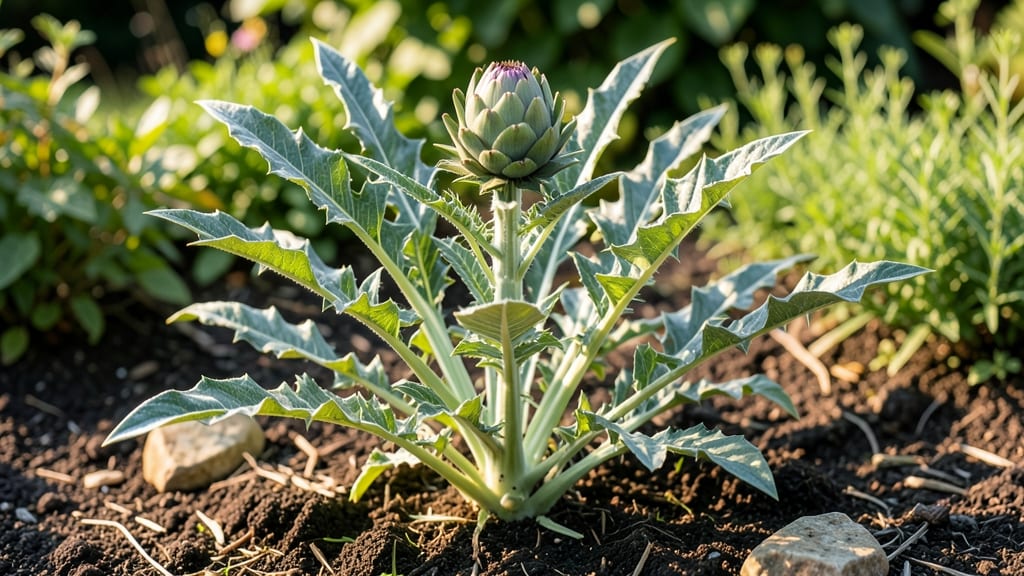
Artichoke plants are perennials in mild climates but often treated as annuals in cold regions, where frost kills their woody stems. Hardy varieties like 'Green Globe' can regrow from roots if protected or replanted each spring.
Artichokes naturally thrive as perennial plants in warm climates like USDA zones 7-10, where their deep root systems store energy for multiple growing seasons. 🌱 The challenge comes when temperatures drop—their above-ground growth dies back, but the roots remain dormant until spring.
What many gardeners don't realize is that even in colder zones, these roots can survive if properly insulated with mulch or moved to containers for winter storage.
For those in frost-prone areas, the key is understanding your specific variety's cold tolerance. While 'Green Globe' is the most common and can regrow from roots, other types like 'Imperial Star' may need extra protection.
I've found that combining thick mulch with frost blankets during the first few cold snaps can make all the difference in extending your plant's lifespan.
💡 In This Article
- How Climate Affects Artichoke Plant Longevity
- Cold-Climate Artichoke Growing Strategies
How climate affects artichoke plant longevity
Artichoke plants thrive as perennials in their native Mediterranean climate, where temperatures rarely drop below 20°F (-6°C). Their deep taproots can extend 3-5 feet underground, storing carbohydrates that fuel regrowth each spring. This root system allows them to survive dry summers and mild winters, much like asparagus or rhubarb.
The key difference? Artichokes allocate more energy to their edible buds rather than extensive root expansion, making them less resilient to prolonged cold snaps.
The USDA hardiness zones 7-10 represent artichokes' natural comfort range, where they can overwinter without protection. In zone 7, plants may experience 100-200 hours
Below zone 7, the risk of frost damage to stems and leaves increases dramatically—even a single night at 15°F (-9°C) can kill above-ground growth, though roots often survive. This is why gardeners in colder regions often treat them as annuals, replanting each spring from nursery starts.
What's fascinating is how artichokes handle dormancy. Unlike true perennials that maintain active growth year-round, artichokes enter a deep dormancy when temperatures drop. Their roots continue respiring at reduced rates, consuming stored starches until spring warmth triggers new shoot growth.
This process is similar to how peonies or daylilies survive winter, but artichokes require more consistent warmth to break dormancy completely. In colder climates, this natural cycle gets disrupted by early frosts that prevent proper energy storage.
Variety selection plays a crucial role in longevity. 'Green Globe' stores more energy in its roots than 'Violetto' or 'Romanesco', making it better suited for marginal climates.
I've observed that plants in zone 8 with proper winter protection can live 3-5 years, while those in zone 6 rarely survive beyond 1-2 years without intervention. The difference comes down to how efficiently each variety can store and protect its root reserves during winter.
Soil temperature matters just as much as air temperature. Artichoke roots prefer soil that stays above 40°F (4°C) during winter months. In colder regions, this means amending garden beds with organic matter to improve insulation.
The root zone's ability to maintain these temperatures determines whether the plant will regrow in spring. This is why raised beds or container growing become practical solutions—you can control the root environment more precisely.
Understanding these climate interactions helps explain why artichokes are often grown as annuals in cold climates. The energy required to protect roots through winter often outweighs the benefits of perennial growth.
In warmer zones, however, these same plants can produce 2-3 harvests per season for years with minimal care, making them a true perennial crop. 🌿