
Flowers
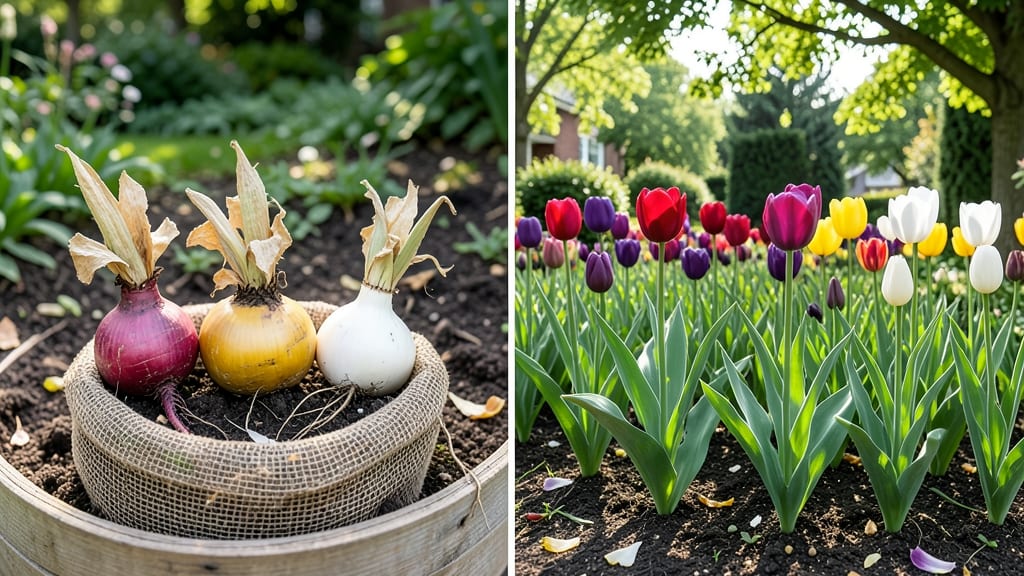
Tulips are perennial plants in most climates but behave like annuals in warm regions, where they die back after flowering each year before regrowing from bulbs. Their growth cycle depends on winter chill exposure and soil conditions, thriving best in USDA Zones 3-8.
Whether tulips act as annuals or perennials depends entirely on your climate. In colder regions, tulips store energy in their bulbs over winter, then burst back to life each spring—true perennial behavior.
But in warmer zones, they often lack the 6-8 weeks of winter chill needed to trigger regrowth, making them appear annual. 🌱 The good news? With proper bulb care—like lifting and storing them in cool, dry conditions—you can coax perennial performance even in marginal climates.
This dual nature explains why gardeners in Zone 9 or 10 might replant tulip bulbs yearly, while those in Zone 5 see them return reliably. The key difference lies in how bulbs respond to temperature cues: without sufficient cold, their dormancy cycle breaks, and they fail to regenerate.
Understanding this helps you choose varieties suited to your region—some, like Darwin hybrids, handle heat better than delicate species tulips.
💡 In This Article
- Why Tulips Die Back Annually in Warm Climates
- Tulip Bulb Care for Year-Round Blooms
Why tulips die back annually in warm climates
Tulips rely on a biological process called vernalization, where they require a period of cold exposure to trigger flowering and regrowth. In colder climates (USDA Zones 3-8), tulip bulbs naturally receive 6-8 weeks of temperatures below 40°F during winter, which breaks their dormancy and signals the plant to regenerate.
This cold period is critical—without it, the bulbs remain in a dormant state and fail to produce new shoots in spring. 🌱
The specific temperature threshold for vernalization is around 32-40°F, but the duration matters just as much. For example, a bulb in Zone 5 might get 100 days below 40°F, while one in Zone 9 might see only 20 days.
This lack of sufficient chill causes the bulbs to behave like annuals, completing their life cycle in one season before dying back. Even if the bulb isn't eaten by pests or rotted by disease, it simply lacks the biological cue to regrow.
Another factor is the bulb's internal energy reserves. Tulips store carbohydrates in their bulbs during the growing season, which they use to fuel regrowth. In warm climates, these reserves are often depleted by the time flowering occurs because the plant expends energy trying to bloom without proper dormancy.
This exhaustion means the bulb can't sustain another growth cycle, leading to its death after flowering. 💫
Soil conditions also play a role. In warmer zones, tulip bulbs planted in heavy, poorly-draining soil are more prone to rot before they can complete their cycle.
The combination of insufficient chill and poor soil drainage creates a double whammy—bulbs either fail to regrow or succumb to fungal diseases like Botrytis (gray mold), which thrives in damp, warm conditions. This is why gardeners in Zone 9 often treat tulips as annuals, replanting fresh bulbs each fall.
Interestingly, some tulip varieties are more resilient to warm climates than others. Darwin hybrid tulips, for example, have thicker stems and larger bulbs that store more energy, making them better suited for marginal zones (like Zone 8).
Species tulips, such as Tulipa greigii or Tulipa tarda, also handle heat better because they evolved in drier, warmer regions of Central Asia. These varieties can sometimes regrow in Zone 9 with careful care, while delicate hybrid tulips often fail.
Understanding these factors helps explain why tulips might look like annuals in your garden. The key takeaway is that their perennial behavior depends on a perfect storm of cold exposure, proper soil conditions, and the right variety—all of which can be influenced by where you live. 🌿