
Flowers
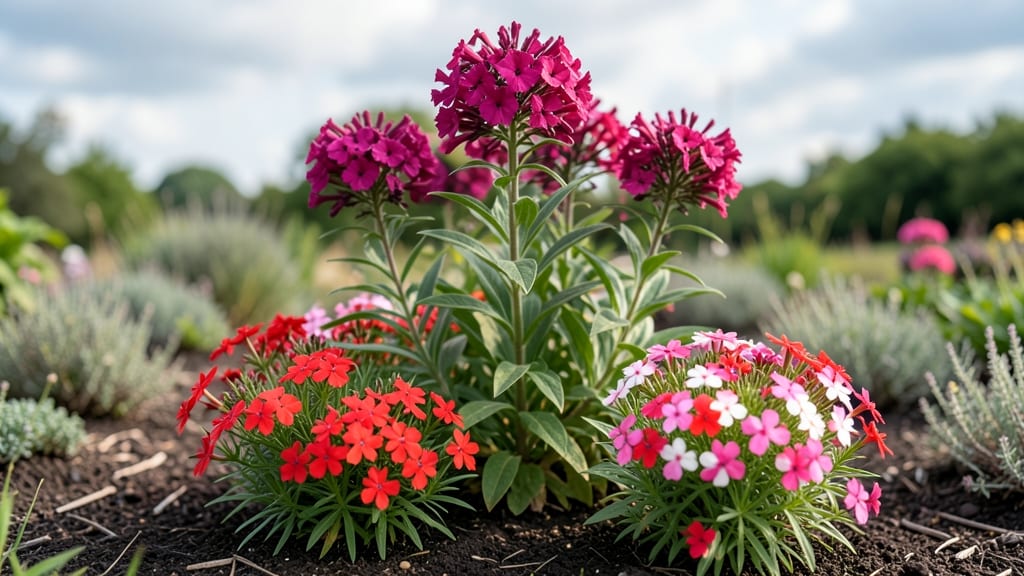
Whether phlox plants are perennial or annual depends on their species and growing conditions, as most garden varieties die back to the ground each winter but regrow from roots as perennials. Hardy varieties like creeping phlox return year after year, while tender species may act as annuals in colder climates.
This distinction comes down to their root systems and cold tolerance. Perennial phlox stores energy underground during winter, allowing them to rebound in spring, while annual varieties often lack this resilience in frost-prone areas. 🌱 For example, garden phlox thrives in zones 3-9 as a perennial, but the same plant might behave annually in zone 10's milder winters.
The key is understanding your local frost patterns and choosing varieties with proven hardiness for your region.
Cold-hardy types like creeping phlox develop deep root systems that survive winter's chill, while tender annuals often rely on quick growth cycles before frost sets in. Mulching in late fall can extend perennial phlox's lifespan by insulating roots, while annuals may need replanting each spring.
The difference isn't just about labels—it's about how each type adapts to your climate's challenges.
💡 In This Article
- How Phlox Dieback Patterns Reveal Perennial vs Annual Growth
- Choosing Phlox for Your Climate: Perennial vs Annual Varieties
How phlox dieback patterns reveal perennial vs annual growth
The key difference between perennial and annual phlox lies in their root systems and how they handle winter dormancy. Perennial phlox, like garden phlox (Phlox paniculata), develop thick, woody root crowns that store carbohydrates and nutrients throughout the cold season.
These roots can survive temperatures as low as -20°F to -30°F when properly insulated, allowing the plant to regrow from the same root base each spring. The dieback you see in winter is just the above-ground foliage shutting down—like a bear hibernating—but the roots remain active underground, maintaining energy reserves.
Annual phlox species, on the other hand, lack this hardy root structure. Their roots are typically fibrous and shallow, with minimal energy storage capacity, making them vulnerable to frost penetration.
In colder climates, these plants complete their entire life cycle in one growing season, producing flowers, setting seed, and dying back completely—often before winter sets in.
The critical temperature threshold for annual behavior is around 25°F: when winter temperatures consistently drop below this, tender phlox varieties simply can't survive. 🌡️ This explains why the same phlox plant might behave as a perennial in zone 5 but as an annual in zone 10's milder winters.
What makes this even more interesting is the plant's hormonal response to temperature shifts. As days shorten and temperatures dip, perennial phlox produces higher levels of abscisic acid, a plant hormone that triggers dormancy in above-ground growth while protecting the root system.
Annual varieties don't have this same hormonal mechanism—once frost hits, their entire structure collapses because they lack the biological "safety net" of a persistent root crown. This hormonal difference is why you'll often see perennial phlox returning with more vigor each year, while annuals require complete replanting.
Another fascinating aspect is how phlox handles vernalization—the process where cold exposure actually stimulates flowering in perennials. After winter's chill, perennial phlox roots "remember" the cold period and produce floral buds more efficiently in spring.
Annuals skip this step entirely, focusing all their energy on rapid above-ground growth before frost. This biological memory in perennials is why they often produce larger, more abundant blooms in their second and third years compared to their first.
Consider the example of creeping phlox (Phlox subulata), which thrives as a perennial in zones 3-8 but may act annually in zone 9's warmer winters. The difference isn't just about temperature tolerance—it's about the duration of cold exposure needed to trigger proper dormancy.
Creeping phlox requires at least 30 days below 40°F to fully reset its growth cycle, while tender annuals can't handle even brief frost periods.
This explains why gardeners in marginal zones often see their perennial phlox struggling or dying back completely—it's not just about the lowest temperature, but the cumulative cold exposure over time.
The visual difference between these growth patterns becomes obvious in spring. Perennial phlox emerges with new shoots from the same root crown, often showing the previous year's growth pattern. Annual phlox, meanwhile, appears as completely fresh plants with no visible connection to previous seasons.
This root memory is what allows perennial phlox to increase their flowering display by 30-50% each year, while annuals start from scratch annually. 🌸