
Tools
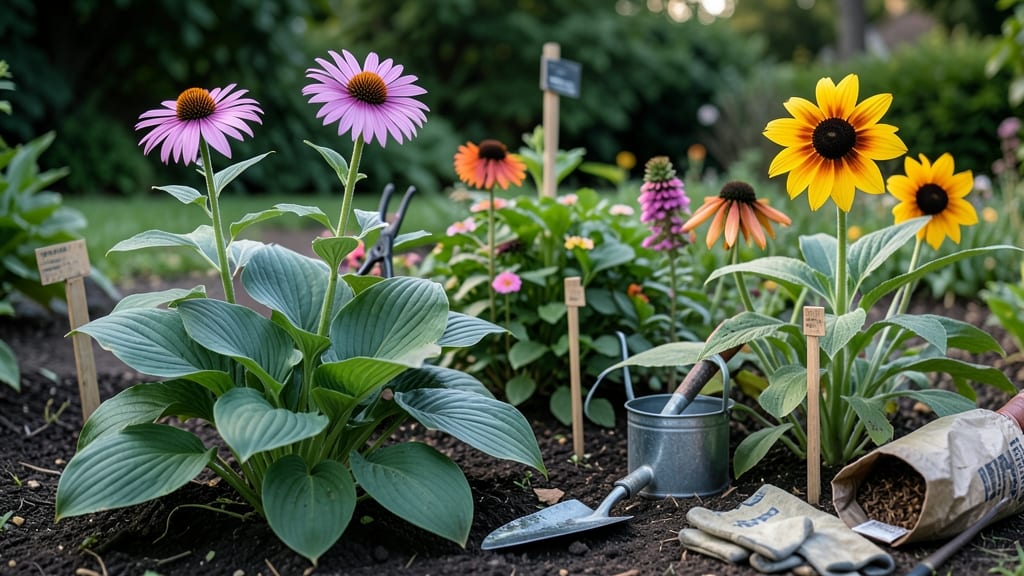
For perennial garden plants in Zone 5, focus on cold-hardy varieties like coneflowers, black-eyed Susans, and hostas that deliver seasonal color with minimal upkeep. Native species offer the best winter resilience and adaptability.
Zone 5's cold winters demand plants with built-in survival strategies, like deep root systems that access moisture below the frost line and antifreeze proteins that protect cell structures. 🌱 The key is selecting perennials that naturally thrive in your region's 10-20°F winters, such as Russian sage or catmint, which bloom reliably year after year without needing replanting.
These plants also develop thicker stems and waxy leaves that reduce water loss during freezing temperatures.
Beyond choosing the right species, proper soil preparation and mulching can extend their lifespan even further. A 3-inch layer of organic mulch acts like an insulating blanket, protecting roots from extreme temperature swings.
I've found that dividing established clumps every 3-4 years also rejuvenates growth and prevents overcrowding, which weakens plants during winter dormancy.
💡 In This Article
- Why Zone 5 Perennials Survive Harsh Winters
- Planting and Maintaining a Low-Maintenance Zone 5 Perennial Garden
Why Zone 5 perennials survive harsh winters
Zone 5 perennials have evolved remarkable survival strategies to endure winters with temperatures dropping to 10-20°F. Their secret weapon is a combination of deep root systems that extend 2-3 feet below the frost line, accessing moisture and nutrients even when the surface freezes.
For example, peony roots can grow up to 3 feet deep, while black-eyed Susans develop extensive lateral roots that create a natural insulation barrier. These roots also store carbohydrates during summer to fuel winter survival.
At the cellular level, many cold-hardy perennials produce antifreeze proteins that prevent ice crystals from forming inside plant tissues.
These proteins, similar to those in cold-water fish, lower the freezing point of cell fluids by 1-5°F. 🌱 Another adaptation is the production of waxy leaf coatings that reduce water loss through transpiration, which is crucial when soil moisture becomes locked in ice.
Plants like Russian sage and sedum develop these protective layers naturally, allowing them to remain dormant yet viable through months of freezing temperatures.
The soil itself plays a critical role in winter survival. Organic matter in the soil acts as a natural insulator, maintaining temperatures 5-10°F warmer just inches below the surface compared to bare ground.
This is why gardeners in Zone 5 swear by 3-4 inch mulch layers of straw or shredded leaves—it can make the difference between a plant surviving or succumbing to freeze-thaw cycles.
The mulch also prevents soil heaving, which occurs when water expands as it freezes and pushes plant roots upward, potentially damaging them.
Hardiness zones provide a useful framework for understanding cold tolerance, but they're not the whole story. For instance, a plant rated for Zone 5 might still struggle if planted in poorly drained soil or exposed to winter winds, which can desiccate tissues even at low temperatures.
That's why native species often outperform introduced ones—they've co-evolved with local conditions. For example, wild columbine thrives in Zone 5's rocky soils and partial shade, while non-native daylilies may require extra protection in harsh winters.
Seasonal care also impacts winter resilience. Proper fall pruning (cutting back dead foliage after first frost) prevents fungal growth that could weaken plants, while spring fertilization provides the energy needed for new growth.
I've noticed that perennials like coneflowers and bee balm rebound particularly well from winter when given a balanced 10-10-10 fertilizer in early spring, as this mimics the natural nutrient release from decomposing organic matter in their native habitats.
What most gardeners don't realize is that the timing of winter dormancy matters just as much as cold tolerance. Many Zone 5 perennials enter dormancy in late fall when day lengths shorten, which triggers physiological changes that make them more resistant to freezing.
This is why late-season planting can fail—young plants may not have time to establish these protective mechanisms before winter sets in.