
Flowers
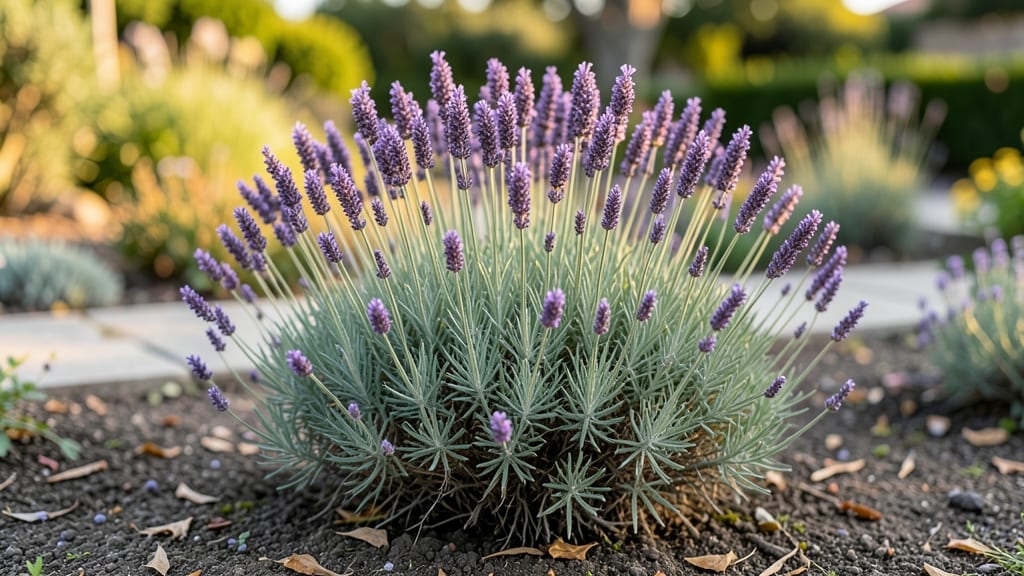
Spanish lavender is a perennial that dies back to the ground in winter but regrows from its woody base each spring, thriving for multiple years with proper care and cold-hardy conditions.
Spanish lavender earns its perennial status through its remarkable resilience—unlike annual varieties that complete their life cycle in one season, this plant survives by storing energy in its woody root crown during dormancy. 🌱 The key lies in its semi-evergreen nature: while foliage may brown and drop in winter, the roots remain alive below the soil, ready to burst back with new growth when temperatures rise.
This makes it far hardier than many gardeners realize, thriving even in zones as cold as 5-9 with minimal protection.
What sets Spanish lavender apart is its ability to self-propagate from these roots, creating dense clumps over time. Unlike true evergreens that stay lush year-round, its winter dieback actually protects the plant from cold damage by reducing surface area exposed to freezing temperatures.
This cycle of dormancy and regrowth is why experienced gardeners often choose it over annual lavender varieties—it delivers consistent beauty with far less replanting effort.
💡 In This Article
- How Spanish Lavender Survives Winter Dieback
- Caring for Spanish Lavender Through Seasons
How Spanish lavender survives winter dieback
Spanish lavender's survival strategy relies on its specialized woody root crown system, which stores carbohydrates and nutrients during dormancy. Unlike annual lavender that completes its life cycle in one season, Spanish lavender's roots remain active below the soil surface, even when above-ground growth appears dead.
This woody base can withstand temperatures down to -15°F (-26°C) in protected microclimates, though most varieties thrive in zones 5-9 with minimal winter protection.
The plant's semi-evergreen nature creates a protective adaptation: as temperatures drop, older leaves brown and drop, reducing the plant's surface area exposed to freezing winds. This natural pruning conserves energy while allowing the root system to remain insulated by soil.
What's fascinating is how the root crown actually increases in size each year, storing more energy for the next growing season—a process similar to how shrubs like boxwood survive winter.
Comparing Spanish lavender to annual varieties reveals key differences in their survival mechanisms. Annual lavender completes its entire life cycle in one season, producing flowers and seeds before dying entirely.
In contrast, Spanish lavender's perennial nature means it can live 10-15 years or more with proper care, as its roots continue growing and branching underground each year. This underground growth creates a network that's more resilient to environmental stresses than annual plants' single-season root systems.
The timing of this dieback is also strategic. Spanish lavender typically begins its dormancy when nighttime temperatures consistently drop below 45°F (7°C), signaling the plant to conserve resources. By late winter, when soil temperatures rise above 50°F (10°C), the root crown activates new growth from dormant buds.
This precise timing ensures the plant emerges just as conditions become favorable for photosynthesis.
What most gardeners don't realize is that this dieback cycle actually improves the plant's long-term health. The winter dormancy period allows the root system to rest and repair, while the spring regrowth often produces more vigorous shoots than previous years.
This renewal process is why Spanish lavender plants often appear more robust each subsequent season, unlike annuals that must be replanted yearly.
For visual evidence of this process, observe how Spanish lavender's stems turn woody and brown in winter while remaining upright.
When spring arrives, these same stems will sprout fresh green growth from their base—a clear sign of the plant's perennial nature at work. 🌿 This visible transformation demonstrates why Spanish lavender is such a reliable garden choice for those seeking low-maintenance, long-lived plants.