
Flowers
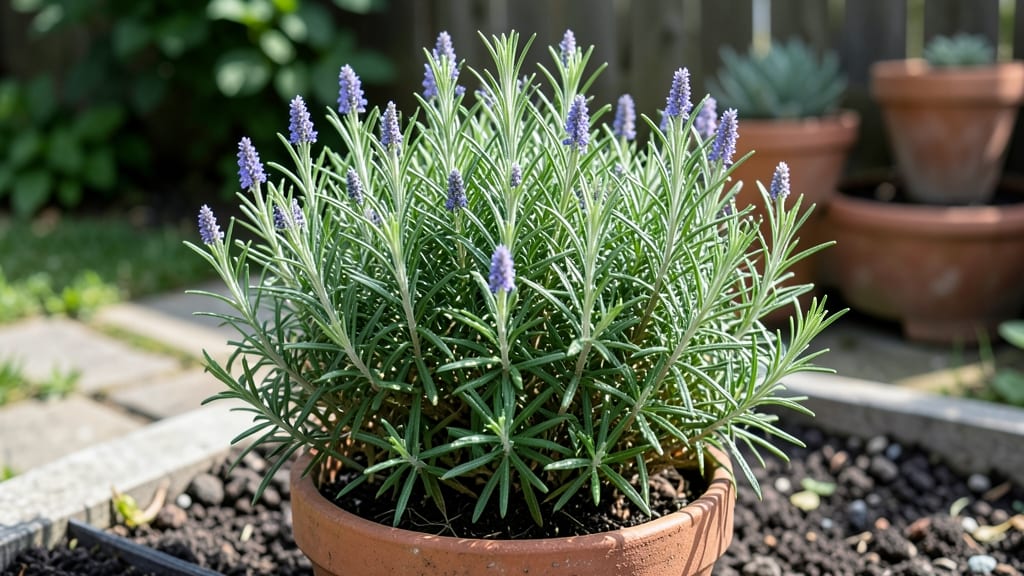
Rosemary herb acts as a perennial in frost-free zones but typically dies back above ground in colder winters, only to regrow from its resilient root crown when temperatures rise. This hardy behavior lets it survive multiple seasons through underground storage.
This survival strategy makes rosemary uniquely adaptable—its woody stems store energy while the roots remain dormant, ready to push new growth when spring arrives. 🌱 In regions like USDA zones 7-10, rosemary thrives year-round, but gardeners in colder areas often treat it as a half-hardy perennial, protecting it through winter with mulch or indoor overwintering.
The key to its persistence lies in those sturdy roots, which can regenerate even after severe frost damage.
What sets rosemary apart from true annuals is this ability to "reset" seasonally. Many herbs would perish in freezing temperatures, but rosemary's deep root system acts like a biological battery, storing nutrients until conditions improve.
This makes it one of the most resilient culinary herbs for gardeners who want flavor without constant replanting.
💡 In This Article
- Rosemary’s Perennial Survival in Different Climates
- Caring for Rosemary Through Winter Dieback
Rosemary’s perennial survival in different climates
Rosemary's perennial nature stems from its specialized woody stems and deep root system, which store carbohydrates and water like a natural reservoir. These stems, called caudex, can reach 1-2 inches thick and contain vascular tissues that transport nutrients between roots and shoots.
In USDA zones 7-10, where winters rarely drop below 10°F, rosemary grows continuously, with new shoots emerging from the base throughout the year. The roots extend 2-3 feet deep, anchoring the plant and accessing moisture during drought.
The magic happens in colder climates (zones 5-6) where temperatures plummet below 0°F. Here, rosemary enters dormancy—a survival strategy where above-ground growth dies back to conserve energy, while the root crown (the thickened base near soil level) remains alive.
This dormant state resembles a hibernating animal: the plant's metabolic rate slows dramatically, with roots continuing minimal activity to maintain viability. Studies show that rosemary roots can survive -20°F for short periods, though prolonged exposure damages them. 🌡️
What distinguishes rosemary from true annuals is its ability to regenerate from these woody stems. Even if the top growth blackens and appears dead, the root crown contains dormant buds that swell with spring warmth.
This regrowth typically begins when soil temperatures reach 50°F, with new shoots emerging within 2-4 weeks. The plant's resilience comes from its Mediterranean origins, where it evolved to thrive in hot, dry summers and mild winters—conditions that mimic zone 7-10 climates.
Gardeners in colder regions often observe that rosemary's dieback cycle creates a false impression of annual behavior. The plant may appear dead for months, but its root system remains active underground, ready to burst forth when conditions improve.
This dual nature—perennial in warmth, dormant in cold—explains why rosemary is classified as a half-hardy perennial. Unlike true perennials that survive winter with minimal protection, rosemary requires gardeners to provide insulation (mulch) or indoor overwintering to ensure its root crown survives until spring.
Consider this comparison: In zone 9 (Los Angeles), rosemary grows year-round with minimal care, while in zone 5 (Chicago), it requires winter protection to return annually. The key difference lies in the plant's ability to store 30-50% more carbohydrates in its woody stems than annual herbs, fueling regrowth after dormancy.
This biological adaptation makes rosemary one of the most persistent herbs in gardens worldwide. 🌿
The plant's survival strategy extends beyond temperature tolerance. Rosemary's leaves contain essential oils that act as natural antifreeze, lowering the freezing point of water within plant cells. This chemical adaptation, combined with its deep root system, allows it to endure conditions that would kill most herbs.
For gardeners, this means rosemary can be treated as a perennial in most climates with proper winter care—proving that its "dieback" is merely a seasonal reset rather than true annual behavior.