
Aphids
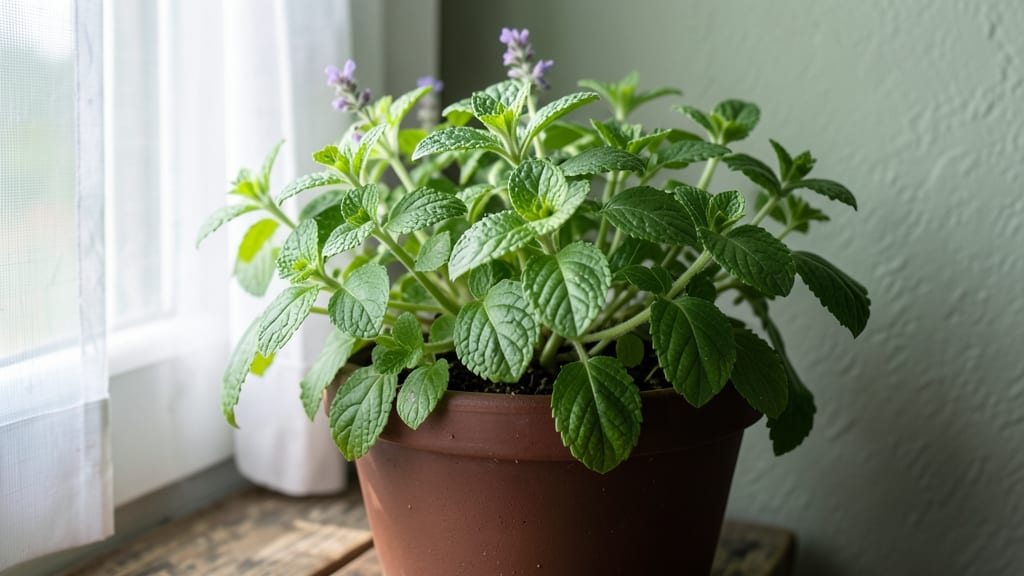
Yes, mint is a perennial plant that thrives year after year thanks to its extensive underground rhizome network, which stores nutrients and regenerates shoots even after harsh winters or heavy pruning.
Mint's perennial nature comes from its rhizome system, which acts like a built-in survival mechanism. These horizontal roots spread underground, storing energy and water to fuel regrowth each spring.
Unlike annuals that complete their life cycle in one season, mint's roots stay alive through frost and drought, sending up fresh leaves when conditions improve. 🌱 This hardiness explains why mint often returns stronger after winter—sometimes even in spots where you thought you'd removed it completely!
What makes this especially interesting is how mint adapts to different climates. While some varieties thrive in USDA zones 3-9, others may need winter protection in colder regions.
The key to managing mint as a perennial is understanding its growth habits—whether you're growing it in containers to control spread or in garden beds where you'll need to contain its aggressive nature.
💡 In This Article
- How Mint’s Rhizome System Makes It a Hardy Perennial
- Managing Mint as a Perennial in Gardens and Landscapes
How mint’s rhizome system makes it a hardy perennial
Mint’s perennial nature stems from its rhizome system, a network of horizontal, underground stems that act like nature’s survival storage unit. These specialized roots store carbohydrates (like starches) and water, allowing mint to photosynthesize even when above-ground growth dies back in winter.
Unlike annuals that complete their life cycle in one season, mint’s rhizomes remain dormant but alive—ready to regenerate when temperatures rise. For example, spearmint and peppermint rhizomes can survive sub-zero temperatures in USDA zones 3-9, thanks to their ability to enter a state of metabolic slowdown.
The science behind this resilience lies in the rhizomes’ apical meristems—growth points that remain protected deep underground. When spring arrives, these meristems receive signals from increasing daylight and warmth, triggering the production of new shoots.
This process contrasts sharply with annual plants like basil, which die entirely after producing seeds, or biennials like carrots, which take two years to complete their life cycle.
Mint’s rhizomes can also regenerate from fragments, meaning even a small piece left in the soil can sprout into a full plant—explaining why mint often "comes back" stronger after being cut back or frozen.
What’s fascinating is how mint’s rhizomes adapt to environmental stress. During drought, they redirect water from older leaves to preserve younger growth, while in cold climates, they produce antifreeze-like compounds (like proline amino acids) to protect cell structures.
This hardiness isn’t just theoretical—gardeners in Zone 4 have reported mint surviving winters with only mulch protection, while tropical varieties in Zone 10 may need shade during summer heat to prevent rhizome overheating. The result?
Mint’s underground system acts like a self-sustaining battery, ensuring it outlasts most other herbs.
For comparison, consider how true annuals like cilantro or marigolds rely entirely on seeds for regeneration. Mint’s rhizomes, however, combine the persistence of perennials with the aggressive regrowth of weeds—hence why it’s often called "the garden’s most determined plant."
This dual nature makes mint both a gardener’s delight (for its hardiness) and a challenge (for its spread). The key to harnessing this system is understanding how to direct its energy—whether by containing it in pots or pruning strategically to encourage bushier, less invasive growth.
One often-overlooked detail is how mint’s rhizomes compete with neighboring plants. They secrete allelopathic chemicals that suppress weeds, but they also steal nutrients from nearby crops if unchecked.
This is why mint thrives in poor soil—its rhizomes are so efficient at nutrient absorption that they can outcompete less resilient plants.
For instance, a single mint plant can spread 3-5 feet in a season if left unmanaged, forming a dense mat of roots that’s nearly impossible to eradicate without manual removal.
To put this into perspective, imagine planting mint in a 1-gallon container. Even there, its rhizomes will fill the pot within 2-3 months, forcing you to divide or prune it aggressively. This isn’t just about aesthetics—it’s about resource allocation.
Mint’s perennial survival strategy is so effective that it prioritizes root expansion over flower production (though it does bloom in late summer). The trade-off? You get lush, aromatic foliage year-round, but at the cost of potential garden dominance. 🌿