
Flowers
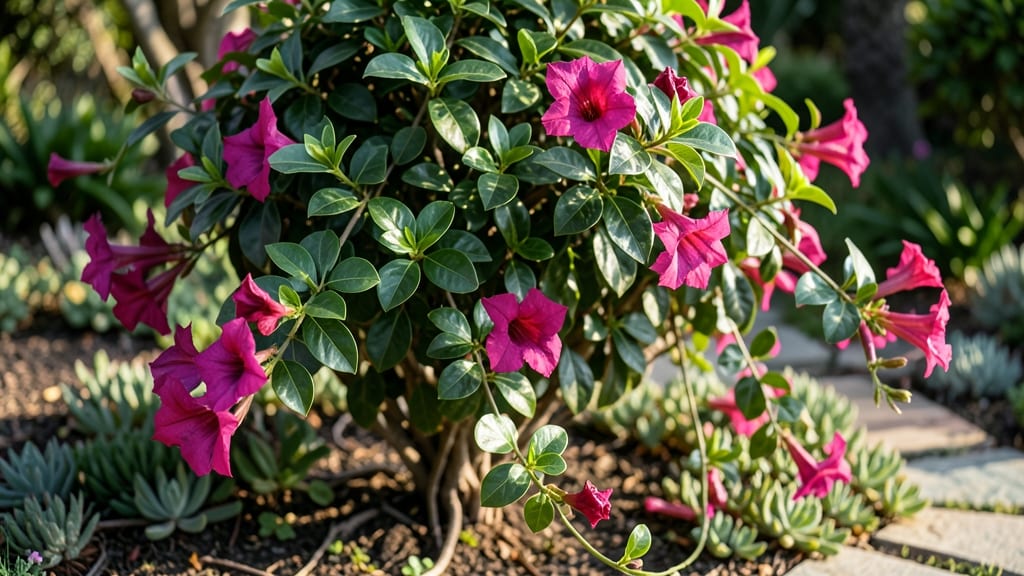
Mandevilla isn't a true perennial in cold climates because its tropical roots freeze and die back during frost, forcing gardeners to replant annually or provide winter protection. Only in USDA Zones 9-11 can it grow year-round with consistent care, while colder regions must treat it as a seasonal plant or overwinter it indoors.
This tropical beauty's cold sensitivity comes from its origins in South America, where temperatures rarely drop below 40°F. 🌱 The plant's roots simply can't tolerate frost, which is why even a light freeze will kill them back to the ground.
In colder zones, gardeners often dig up the roots in fall, trim the foliage, and store them in a cool, dry place until spring. The good news? With proper overwintering, you can enjoy Mandevilla's stunning blooms year after year, even in less forgiving climates.
What sets Mandevilla apart from true perennials is its growth habit—it produces new shoots from the roots each spring, but only if those roots survive. This makes it more like a semi-perennial that relies on human intervention to persist through winter.
The key is understanding your local frost dates and acting before the first freeze hits.
💡 In This Article
- How Mandevilla Survives Winter in Different Climates
- Protecting Mandevilla Over Winter: Step-by-Step Methods
How Mandevilla survives winter in different climates
Mandevilla's survival hinges on its tropical origins—native to Brazil, Argentina, and Peru, where temperatures rarely dip below 40°F. The plant's roots contain minimal cold-hardening compounds, making them vulnerable to frost damage. When temperatures drop to 28°F or lower, the cell membranes in the roots rupture, causing irreversible damage.
Unlike hardy perennials that enter dormancy, Mandevilla's roots simply freeze solid, turning black and mushy within hours. 🌡️
The USDA hardiness zones where Mandevilla thrives year-round (Zones 9-11) rarely experience frost, allowing the roots to remain active. In these climates, the plant behaves like a true perennial, producing new growth from the same root system each spring.
However, in colder regions, even a light freeze can kill the roots entirely, forcing gardeners to replant from cuttings or tubers. The key difference is that Mandevilla's roots don't store enough energy reserves to survive winter like bulbs or rhizomes do.
What most gardeners don't realize is that Mandevilla's foliage can often survive brief cold snaps—it's the roots that fail first. The plant may look healthy above ground even while its roots are dying underground. This disconnect is why many gardeners mistakenly believe Mandevilla is hardier than it actually is.
In reality, the roots begin to fail at temperatures as high as 32°F, while the leaves might still appear vibrant. 🍃
For regions on the fringe of Mandevilla's hardiness (like Zone 8b), the plant can sometimes survive mild winters if protected. The roots may endure brief periods of 20°F temperatures if they're well-mulched and the ground isn't frozen solid.
However, any prolonged exposure to freezing conditions will kill the roots completely. This is why overwintering strategies focus on either protecting the roots in place or digging them up entirely before frost arrives.
Botanically, Mandevilla belongs to the Apocynaceae family, which includes other frost-sensitive plants like oleander and frangipani. These plants have evolved in warm climates where temperature fluctuations are minimal, leaving them without the cold-resistant adaptations found in temperate perennials.
The lack of antifreeze proteins in their cells makes them particularly vulnerable to ice crystal formation during freezes. This biological limitation is what truly defines Mandevilla as a non-perennial in cold climates. ❄️
Understanding this biological reality helps explain why some gardeners in marginal zones report limited success with Mandevilla. Even with protective measures, the roots often fail to regenerate properly in spring, requiring complete replacement of the plant.
The key to long-term success lies in either accepting Mandevilla as an annual or investing in proper overwintering techniques that mimic its native tropical conditions.