
Planting
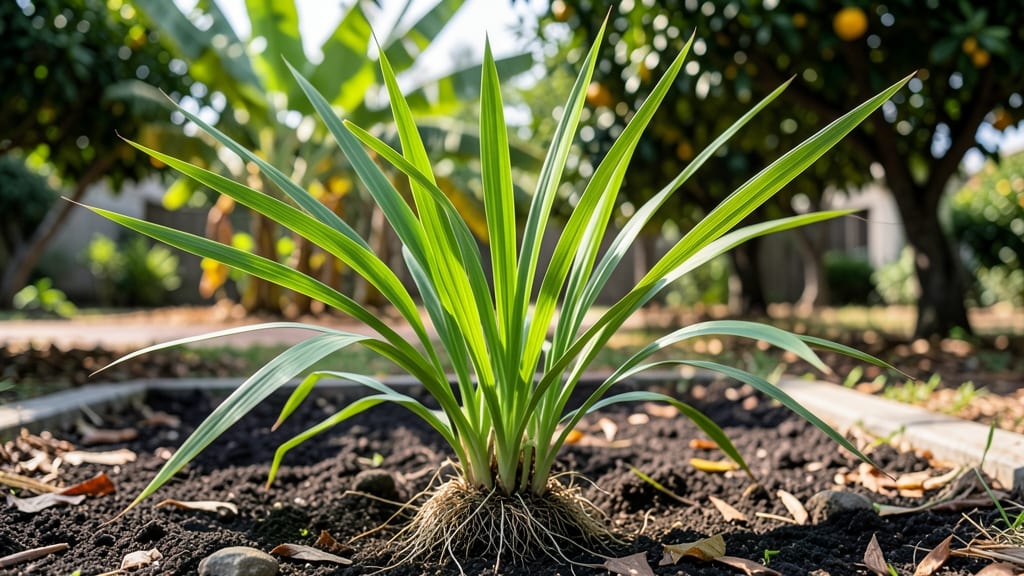
The lemongrass plant is a perennial in warm climates (USDA zones 9-12) but grows as an annual in colder regions (below 20°F), where frost kills the above-ground growth, though its rhizomes often survive to regrow when temperatures rise. Some hardier varieties can persist through mild winters with proper protection.
This distinction comes down to temperature thresholds that trigger dormancy or death.
In frost-free zones, lemongrass thrives year-round, sending up new shoots from its underground rhizomes. Below 20°F, however, the plant's above-ground stems die back completely, but the roots often remain viable. Hardy varieties can sometimes survive even colder snaps if protected with mulch or moved indoors.
The key difference is whether your winter dips below 20°F—if they do, you'll need to treat it as an annual or take special winterizing steps.
The plant's ability to regrow from rhizomes is what makes it so adaptable. When spring arrives and temperatures stabilize above 50°F, new growth emerges from the surviving roots, often within weeks.
This resilience is why many gardeners in marginal zones grow lemongrass in containers that can be moved indoors during winter. The rhizome system acts like a natural insurance policy against cold snaps, allowing the plant to "reset" each growing season when conditions improve.
💡 In This Article
- Lemongrass Plant Lifespan by USDA Hardiness Zones
- Winterizing Lemongrass in Cold Climates: Practical Survival Tips
Lemongrass plant lifespan by USDA hardiness zones
The lemongrass plant's perennial nature hinges entirely on temperature exposure. In USDA zones 9-12, where winters rarely drop below 30°F, lemongrass thrives continuously, growing year-round from its extensive rhizome network. These underground stems store carbohydrates and nutrients, allowing new shoots to emerge whenever conditions are favorable.
The plant's natural dormancy in these regions is minimal—growth slows during cooler months but never completely stops.
When temperatures plummet below 20°F, however, the story changes dramatically. This critical threshold triggers cellular damage in lemongrass stems, causing them to blacken and die back to the ground.
The key difference lies in the rhizome system: while the above-ground growth perishes, these underground stems often remain viable if protected.
In zone 8 (10-20°F winters), rhizomes may survive with heavy mulching, while zones 7 and below (below 0°F) typically require container growing or indoor overwintering to prevent complete death.
What makes this transition fascinating is the plant's regrowth mechanism. When spring arrives and soil temperatures reach 55-60°F, surviving rhizomes begin producing new shoots within 2-4 weeks.
This rapid recovery explains why lemongrass can appear "perennial" in marginal zones—it's not the same plant persisting through winter, but rather a new growth cycle emerging from dormant roots. The rhizomes act like biological seed banks, storing genetic material to restart the plant when conditions improve.
Scientifically, this behavior relates to lemongrass's tropical origins. The plant evolved in regions where temperatures rarely drop below 50°F, making its cold tolerance a secondary adaptation. When exposed to frost, its cells undergo a form of programmed death in the stems while the rhizomes enter a protected state.
This dual-system survival strategy is why you'll often see lemongrass described as "semi-hardy"—it can persist through mild winters but requires active protection in colder climates.
Consider this comparison: In Miami (zone 10b), lemongrass grows continuously with minimal care, while in Chicago (zone 5b), it must be treated as an annual unless you take specific winterizing measures.
The difference isn't just about temperature—it's about how long the plant remains exposed to freezing conditions. Even a single night below 20°F can be fatal to above-ground growth in colder zones.
Here's what happens at the cellular level: Frost causes ice crystals to form in lemongrass stems, rupturing cell walls and disrupting water transport. The rhizomes, however, contain higher concentrations of protective sugars and antioxidants that prevent this damage.
This biological insulation is why you can often find lemongrass regrowing from what appeared to be dead plants in spring—those rhizomes were quietly waiting for warmer conditions to restart growth.
The takeaway is clear: Lemongrass's perennial status depends entirely on your local climate. In frost-free regions, it behaves like a true perennial, while in colder zones, it becomes an annual unless you implement specific survival strategies.
Understanding this threshold helps gardeners decide whether to grow lemongrass in-ground, in containers, or as a seasonal plant.