
Aphids
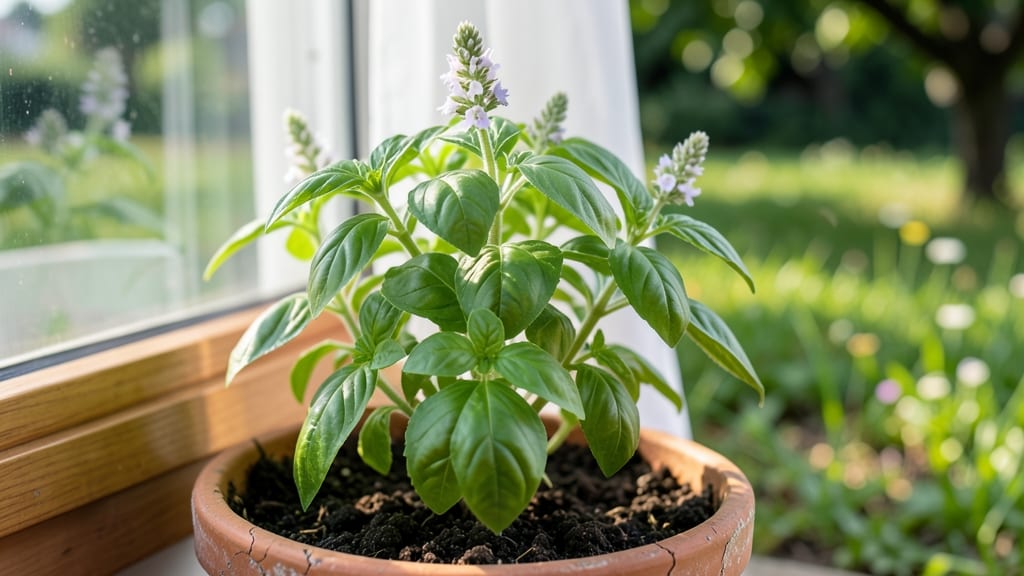
Basil is not a true perennial in most climates, as it dies back when temperatures drop below 40°F, though some tropical varieties may survive in USDA zones 10-12 with winter care. Its hardiness depends on frost tolerance and seasonal conditions.
Basil's sensitivity to cold stems from its tropical origins, where it thrives in warm, humid conditions. 🌱 Unlike hardy perennials like rosemary or thyme, basil lacks the cellular adaptations to withstand freezing temperatures, causing irreversible damage to its leaves and stems when exposed to frost.
This dieback isn't a flaw—it's a natural survival mechanism that conserves energy until warmer weather returns. In colder regions, gardeners often treat basil as an annual, replanting fresh seeds each spring to enjoy its signature flavor.
What makes this interesting is how different basil varieties respond to winter. For example, Genovese basil—a popular culinary type—struggles in zones below 9, while Thai basil or holy basil might endure slightly cooler temperatures due to their genetic adaptations.
Understanding these nuances helps gardeners choose the right varieties for their climate or implement protective strategies like container growing or indoor overwintering.
💡 In This Article
- Why Basil Dies in Cold Weather: The Science of Freeze Sensitivity
- How to Overwinter Basil in Cold Climates: Step-by-Step Survival Tips
Why basil dies in cold weather: the science of freeze sensitivity
Basil's tropical heritage means its cells lack the protective mechanisms found in hardy perennials. When temperatures dip below 40°F, ice crystals form in basil's leaf tissues, rupturing cell walls and disrupting water transport.
This is different from frost-resistant plants like rosemary, which produce antifreeze proteins that prevent ice formation. Basil's thin, tender leaves simply can't withstand the cellular damage caused by even light frosts.
The critical threshold isn't just about freezing (32°F), but about prolonged exposure to 40°F or below. At these temperatures, basil's metabolic processes slow dramatically, and chlorophyll begins breaking down.
What's fascinating is how this varies by variety—Genovese basil, for instance, shows visible damage after just 24 hours at 38°F, while Thai basil might survive 48 hours at 35°F due to slightly thicker leaf structures.
This biological sensitivity explains why basil is classified as a half-hardy annual in most climates.
Comparing basil to true perennials like oregano reveals the stark difference in cold tolerance. Oregano's leaves contain high levels of rosmarinic acid, which acts as a natural antioxidant protecting cells during cold snaps. Basil, however, has evolved in consistently warm environments where such protections aren't needed.
The result? Basil's growth stops completely below 50°F, and any exposure to frost triggers irreversible dieback within 3-5 days, regardless of variety.
What most gardeners don't realize is how soil temperature factors into this equation. Even if air temperatures hover around 45°F, soil temperatures can drop to 35°F or lower at night, accelerating root damage.
Basil's shallow root system (typically 12-18 inches deep) is particularly vulnerable to cold soil, which is why container-grown basil often survives longer—its roots stay slightly warmer than in-ground plants. This soil temperature sensitivity is why overwintering strategies focus on insulating both roots and foliage.
Interestingly, basil's response to cold isn't just about survival—it's also about energy conservation. When temperatures drop, basil plants redirect resources from leaf production to root development, a strategy that would benefit true perennials but becomes a losing battle for basil in freezing climates.
The plant's entire above-ground structure essentially "shuts down" as a last resort, with leaves turning yellow and stems becoming woody—a clear sign it's preparing for death rather than dormancy.
The good news? This biological sensitivity isn't a flaw—it's an adaptation to basil's natural tropical habitat. In regions like Florida or Hawaii (USDA zones 10-12), basil can grow as a true perennial because these areas rarely experience temperatures below 40°F.
Even there, however, basil may still die back during rare cold snaps, proving that while some varieties have better cold tolerance, none are truly frost-hardy like temperate perennials.