
Flowers
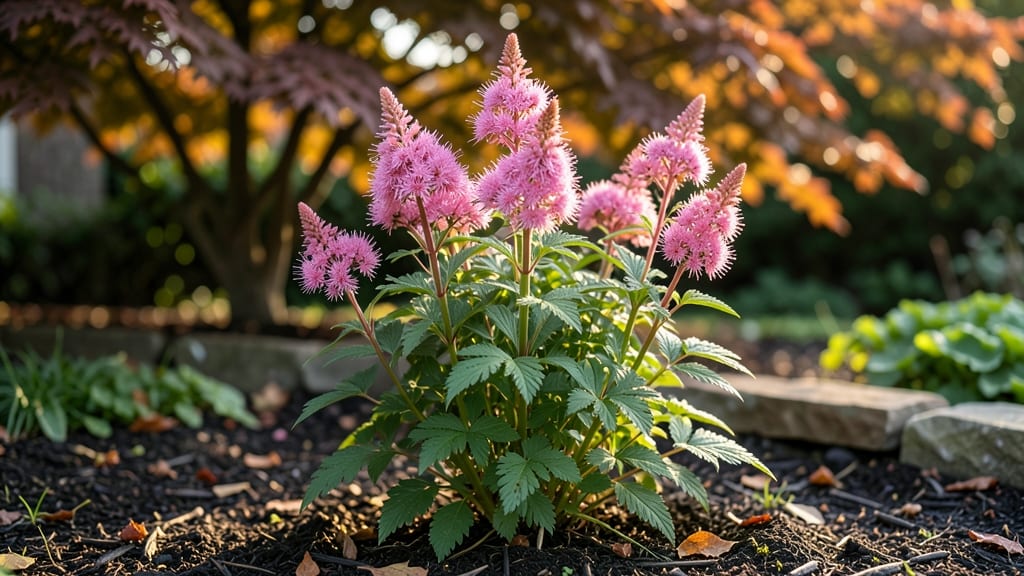
Astilbe is a perennial plant that dies back to the ground each winter, then emerges from its hardy root system in spring, proving its long-term survival in seasonal climates.
This dieback cycle is what truly defines astilbe as a perennial rather than an annual. 🌱 Unlike annuals that complete their entire life cycle in one season, astilbe stores energy underground during winter, allowing it to rebound with fresh foliage every spring.
The plant's thick, fibrous roots act like a natural battery, ensuring it can withstand freezing temperatures while preparing for the next growing season.
Many gardeners appreciate astilbe for its ability to return year after year with minimal effort, though proper winter care—like mulching and protecting from harsh winds—helps maximize its resilience. The key is understanding that what looks like death in winter is actually just a temporary dormancy phase.
💡 In This Article
- How Astilbe’s Winter Dieback Proves Its Perennial Nature
- Caring for Astilbe Through Its Perennial Growth Cycle
How astilbe’s winter dieback proves its perennial nature
Astilbe’s survival strategy relies on its specialized underground structure called a rhizome, a thick, fleshy root system that stores carbohydrates and nutrients like a natural energy reserve.
During autumn, as temperatures drop below 50°F, the plant’s above-ground foliage begins to yellow and wither—a process called senescence—while the rhizome remains dormant but alive beneath the soil. This contrasts sharply with annuals, which complete their entire life cycle in one season and produce seeds before dying entirely.
The rhizome’s ability to endure freezing temperatures (down to -20°F in many cultivars) comes from its high concentration of antifreeze proteins and stored sugars, which act like a biological antifreeze.
For example, the popular ‘Fanal’ variety develops a dense, woody rhizome that can survive harsh winters when mulched properly, while its delicate feathery plumes regrow from the same root system each spring. This regenerative capacity is the defining trait of perennials.
What makes astilbe’s cycle particularly fascinating is how it balances energy conservation with rapid regrowth. Studies show that astilbe rhizomes can store enough energy to produce new shoots within just 2-4 weeks after soil temperatures reach 55°F in spring.
The plant’s ability to "reset" annually while maintaining genetic consistency through its rhizomes is what distinguishes it from biennials (which live two years) or annuals (which live one).
Visually, you can observe this process firsthand: after winter’s dormancy, the first signs of life appear as small, tight buds on the rhizome, which then unfurl into the iconic feathery plumes.
This rebirth isn’t just about aesthetics—it’s a biological adaptation that allows astilbe to thrive in seasonal climates where other plants might struggle. The plant’s ability to "come back stronger" each year is why it’s a gardener’s favorite for long-term color.
Interestingly, astilbe’s dieback also serves as a natural pruning mechanism. The dead foliage insulates the rhizome during winter, while the regrowth in spring is often more vigorous than the previous year’s growth.
This cycle of death and rebirth isn’t just survival—it’s a deliberate part of the plant’s life strategy, ensuring it outlasts annuals and even many short-lived perennials in the garden.
For those curious about the science, astilbe’s dormancy is regulated by photoperiodism—the plant’s internal clock responds to decreasing daylight in autumn, triggering the storage of nutrients and the shutdown of above-ground growth. This biological timing ensures the rhizome remains protected until conditions are ideal for regrowth. 🌱