
Flowers
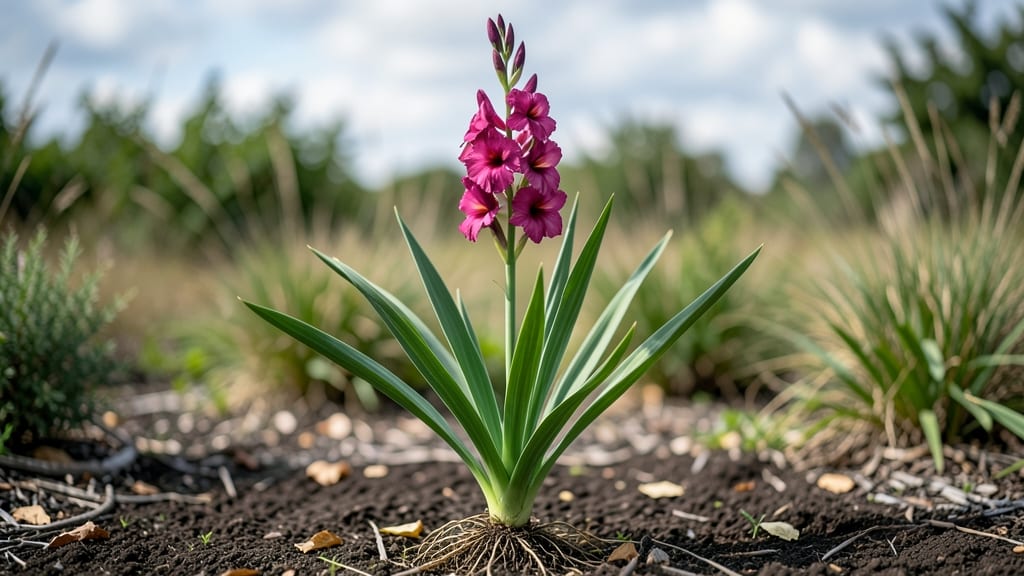
Gladioli are perennial plants in warm climates but are often grown as annuals in colder regions because their corms struggle with frost, requiring winter protection or replanting each spring to ensure survival.
Gladioli's true nature as perennials reveals itself in frost-free zones, where their underground corms store energy year-round to produce dramatic summer blooms annually. 🌱 In colder climates, gardeners treat them as annuals because the corms often freeze without protection, forcing replanting each spring.
The key difference lies in their hardiness—while they thrive in USDA zones 7-11, northern gardeners must either dig up corms for winter storage or use heavy mulch to shield them from freezing temperatures.
This dual nature explains why gladioli appear to "die back" in winter—they're actually entering dormancy, with their energy reserves tucked safely underground until warmer weather returns.
The challenge lies in maintaining those reserves through harsh winters, which is why many gardeners in marginal zones opt for the annual approach despite the extra work.
💡 In This Article
- Gladiolus Lifespan: Why They Die Back in Winter
- Extending Gladiolus Growth: Cold Hardiness Zones and Care Tips
Gladiolus lifespan: why they die back in winter
Gladioli rely on corms—thick, underground storage organs—to survive winter dormancy. These corms act like nature's battery, storing starches and nutrients that fuel regrowth when temperatures rise.
Unlike true annuals that complete their life cycle in one season, gladioli's corms remain viable for years in ideal conditions, producing new shoots each spring from the same root system. 🌱 The key difference is that while the above-ground foliage dies back in winter, the corm itself remains alive, waiting for warmth to trigger regrowth.
Here's what happens when frost arrives: temperatures below 20°F (-6°C) cause cellular damage to the corm's outer layers, disrupting nutrient storage. The corm's natural antifreeze compounds (like sugars and proteins) only provide limited protection—think of it like a car battery losing charge in extreme cold.
In zones 8-11, this process is temporary; the corm's reserves remain intact until spring. But in colder regions, repeated freeze-thaw cycles can exhaust these reserves faster than they can replenish.
What makes this adaptation fascinating is the corm's layered structure. The outer scales protect inner growth points while allowing gradual nutrient transfer during dormancy. This is why you'll often see multiple corm layers forming over years—each new layer represents a season's growth.
The trade-off? This storage system requires consistent warmth to function properly, which is why gladioli struggle in climates with prolonged freezing.
Visualize this process: in late summer, the corm begins converting leaf sugars into starches through photosynthesis. By fall, it's essentially "banking" these reserves for winter. When spring arrives, the corm's apical meristem (growth center) activates, sending up new shoots while the old corm shrinks as nutrients are used.
This cycle explains why gardeners in warm zones can plant once and enjoy years of blooms—each corm becomes more robust with proper care.
The confusion about annual vs. perennial growth stems from how gardeners respond to winter conditions. In frost-free zones, the plant behaves as a true perennial. But in colder areas, the lack of winter protection forces gardeners to treat it as an annual, even though the plant's biological nature remains perennial.
This duality is why you'll see gladioli thriving for years in Mediterranean climates but needing annual replanting in New England.
Consider this comparison: a gladiolus corm in zone 10 might live 5+ years with minimal care, while one in zone 6 may only survive one winter without protection. The difference isn't in the plant's biology but in how we interact with its natural dormancy cycle.
This is why overwintering strategies become so critical for gardeners in marginal zones.