
Plants
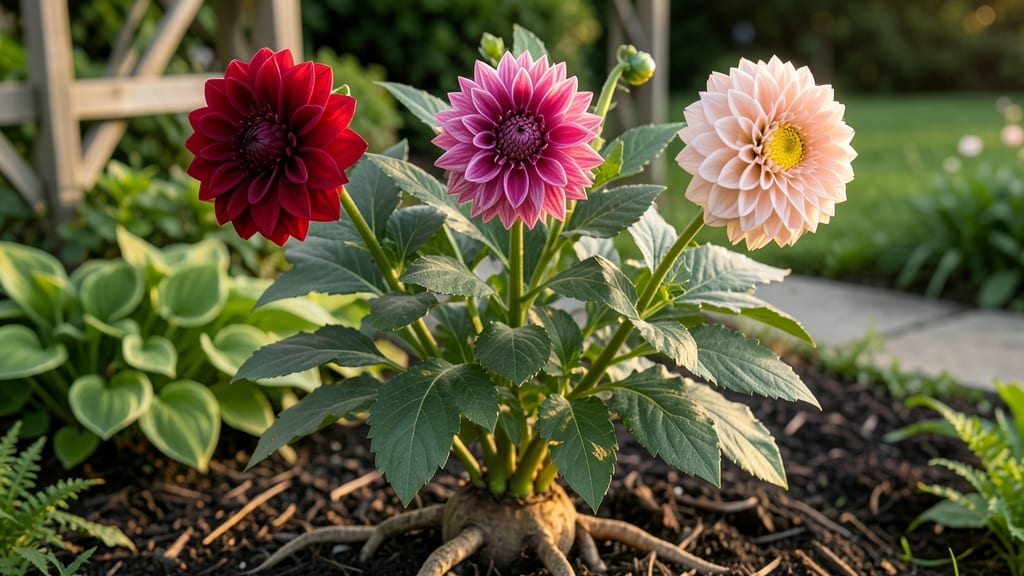
Dahlias are perennials in warm climates but typically treated as annuals in cold regions, requiring tuber storage over winter to survive frost. Their hardiness varies by variety, with some thriving in USDA zones 7-10 without digging.
Whether dahlias survive winter depends entirely on your climate zone and the specific variety.
In warmer regions (USDA zones 8-10), these showy blooms naturally return each year, sending up fresh stems from their underground tubers. 🌱 However, in colder areas, most varieties need careful overwintering—digging up tubers, curing them, and storing them in a cool, dry place until spring.
The key difference lies in their tuber dormancy: while some hardy types like 'Café au Lait' can handle brief freezes, standard dahlias will perish if left in the ground during frost.
For gardeners in marginal zones (like zone 7), the decision often comes down to whether you're willing to put in the effort for storage. The payoff? A full season of dramatic blooms that would otherwise die back to the ground.
I've found that even in colder climates, with proper care, you can enjoy dahlias year after year—it just takes a little extra planning.
💡 In This Article
- Dahlia Hardiness Zones and Cold Tolerance Explained
- Step-by-Step Dahlia Tuber Overwintering Guide
Dahlia hardiness zones and cold tolerance explained
The USDA Plant Hardiness Zone Map divides North America into 13 zones based on average annual minimum temperatures, and this is your first clue about dahlia survival. Most dahlia varieties thrive in zones 8-10, where winter temperatures rarely drop below 10°F (-12°C).
In these regions, dahlias behave as true perennials, with their tubers naturally overwintering underground and sprouting fresh growth each spring. The tuber itself is the key—it stores energy and remains dormant until soil temperatures rise above 50°F (10°C), typically in late spring. 🌱
For gardeners in zones 7 and below, the challenge comes from prolonged freezing. Standard dahlia tubers begin to suffer damage when exposed to temperatures below 20°F (-6°C) for more than a few hours.
The damage isn't just surface-level—it starts with cell rupture in the tuber's vascular system, leading to rot if moisture is present. However, there are exceptions: varieties like 'Café au Lait' and 'Bishop' have shown remarkable hardiness, surviving brief exposures to 0°F (-18°C) when properly mulched.
These varieties achieve this through a natural antifreeze protein that prevents ice crystal formation in their cells.
What most gardeners don't realize is how soil insulation plays a role. A thick layer of organic mulch (like straw or leaves) can create a 5-10°F (3-6°C) buffer zone around the tuber, potentially extending survival in marginal zones.
I've seen dahlias in zone 7 survive winters with 4-6 inches (10-15 cm) of mulch, though the plants often produce smaller blooms the following season. The trade-off is between risk and reward—would you rather dig and store, or take a chance on natural insulation? 💫
Another critical factor is the tuber's moisture content. When stored at 35-45°F (2-7°C) with 50-60% humidity, tubers remain dormant and resistant to freezing. Too much moisture causes rot, while too little leads to desiccation.
This balance explains why many gardeners fail with overwintering—it's not just about temperature, but creating the right microclimate for tuber dormancy. The goal is to mimic the natural conditions these plants would experience in their native highland environments of Mexico and Central America.
Let's talk about the science behind tuber dormancy. Dahlias enter dormancy as daylight hours shorten in fall, triggering hormonal changes that cause the plant to redirect energy to the tuber. This process creates a natural antifreeze compound (similar to what we see in hardy varieties) that protects cellular structures.
However, this protection has limits—prolonged exposure to -5°F (-21°C) or colder will eventually overwhelm even the hardiest tubers. This is why zone 7 gardeners often see mixed results: some tubers survive, others don't, depending on how severe the winter was.
For those pushing the limits in zone 6 and below, consider these hardy alternatives: 'Karma Choc' (zone 6 tolerant), 'Thomas Edison' (zone 6 with mulch), and 'Café au Lait' (zone 5 with protection).
These varieties have been selectively bred to extend their cold tolerance through thicker tuber skins and more efficient energy storage. The lesson here? Not all dahlias are created equal—your choice of variety can mean the difference between annual disappointment and perennial success. 🌟