
Orchid Care
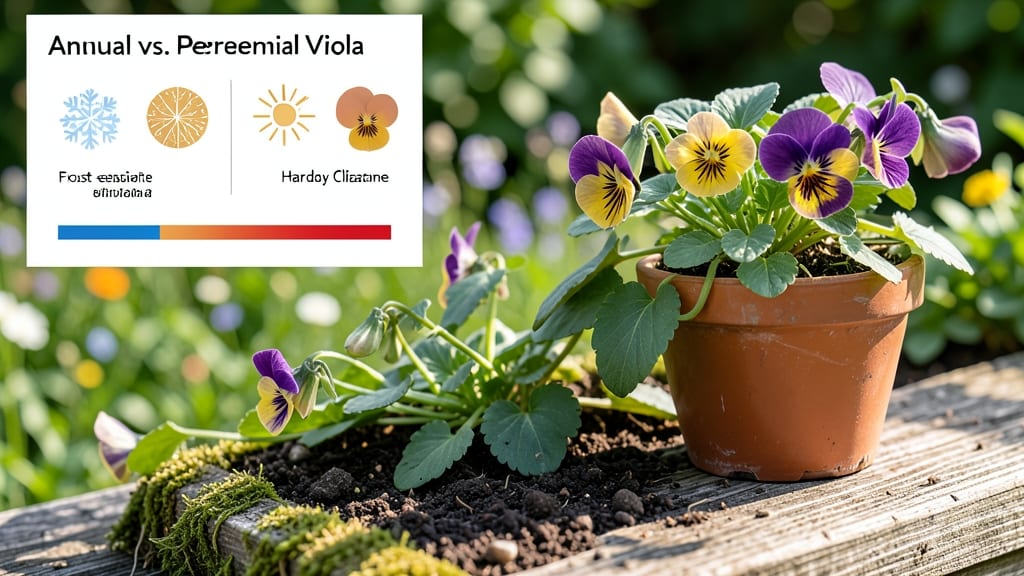
Violas are perennials in mild climates but often treated as annuals in cold regions, as they typically die back with hard freezes though they may regrow from roots if protected or replanted the following spring. Their hardiness varies by variety and winter conditions.
Violas are perennials in warmer climates because their roots survive winter, allowing them to return year after year. 🌱 However, in colder regions, their above-ground growth often freezes back to the ground, making them behave like annuals.
This dual nature depends on your local climate zone and how well you protect them during winter months. Some gardeners even extend their blooming season by using mulch or containers that can be moved indoors during harsh freezes.
What sets violas apart is their adaptability—certain varieties like Viola cornuta or Viola tricolor are hardier and better suited for cooler climates.
If you live in zone 4 or below, choosing these cold-tolerant types and providing winter protection (like thick mulch or row covers) can help them persist through the season.
The key difference between treating violas as perennials or annuals comes down to winter care. In mild winters, they'll naturally regrow from their roots, while in severe cold, they may need replanting each spring. This flexibility makes them one of the most versatile flowers for gardeners in transitional climates.
💡 In This Article
- Viola Hardiness Zones and Cold Climate Survival
- Extending Viola Blooms in Cold Seasons: Practical Tips
Viola hardiness zones and cold climate survival
Violas thrive as perennials in USDA hardiness zones 4-9, meaning they can survive winter temperatures as low as -30°F to +30°F (-34°C to +1°C) depending on the variety. The secret lies in their root systems, which store energy and remain dormant during frost.
Unlike tender annuals, viola roots can endure freezing ground temperatures down to 10°F (-12°C) for short periods, though prolonged exposure below 0°F (-18°C) may cause damage. 🌱 This root resilience explains why violas return in spring when grown in protected microclimates or sheltered garden beds.
The classification shift from perennial to annual behavior occurs when winter conditions exceed a viola’s hardiness limits. For example, Viola cornuta (horned violet) handles zone 5 winters better than Viola tricolor (heartsease), which may die back completely in zone 4 without protection.
The critical factor is whether roots survive: if they do, the plant is perennial; if they freeze, it behaves as an annual. Gardeners in zone 3 or colder typically replant violas each spring because the ground rarely thaws enough for root recovery.
What makes violas unique is their ability to regenerate from crowns (the base where stems meet roots) even after top growth dies. This is why you’ll often see violas "coming back" in spring—what appears dead is actually a dormant root system waiting for warmer soil.
The process begins when soil temperatures rise above 40°F (4°C), signaling roots to push new shoots. In contrast, true annuals like marigolds have no persistent structures to regrow from.
Cold tolerance varies dramatically between species. Viola odorata (sweet violet) can survive zone 4 winters with mulch, while Viola × wittrockiana hybrids often need winter protection in zone 5.
The key difference lies in their native habitats: woodland violas evolved in temperate forests with seasonal dieback, while garden hybrids were bred for milder conditions. This evolutionary adaptation explains why some varieties handle frost better than others.
For gardeners in marginal zones (like zone 5), the solution often involves strategic placement. Plant violas near south-facing walls or under evergreen trees where snow accumulates, creating a 10°F (5°C) warmer microclimate. This natural insulation can mean the difference between winter survival and total loss.
The same principle applies to container growing: pots buried in the ground or wrapped in burlap provide the extra protection needed for root survival. 💫
Understanding these mechanisms helps explain why violas are called "winter pansies" in some regions—they’re not truly winter-hardy but can persist through cold seasons with proper care. The boundary between perennial and annual behavior isn't fixed; it's a sliding scale determined by local climate, variety selection, and winter management practices.