
Plants
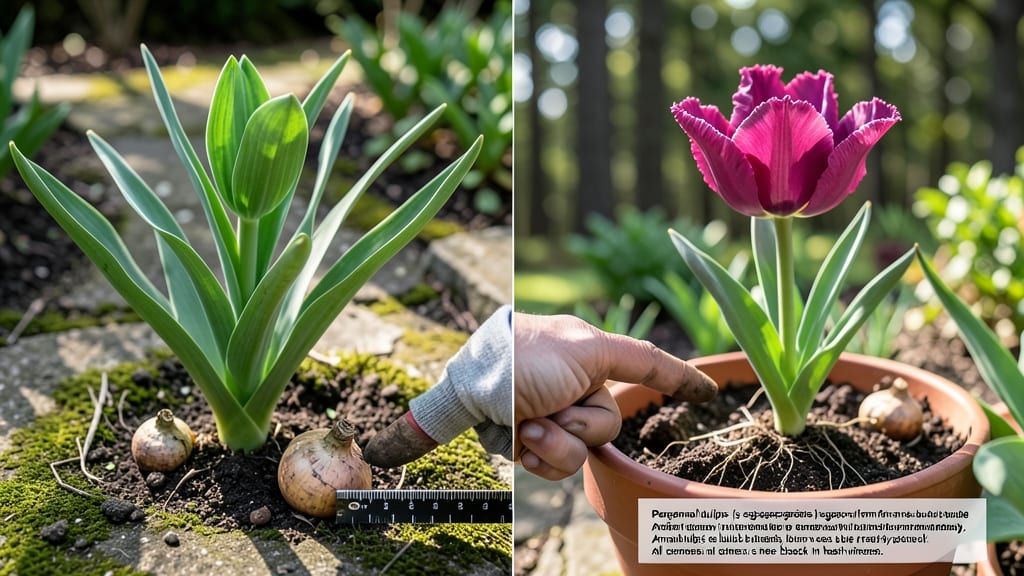
Tulips are perennials in ideal conditions, returning each spring after proper care, but many gardeners treat them as annuals due to their tendency to decline after flowering. Cold hardiness zones 3-8 support their overwintering with proper soil and mulching.
Tulips are technically perennial plants because their bulbs survive underground year after year—but their above-ground performance often feels annual. 🌱 The key difference lies in how they store energy: tulips deplete their reserves quickly after flowering, leaving bulbs vulnerable without proper care.
Unlike hardy perennials like daffodils, which regrow vigorously, tulips need consistent soil moisture and protection from freezing to rebuild strength for next season.
This is why gardeners in zones 3-8 must focus on mulching (3-4 inches of straw or leaves) and avoiding over-fertilization after blooming. Without these steps, the bulbs may not have enough energy to push new shoots through the soil in spring.
Think of it like a marathon runner needing recovery time—tulips need rest to perform their best the following year.
💡 In This Article
- Tulip Lifecycle: Why They Act Like Annuals
- Best Practices for Overwintering Tulip Bulbs
Tulip lifecycle: why they act like annuals
The confusion around tulips stems from their unique energy cycle. After flowering, tulips rely on their bulbs to store nutrients for regrowth, but their foliage—critical for photosynthesis—dies back quickly, often within 6-8 weeks post-bloom.
This rapid depletion leaves bulbs weakened unless they receive proper care. Unlike daffodils, which continue photosynthesizing for months, tulips act like annuals because their short-lived leaves don't replenish enough reserves for strong regrowth.
Here's what happens biologically: Tulip bulbs contain starch reserves that fuel both flowering and foliage growth. When the plant flowers, it uses 60-70% of its energy—leaving minimal fuel for leaf production. The remaining foliage must then work overtime to rebuild bulb strength before winter.
Without this recovery period, bulbs shrink and may fail to bloom the next year. 🌱 This is why gardeners often see tulips disappearing after just one season.
Comparing tulips to true perennials like daffodils highlights the difference. Daffodils produce broad, long-lasting foliage that continues photosynthesizing well into summer, replenishing bulb reserves. Tulips, however, have narrow, short-lived leaves that wither quickly.
This biological trait explains why tulips need extra care—like mulching and controlled fertilization—to mimic the energy recovery of hardier perennials.
Another critical factor is bulb size. Smaller bulbs (2-3 inches in diameter) have less stored energy and are more likely to decline after flowering. Larger bulbs (4+ inches) have better survival rates because they contain more reserves.
This is why commercial growers often sell "premium" tulip bulbs—these have been carefully nurtured to ensure they have enough energy for multiple flowering cycles.
The post-flowering period is when tulips make or break their perennial status. If you cut back foliage too soon (before it yellows naturally), you're removing the plant's only chance to rebuild energy stores.
This is a common mistake that turns tulips into one-and-done annuals. Think of it like a rechargeable battery—if you unplug it too early, it won't have enough power for next use.
What most gardeners don't realize is that tulips have a natural dormancy period that begins after flowering. During this time, the bulb focuses on rebuilding its starch reserves rather than producing new growth.
This dormancy lasts about 8-10 weeks, which is why early summer is the most critical time for bulb care. Proper watering and mulching during this window can mean the difference between a thriving perennial and a failed annual.