
Plants
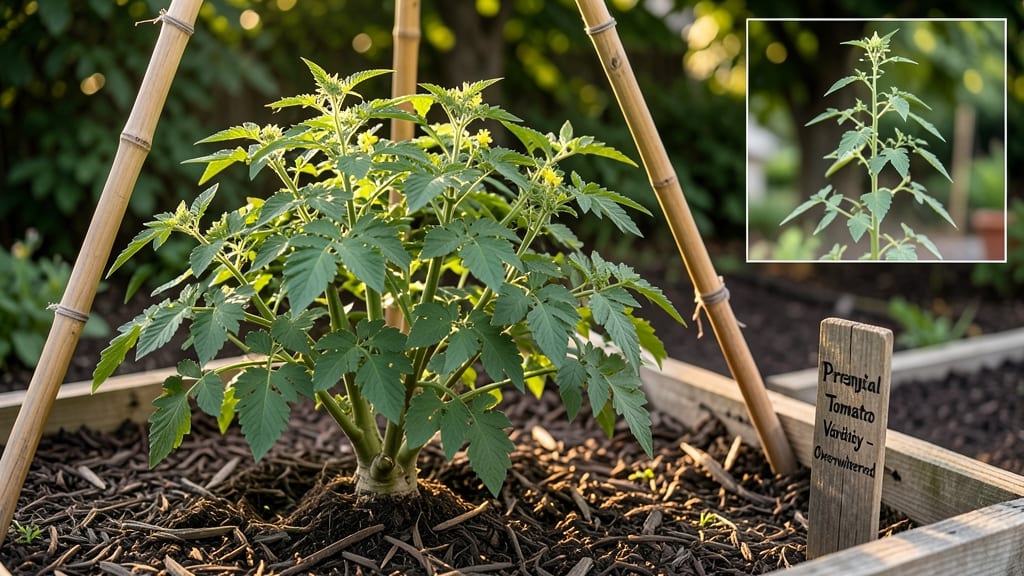
Tomato plants are not perennial in most climates, dying back after harvest due to frost sensitivity, though tropical varieties may survive mild winters in USDA Zones 10-12 without protection. Most gardeners replant annually for optimal yields.
Tomatoes are annuals in most gardens because they can't withstand freezing temperatures. 🌱 Even in warmer climates, they typically complete their life cycle in one growing season, producing fruit before the plant naturally declines.
The few exceptions—like cherry tomatoes in Zone 10—are tropical varieties bred for resilience, but they still require specific care to survive winters. Most gardeners focus on replanting each spring for fresh starts, as new plants often yield better than overworked perennials.
This annual habit actually works to their advantage—it prevents disease buildup in the soil and allows for better crop rotation. I've found that even in mild winters, tomato plants often develop woodiness or pest issues if left to overwinter, making annual replanting the smarter long-term strategy for most home gardeners.
💡 In This Article
- Why Tomato Plants Die in Cold Climates
- Overwintering Tomato Plants in Cold Zones
Why tomato plants die in cold climates
Tomatoes belong to the Solanum lycopersicum species, which evolved in tropical regions where temperatures rarely drop below 50°F. Their cellular structure lacks the protective mechanisms found in true perennials like asparagus or rhubarb.
When frost hits, the plant's cell walls rupture from ice crystal formation, causing irreversible damage within 30-60 minutes of exposure to 28°F or below.
The plant's vascular system also freezes, blocking water transport and causing dehydration even if temperatures later rise.
This is why you'll often see tomato plants wilt dramatically overnight after a light frost—what appears to be recovery is just the plant's final attempt to conserve moisture before dying. 🌱 In contrast, perennials like artichokes have deep root systems that store energy reserves and insulating compounds that prevent cellular damage during cold snaps.
Even in milder climates (Zones 8-9), tomatoes struggle to overwinter because they're not adapted to extended periods of reduced sunlight and cooler temperatures. Their growth cycle is designed for rapid fruit production in warm seasons, not gradual energy storage like true perennials.
This biological limitation explains why gardeners in these zones still typically replant annually for consistent yields.
What most people don't realize is that tomatoes actually stop producing when nighttime temperatures consistently drop below 60°F. The plant's flowering mechanism shuts down as a survival response, making it impossible to extend the harvest season through normal growing practices.
This physiological shutdown occurs even in frost-free climates, demonstrating how fundamentally different tomatoes are from perennial vegetables.
For comparison, consider rhubarb—another garden staple that thrives as a perennial. Rhubarb plants develop thick, fleshy roots that store starches and can survive -20°F temperatures.
The key difference lies in their evolutionary adaptation: rhubarb originated in temperate regions where winter dormancy is essential for survival, while tomatoes evolved in environments where they complete their entire life cycle before seasonal changes occur.