
Vegetables
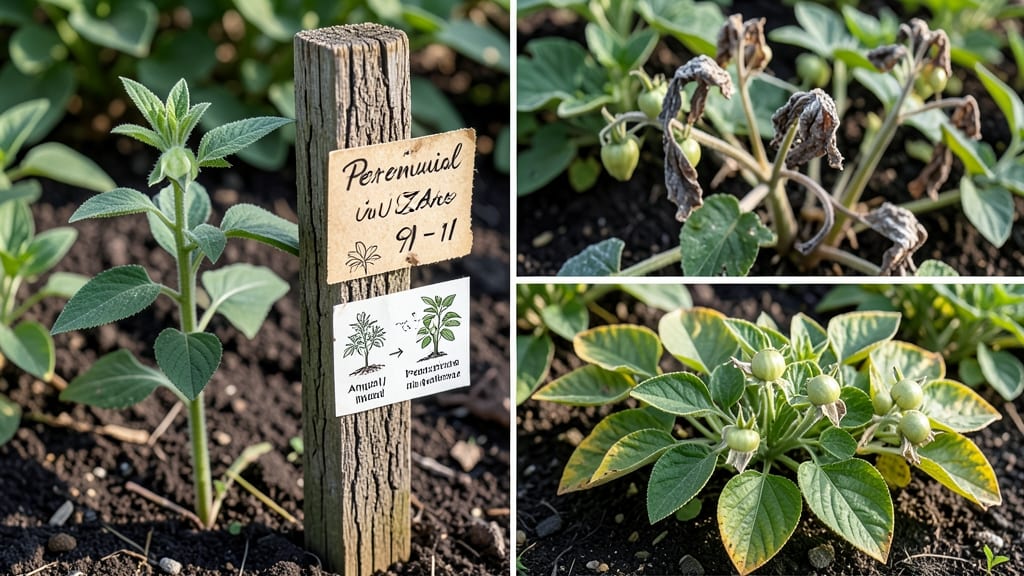
Tomatillos aren't naturally perennial plants, but they can live multiple years in frost-free zones with the right care. In colder areas, they'll die back each winter but may regrow from their roots if you shield them from freezing and keep the soil moist.
These plants originated in Mexico's warm climates, which explains why they struggle in freezing temperatures. 🌱 Unlike true perennials like asparagus, tomatillos don't have hardy root systems that survive winter dormancy naturally.
However, with proper protection—like thick mulch or cold frames—you can extend their lifespan beyond a single season. The key is mimicking their native tropical conditions as much as possible during colder months.
What's interesting is how their growth pattern changes with protection. In frost-free zones (like USDA Zone 9 and above), they'll often produce fruit for multiple years with minimal intervention. But in colder regions, even with overwintering techniques, you might only get reliable regrowth for 2-3 years before the roots weaken.
This makes them act more like biennials in marginal climates rather than true perennials.
💡 In This Article
- Tomatillo Growth Cycle: Why They Act Like Annuals in Cold Climates
- Year-Round Tomatillo Cultivation: Mulching and Overwintering Strategies
Tomatillo growth cycle: why they act like annuals in cold climates
Tomatillos evolved in Mexico's warm, high-altitude regions where temperatures rarely drop below 50°F. Their delicate root systems lack the protective adaptations found in true perennials like asparagus or rhubarb, which can withstand -20°F winters.
When exposed to frost, their cells rupture from ice crystal formation, triggering irreversible damage to the vascular system that transports water and nutrients. This explains why they behave like annuals in most temperate climates—even a single hard freeze can kill the entire plant down to the roots.
The key difference lies in their energy storage strategy. True perennials allocate resources to thick, woody roots or underground stems (like tubers) that store carbohydrates for regrowth. Tomatillos, however, invest their energy into rapid above-ground growth during their 60-90 day growing season, producing fruit rather than building winter-hardy structures.
Their roots are fibrous rather than deep-tapping, making them more susceptible to soil temperature fluctuations. In their native habitat, they rely on consistent warmth rather than seasonal dormancy.
What's fascinating is how their growth pattern mirrors that of tropical plants. When temperatures drop below 45°F for extended periods, tomatillos enter a state of physiological stress rather than true dormancy. This triggers ethylene production—a plant hormone that accelerates aging and cell death in non-hardy tissues.
Unlike asparagus crowns that can remain viable for years in the ground, tomatillo roots typically degrade within 1-2 years without protection, even in mild climates.
Consider this comparison: While rhubarb can survive -30°F winters by converting starches to antifreeze-like compounds in its roots, tomatillos have no such mechanism. Their leaves and stems contain high levels of soluble sugars that actually attract freezing damage.
This is why gardeners in Zone 8 often see their plants die back completely after 20°F nights, even when the roots appear intact at first glance. The real damage occurs at the cellular level long before visible wilting appears.
There's also a seasonal timing factor. Tomatillos require 120-150 frost-free days to mature, which limits their growing window in northern climates. Unlike perennials that can delay flowering until conditions improve, tomatillos have a fixed reproductive cycle tied to daylight length.
This biological clock makes them particularly vulnerable to early autumn frosts, which can cut their growing season short before they've stored enough energy in their roots for potential regrowth.
The good news is that their tropical nature also means they respond dramatically to ideal conditions. In frost-free zones (Zones 9-11), a single plant can produce 50-100 fruits annually for multiple years with consistent care.
The secret lies in maintaining soil temperatures above 60°F and providing 1-2 inches of water weekly—conditions that keep their metabolic processes active year-round.