
Plants
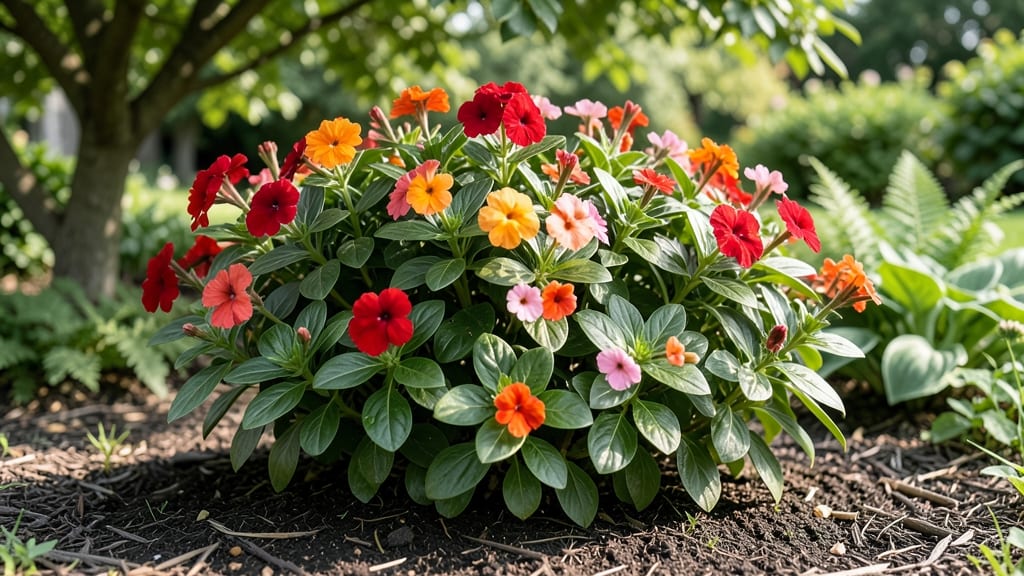
Sunpatiens aren't true perennials—they act like tender perennials in warm zones but die back completely each year in colder areas, needing spring replanting. Their leaves freeze with frost, though roots can linger in mild winters, unlike hardy annuals that reseed themselves.
Sunpatiens actually fall into a gray area between perennials and annuals. 🌱 Their tuberous roots store energy underground, allowing them to regrow from the same plant in frost-free climates. In colder regions, though, gardeners must treat them like annuals—digging up and replanting tubers each spring.
This behavior sets them apart from true perennials (like hostas) that reliably return year after year without intervention.
What makes this interesting is how their growth cycle mirrors that of tender perennials like caladiums or dahlias. The key difference? Sunpatiens thrive in USDA zones 8–11 without extra care, while colder-zone gardeners need to take action before frost hits.
Their ability to survive mild winters through root systems explains why they're often confused with hardy plants.
💡 In This Article
- Sunpatiens’ Dieback Cycle Explained: Why They Act Like Annuals
- How to Overwinter Sunpatiens in Cold Climates
Sunpatiens’ dieback cycle explained: why they act like annuals
Sunpatiens rely on specialized tuberous roots to store energy, much like dahlias or cannas, which is why they behave like tender perennials in warm climates. These roots act as biological batteries, storing carbohydrates and nutrients during the growing season to fuel regrowth.
When temperatures drop below 32°F, the above-ground foliage freezes and dies back completely, but the roots remain dormant underground—unless frost penetrates deeply. In USDA zones 8–11, this cycle repeats naturally each year, while colder regions require human intervention to preserve the tubers.
The key difference from true perennials (like hostas) lies in their frost tolerance. Hardy perennials have deep, insulated root systems that survive -10°F to -20°F, while sunpatiens’ tubers typically perish below 20°F unless protected. True annuals (e.g., marigolds) die entirely, but sunpatiens’ roots can regenerate—if they survive the winter.
This explains why gardeners in zone 7 must dig up tubers before frost, while zone 10 gardeners can leave them in the ground.
What happens biologically? When frost hits, sunpatiens trigger a survival mechanism: their leaves wilt and die, but the roots convert stored energy into protective compounds. This process is similar to how sweet potatoes enter dormancy.
The critical factor is soil temperature—roots can survive 28°F in well-drained soil but rot if saturated. Unlike hardy annuals that reseed, sunpatiens depend entirely on their tubers for next year’s growth.
Consider this: a sunpatien in zone 9 might regrow from the same tuber for 3–5 years without replanting, while one in zone 6 requires annual digging. The trade-off?
Their vibrant foliage and continuous blooms make them worth the effort. Think of them as "perennials with a vacation policy"—they’ll return if you help them through winter.
Here’s how their cycle compares:
- True Perennials (hostas): Survive -10°F**+ via deep roots; foliage returns yearly without help.
- Sunpatiens: Die back annually; tubers store energy but need protection in frost.
- True Annuals (marigolds): Die entirely; rely on seeds for next year’s growth.
Their behavior explains why sunpatiens are often called "self-cleaning perennials"—they tidily die back, leaving gardeners to decide whether to replant or let nature take its course. 🌿