
Plants
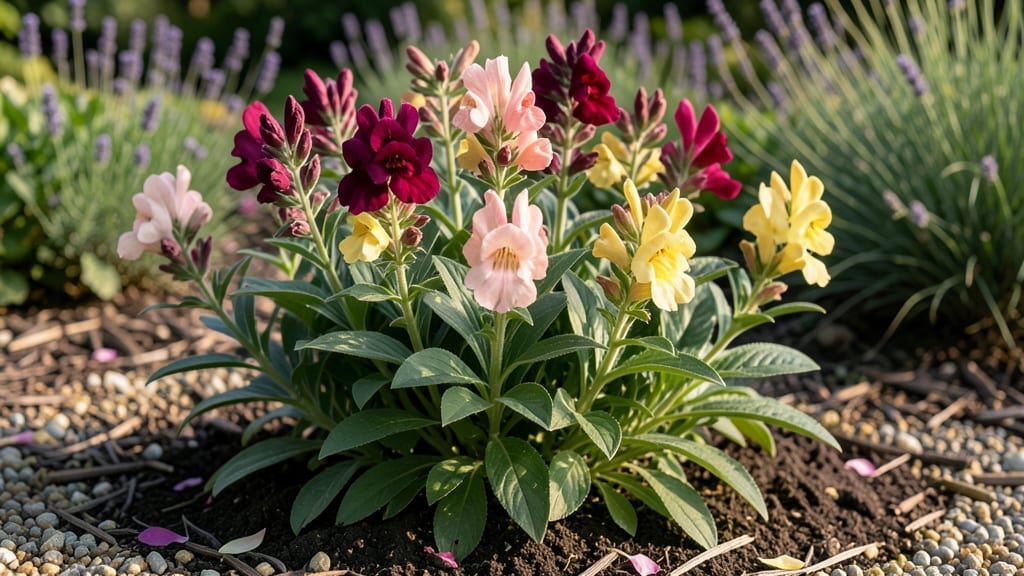
Snapdragons are not true perennials in most climates, though they self-seed prolifically and may regrow annually. In warmer zones (USDA 7-10), they can overwinter with proper care, but frost typically kills them back to the ground each year.
Snapdragons (Antirrhinum majus) behave like annuals in most regions because their tender stems and leaves can't survive freezing temperatures. 🌱 However, their roots often persist underground, allowing new growth to sprout when conditions warm up—this is why they seem to "come back" each spring.
In milder climates, they might even survive winter with the right protection, like thick mulch or frost blankets, though they'll still suffer some damage from hard freezes.
What sets snapdragons apart from true perennials is their ability to self-seed aggressively. A single plant can produce hundreds of seeds, ensuring a fresh crop of flowers appears year after year without replanting. This natural propagation makes them feel perennial-like, even though they're technically treated as annuals in colder zones.
💡 In This Article
- Snapdragon Lifespan: Why They Die Back in Cold Climates
- How to Extend Snapdragon Growth Beyond One Season
Snapdragon lifespan: why they die back in cold climates
Antirrhinum majus (snapdragons) are classified as tender perennials because their above-ground growth freezes to death in temperatures below 25°F. Unlike woody perennials like lavender or rosemary, snapdragons lack thick, insulated stems that can survive winter. Their herbaceous stems contain 80-90% water by volume, which expands and ruptures cell walls when frozen—a process called cryodamage. This is why you'll often see snapdragons blackened and mushy after the first hard frost, even if their roots remain alive below the soil line.
The real secret to their survival lies in their fibrous root system, which can extend 12-18 inches deep and store enough energy to regenerate new shoots when temperatures rise.
In USDA Zone 8 and warmer, these roots often survive winters with minimal protection, allowing snapdragons to rebound quickly in spring.
The key difference from true perennials is that snapdragons don't develop woody tissue—just a network of roots that can regrow foliage but not the same robust structure as, say, a peony or hosta.
What's fascinating is how snapdragons handle frost differently at various growth stages. Seedlings are particularly vulnerable, with 50% mortality risk if exposed to 32°F temperatures. Mature plants, however, can tolerate brief dips to 28°F if their roots are well-established.
This explains why snapdragons often "come back" from year to year—the roots act like a biological time capsule, waiting for warmer conditions to restart the growth cycle. 🌿
Another critical factor is the plant's vernalization requirement. Snapdragons need 4-6 weeks of cool (50-60°F) temperatures to trigger flowering in spring. This cold period breaks dormancy in their root systems, which is why they often bloom earlier than annuals planted from seed.
Without this vernalization, snapdragons may produce foliage but delay flowering until they've experienced sufficient chill hours.
For comparison, consider how a true perennial like black-eyed Susan handles winter: its roots develop thick, insulated storage organs that can survive -20°F temperatures. Snapdragons, with their delicate root systems, simply can't match that hardiness.
Their survival strategy relies instead on rapid regrowth from stored energy and prolific self-seeding—two traits that give them a perennial-like presence without the true perennial structure.
Here's what happens when you try to overwinter snapdragons in colder zones (USDA 5-6): the roots may survive, but the regrowth is often weak and stunted. This is because the soil stays frozen for months, preventing the roots from accessing moisture and nutrients.
In contrast, in Zone 9, where winters rarely drop below 28°F, snapdragons can maintain continuous growth with minimal intervention.