
Shrubs
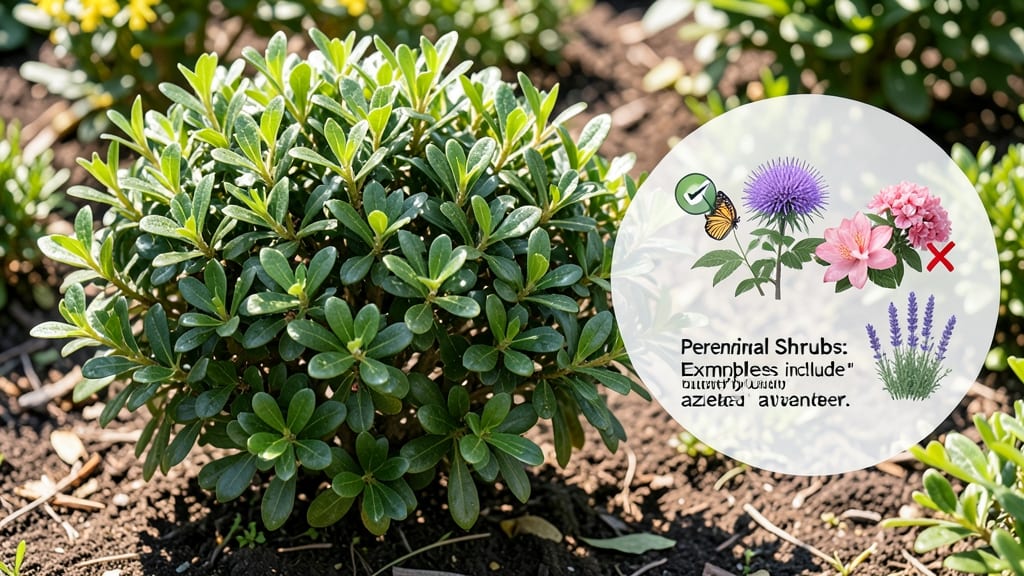
Shrubs are perennials by definition, meaning they live for multiple years, regrowing from the same root system annually. Unlike annuals, they retain woody stems and often grow larger each season, though some may die back to the ground in winter.
When you think about shrubs, their perennial nature comes down to their woody stems and deep root systems, which store energy to regrow each year. 🌱 Unlike herbaceous perennials that die back to the ground, many shrubs keep their structure above soil, making them hardier.
This means even if they lose leaves in winter, their roots stay alive, ready to burst back with new growth when conditions improve.
What's interesting is how this differs from annuals, which complete their entire life cycle in one season. Shrubs, on the other hand, invest in long-term survival, often living for decades with proper care. The key is their ability to enter dormancy during harsh weather while maintaining their root systems intact.
💡 In This Article
- How Shrub Root Systems Ensure Perennial Growth
- Identifying Perennial Shrubs vs. Short-Lived Varieties
How shrub root systems ensure perennial growth
The true secret behind a shrub's perennial nature lies in its deep, extensive root system and woody stems, which act like nature's built-in survival kit.
Unlike annuals that rely on quick seed-to-seed reproduction, shrubs invest energy into developing a taproot system that can extend 3-5 feet deep in mature plants. This root structure stores carbohydrates and nutrients during dormancy, fueling regrowth when conditions improve.
For example, a hydrangea can have roots that spread 6-10 feet wide, allowing it to access water and nutrients even in dry spells.
What sets shrubs apart from herbaceous perennials (like hostas) is their woody stem structure. These stems contain vascular cambium, a growth layer that produces new cells each year, increasing the plant's girth. This is why shrubs like boxwoods or azaleas grow thicker over time.
The woody tissue also provides insulation against temperature extremes, protecting the plant's core during winter. In contrast, herbaceous perennials die back to the ground, relying entirely on their root crowns to survive.
The dormancy cycle is where shrubs truly shine in their perennial strategy. During winter, many shrubs enter a physiological dormancy, where metabolic processes slow dramatically. Some, like deciduous shrubs, shed leaves to conserve energy, while evergreens maintain foliage but reduce photosynthesis.
The key is that root respiration continues at minimal levels, powered by stored starches. This means even in sub-freezing temperatures, the root system stays alive—ready to push out new growth as soon as soil temperatures rise above 40°F.
There's a fascinating comparison to be made with biennial plants (like carrots or foxgloves), which have a two-year life cycle. While biennials store energy in their roots for the second year, they don't have the woody structure to persist indefinitely.
Shrubs, however, combine energy storage with physical durability, allowing them to live for decades with proper care. Take the serviceberry shrub, which can live for 50-100 years—its thick bark and extensive roots make it resilient against pests, drought, and seasonal changes.
What most gardeners don't realize is how soil conditions affect this perennial survival mechanism. Shrubs planted in well-draining soil with organic matter develop stronger root systems than those in compacted or poor-quality soil.
The organic matter provides a steady supply of nutrients, while good drainage prevents root rot during wet periods. For instance, rhododendrons thrive in acidic, well-draining soils, where their roots can access the iron and manganese they need for healthy growth.
In contrast, planting them in alkaline soil would stress the roots, potentially shortening their lifespan.
The perennial advantage becomes especially clear when comparing shrubs to annuals. While an annual like a marigold completes its entire life cycle in one season—growing, flowering, and setting seed—shrubs like lavender can produce flowers year after year with minimal intervention.
This is because the shrub's energy isn't spent on seed production but rather on vegetative growth and root expansion. The trade-off? Shrubs take 2-3 years to reach full maturity, but once established, they require far less maintenance than replanting annuals every season. 🌿