
Orchid Care
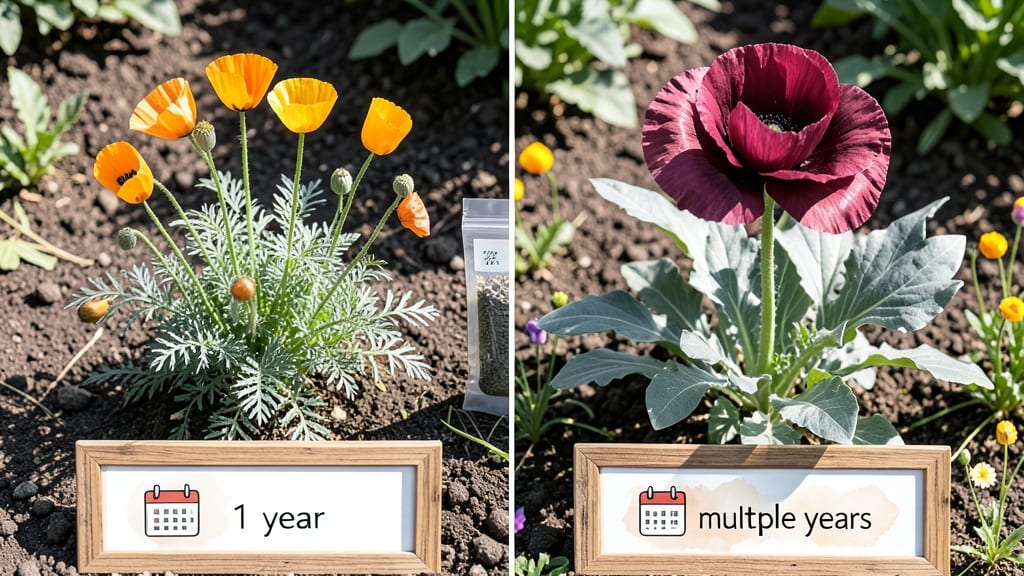
Poppies are typically annuals, completing their life cycle in one growing season, though some perennial varieties like the Iceland poppy (Papaver nudicaule) or Oriental poppy (Papaver orientale) return yearly with proper care and climate conditions. Most common garden poppies, however, die back after flowering and must be replanted annually.
Most garden poppies behave like annuals because they prioritize seed production over root survival. 🌱 Once they flower, their energy shifts to creating seeds, causing the plant to wither away—even if the roots might technically persist.
This dieback is why many gardeners assume all poppies are annuals, but the key difference lies in their root systems: true perennials like Iceland poppies store energy underground to regrow, while common varieties simply fade after blooming.
What makes this tricky is that some poppies are actually biennials—they take two years to complete their life cycle. For example, the classic corn poppy (Papaver rhoeas) might grow leaves the first year, flower the second, and then die.
This two-year cycle often gets misclassified as annual behavior, adding to the confusion. The good news? With the right growing conditions, you can coax even some "annual" poppies to self-seed and return the next year naturally.
💡 In This Article
- Why Most Poppies Act Like Annuals Despite Perennial Roots
- How to Grow Perennial Poppies Like a Pro
Why most poppies act like annuals despite perennial roots
The confusion around poppies stems from their reproductive strategy: most species prioritize seed production over root survival.
When you see a poppy flower, its entire focus shifts from growth to creating seeds—this is why they wither after blooming, even if their roots might persist for a short time. 🌱 The classic example is the corn poppy (Papaver rhoeas), which produces thousands of tiny black seeds that scatter effortlessly, ensuring the next generation's survival rather than the parent plant's longevity.
Botanically, this behavior is tied to their life cycle stages. Annual poppies complete their entire growth cycle—from seed germination to flowering to seed production—in just 90-120 days. The energy investment goes entirely into seed creation, leaving no reserves for root persistence.
Even perennial poppies like the Iceland poppy (Papaver nudicaule) behave differently: they store energy in their roots during the growing season to regrow the following year, while annuals simply fade away once their mission is complete.
Climate plays a huge role in this dieback pattern. Poppies are sensitive to temperature extremes—both heat and cold can trigger their natural decline.
For instance, in regions with harsh winters, annual poppies may not survive the cold, while perennials like the Oriental poppy (Papaver orientale) have developed thicker root systems to endure -10°F to -20°F temperatures.
This climate sensitivity explains why gardeners in colder zones often assume all poppies are annuals—they simply don't see the perennial varieties thrive.
What adds to the confusion is the biennial nature of some poppies. Species like the corn poppy might grow vegetatively in their first year, flower in their second, and then die. This two-year cycle mimics annual behavior, leading many to misclassify them.
The key difference? Biennials still produce seeds, but their root systems are more developed than true annuals, giving them a slight edge in survival if conditions are favorable.
Here's the science behind it: Poppies use a survival strategy called "r-selected reproduction," where they invest heavily in producing many offspring (seeds) with minimal energy spent on individual plant longevity. This contrasts with "K-selected" perennials like trees, which prioritize long-term survival.
The result? Annual poppies create a carpet of seeds that germinate the next season, while perennial poppies focus on building root reserves for future growth.
For gardeners, this means understanding the trade-off: annual poppies offer vibrant, short-term color, while perennials require more care but return year after year.
The Iceland poppy, for example, thrives in USDA zones 3-9 and can live for 5-7 years with proper care, while its annual cousins may only last a single season. The choice depends on your gardening goals and climate conditions.