
Orchid Care
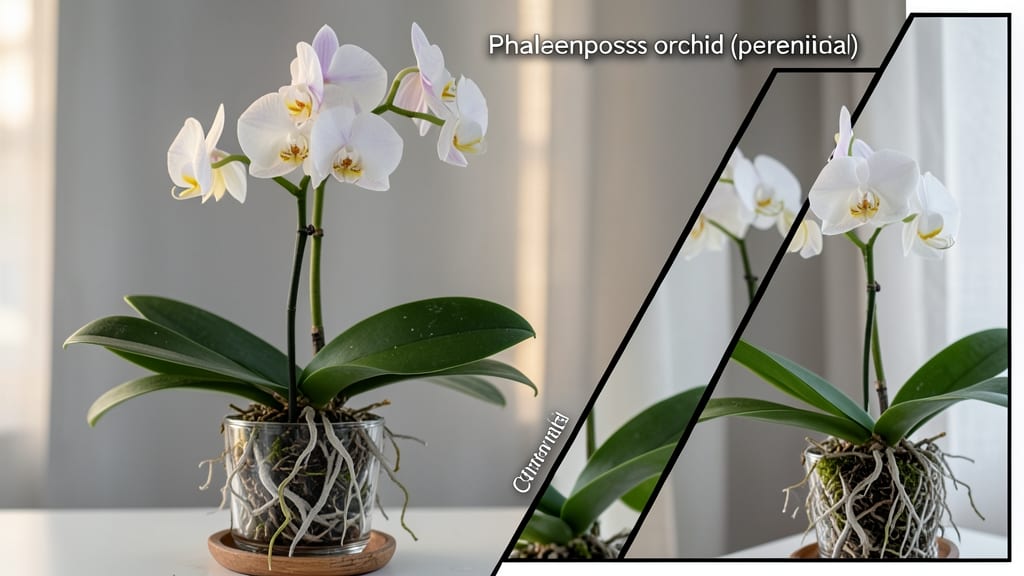
Orchids function as perennials because their underground structures—roots and rhizomes—survive year-round, even though their above-ground foliage often dies back seasonally. This regrowth pattern from dormant storage organs defines their perennial nature, though their exact lifespan varies widely by species and growing conditions.
Think of orchids like woodland perennials that go dormant—only instead of bulbs or tubers, they rely on specialized pseudobulbs to store nutrients. 🌱 These swollen stems act as nature's energy banks, allowing the plant to "rest" during harsh seasons while keeping its root system alive.
Unlike true perennials that regrow from the same leaves, orchids often shed their foliage completely before sprouting fresh growth, which can be confusing for new growers. The key difference? Orchids' survival strategy depends heavily on their growing environment—whether they're epiphytic (air plants) or terrestrial (ground-dwelling) species.
For example, Phalaenopsis orchids (moth orchids) may keep some leaves year-round in warm climates, while Cattleyas go completely dormant in winter. This seasonal behavior is why orchids thrive as "perennial" houseplants—they're not annuals that die after flowering, but they do require specific care to maintain that perennial growth cycle.
Proper light exposure and watering adjustments during dormancy periods can dramatically extend their lifespan as living plants.
💡 In This Article
- How Orchid Growth Cycles Mimic Perennial Behavior
- Orchid Care Tips to Extend Their Lifespan as Perennials
How orchid growth cycles mimic perennial behavior
The botanical magic behind orchids' perennial-like survival lies in their pseudobulbs—thickened, swollen stems that function like nature's energy reserves. These specialized structures store water, carbohydrates, and nutrients during dormant periods, allowing orchids to "rest" through harsh seasons while maintaining their root systems.
For instance, a mature Cymbidium pseudobulb can store enough energy to sustain the plant for months without new growth, much like how a dahlia tuber stores nutrients for spring regrowth.
Epiphytic orchids (like Vandas) and terrestrial types (such as Paphiopedilums) employ different strategies. Epiphytes rely on their aerial roots to absorb moisture and nutrients from the air, while terrestrial species develop thick rhizomes underground.
This adaptability explains why orchids thrive in diverse climates—from tropical greenhouses to temperate outdoor gardens. The key difference from true perennials is that orchids often completely shed their leaves during dormancy, unlike hostas which maintain some foliage year-round.
Seasonal dieback isn't a sign of death—it's a survival mechanism. When temperatures drop or daylight shortens, orchids trigger a hormonal response that causes leaf abscission (shedding), conserving energy.
This process is similar to how deciduous trees drop leaves in autumn, but orchids take it further by storing nutrients in their pseudobulbs. For example, Dendrobium species may lose all their leaves in winter, only to produce new shoots from the base when conditions improve.
Light exposure plays a crucial role in this cycle. Most orchids require 12-14 hours of daylight during active growth phases, but reduced light triggers dormancy. This photoperiod sensitivity explains why indoor orchids often struggle—their artificial lighting doesn't mimic natural seasonal changes.
In contrast, outdoor orchids automatically adjust their growth patterns based on the sun's arc, creating a more natural perennial-like cycle.
What most growers miss is that orchid dormancy isn't complete rest—roots remain active, absorbing moisture when available. This subtle activity maintains the plant's connection to its environment while conserving energy.
For instance, Cattleya orchids may appear dormant in winter, but their roots continue to function at minimal levels, ready to resume growth when spring arrives. This root activity is why proper potting medium (like bark or sphagnum moss) is critical—it must remain slightly moist during dormancy to prevent root desiccation.
The lifespan implications are significant. With proper care, orchids can live for decades—some Phalaenopsis specimens reach 50+ years! This longevity stems from their perennial growth habits, where each pseudobulb represents a year's worth of stored energy.
Unlike annuals that complete their life cycle in one season, orchids build resilience through repeated cycles of growth, dormancy, and regrowth—making them true long-term investments for plant enthusiasts.