
Plants
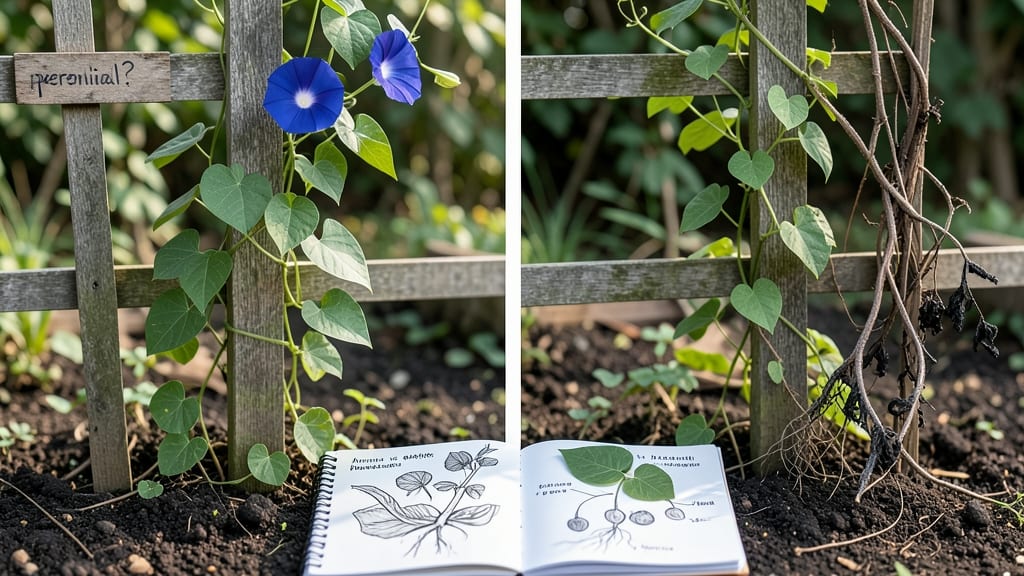
Morning glories are not true perennials in most climates, dying back to the ground each winter and regrowing from seed the following spring. However, in USDA zones 8-11, they may self-seed prolifically or survive mild winters with proper mulching.
Morning glories behave more like annuals in colder regions because their delicate vines and shallow roots can't withstand freezing temperatures. 🌱 Unlike hardy perennials such as clematis, they lack the deep root systems needed to survive winter dieback.
The good news? In warmer zones, their seeds often germinate naturally, creating fresh blooms each season without extra effort. For gardeners in transitional climates, strategic mulching or indoor overwintering can help preserve the plants through chilly months.
What sets morning glories apart is their ability to adapt through self-seeding—dropping seeds that sprout readily in spring. This makes them feel perennial-like, even when technically classified as tender annuals.
The key difference lies in their resilience: while they won't regrow from the same roots after frost, their prolific seed production ensures continuous color year after year.
💡 In This Article
- Why Morning Glories Die in Cold Climates
- How to Grow Morning Glories Year-Round
Why morning glories die in cold climates
Morning glories (genus Ipomoea) lack the cold tolerance of true perennials because their biological structure isn't built for winter survival. These vining plants develop shallow root systems that typically extend only 6-12 inches deep, while hardy perennials like clematis can send roots 3-5 feet downward.
When temperatures drop below 28°F, the above-ground vines freeze solid, and the shallow roots become vulnerable to frost penetration, causing irreversible damage to the plant's vascular system.
The real culprit is their tropical origins—most morning glory species hail from Central and South America where winter temperatures rarely fall below 40°F. Their cell membranes contain high levels of unsaturated fats that remain fluid only in warm conditions.
When exposed to freezing temperatures, these fats solidify, rupturing cell walls and killing the plant tissue. 🌡️ This process happens within 2-3 hours of a hard freeze (20°F or lower), which explains why even well-established plants can't survive northern winters without protection.
Compare this to wisteria, another vine, which can endure -15°F temperatures because it develops a thick, woody base and deep taproots that store nutrients. Morning glories, however, allocate most of their energy to rapid vine growth and flower production during the growing season rather than building winter-resistant structures.
Their entire lifecycle is optimized for warm climates where they can complete their growth cycle in just 60-90 days from seed.
What makes this especially frustrating for gardeners is how morning glories appear to be perennials in mild winters. In zones 8-11, where temperatures rarely drop below 20°F, the plants may survive light frosts by entering a dormant state.
However, this isn't true perennial behavior—it's more like hibernation. The roots don't regenerate new growth from the same plant; instead, they produce seeds that germinate in spring, creating the illusion of perennial behavior.
The science behind this involves a process called "thermomorphogenesis," where plants detect temperature changes and adjust their growth patterns. Morning glories respond to shortening daylight and dropping temperatures by shifting resources from growth to seed production—essentially preparing for death rather than dormancy.
This is why you'll often see them blooming profusely in late summer, as they're racing to set seed before winter arrives.
For gardeners in transitional zones (7-8), this means morning glories will die back completely each winter, but their seeds may still germinate in spring if they're not disturbed.
The key difference from true perennials is that morning glories never regrow from the same root system—they always rely on new seeds for the next generation. This biological quirk explains why they're classified as tender annuals rather than perennials.