
Flowers
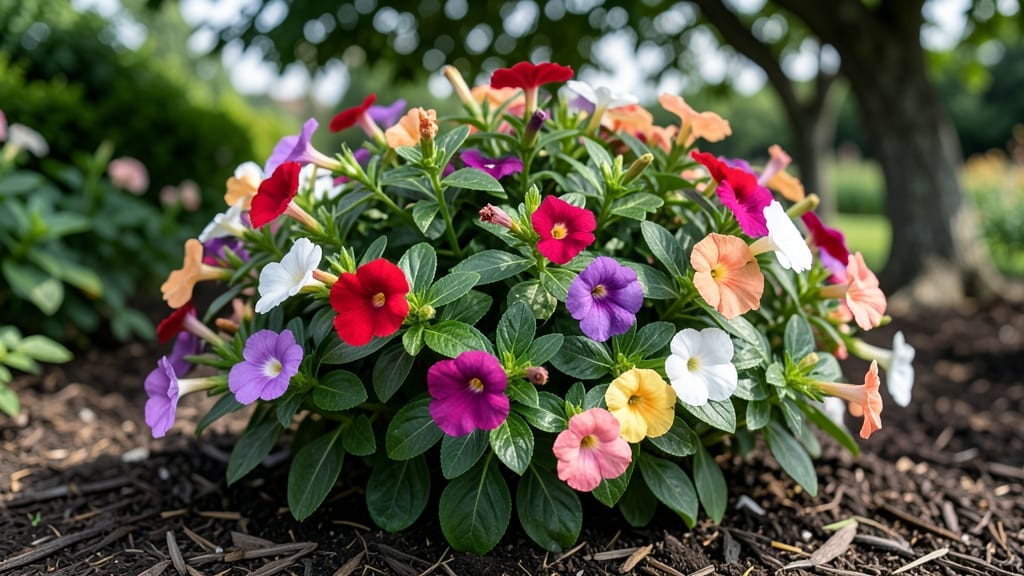
Impatiens are not perennials in most climates, dying back to the ground after frost. In USDA Zones 10-11, they may persist as tender perennials, but gardeners in colder regions treat them as annuals, replanting yearly for vibrant summer blooms.
Impatiens' tropical origins explain why they struggle in cold climates—they simply can't survive freezing temperatures. 🌱 Their delicate stems and shallow roots freeze solid below 32°F, killing the plant completely.
Even in mild winters, they rarely regrow from the roots, which is why most gardeners plant fresh seeds or seedlings each spring for that signature summer color burst.
For gardeners in colder zones, treating impatiens as annuals actually works to their advantage. These shade-loving plants thrive in summer's warmth and produce continuous blooms until frost, making them perfect temporary color solutions.
The trade-off? You'll need to start fresh each season, but the payoff is vibrant, low-maintenance flowers that brighten up shady garden spots effortlessly.
💡 In This Article
- Why Impatiens Freeze Out in Cold Climates
- Year-Round Impatiens Gardening Strategies
Why impatiens freeze out in cold climates
Impatiens trace their origins to tropical regions of East Africa and Southeast Asia, where temperatures rarely drop below 50°F—a stark contrast to the freezing winters of most U.S. growing zones. Their thin, herbaceous stems and shallow root systems evolved to thrive in warm, humid conditions, not to withstand frost.
When temperatures fall below 32°F, the plant's cells begin to freeze, causing ice crystals to form within their structures. These crystals rupture cell membranes, leading to irreversible damage that kills the plant entirely.
The damage happens at a cellular level: impatiens lack the hardy, woody stems or deep root systems of true perennials like hostas or daylilies. Their stems contain minimal lignin—a structural polymer that provides rigidity—and their roots rarely penetrate deeper than 6-12 inches into the soil.
This shallow growth pattern means they have little protection from ground-level cold snaps. Even a light frost can turn their vibrant foliage brown and crispy within hours, signaling the end of their growing season.
What makes this particularly frustrating for gardeners is how impatiens behave after frost. Unlike some perennials that may resprout from protected root crowns, impatiens don't have dormant buds capable of surviving winter.
Their entire above-ground structure dies back completely, and without a protected environment, the roots themselves rarely persist through freezing temperatures. This is why you'll never see impatiens naturally returning in spring—unless you're in USDA Zones 10-11, where winter lows rarely dip below 40°F.
There's also a physiological reason why impatiens struggle to adapt: their metabolic processes are optimized for warm weather. Photosynthesis slows dramatically below 50°F, and their growth rate plummets. The plants simply can't store enough energy reserves to survive winter dormancy like true perennials.
This tropical dependency explains why even mild winters in Zone 8 or 9 often result in complete plant loss, despite gardeners' best efforts to protect them with mulch or row covers.
Consider this comparison: a hardy perennial like peonies can survive -20°F winters because their buds are protected underground, while impatiens have no such adaptations. Their entire life cycle is geared toward rapid summer growth and reproduction—not long-term survival.
This biological limitation is why they're classified as annuals in most gardens, despite their ability to self-seed under ideal conditions.
For those curious about exceptions, New Guinea impatiens (a different species) show slightly better cold tolerance, sometimes surviving brief dips to 28°F—but they still won't regrow after winter in temperate climates.
The key takeaway? Impatiens' tropical nature makes them exquisite summer performers, but their inability to endure frost is a fundamental biological constraint that gardeners must work around rather than overcome.