
Plants
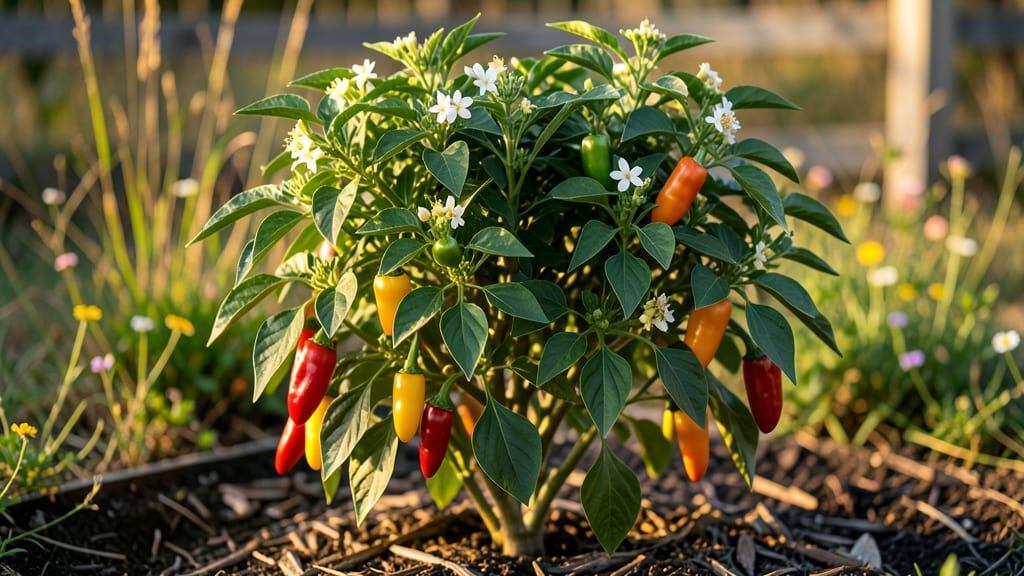
Hot pepper plants are not perennial in most climates, as they typically die after producing fruit in warmer zones but can survive as tender perennials in USDA zones 10-12 with proper winter care and mulching. Cold exposure below 30°F kills most varieties.
Hot peppers originate from tropical regions where temperatures rarely drop below 50°F, so their natural survival instincts aren't built for freezing climates. 🌱 In areas outside zones 10-12, gardeners often treat them as annuals—planting fresh each spring—because even a light frost can damage leaves and roots beyond recovery.
The few varieties that might persist through mild winters (like certain jalapeño strains) still require heavy mulching or protective covers to survive. This explains why most gardeners in the Midwest or Northeast replant every year rather than trying to overwinter them.
What changes in warmer microclimates is the pepper's ability to enter dormancy—a survival strategy that lets it regrow from the base after winter. Without this adaptation, most peppers simply shut down when temperatures dip, making them vulnerable to complete die-off.
The key difference lies in their root systems: tropical roots aren't insulated against cold, so even a few degrees below freezing can trigger irreversible damage.
💡 In This Article
- Why Hot Peppers Die in Cold Climates
- Extending Hot Pepper Lifespan in Cold Regions
Why hot peppers die in cold climates
Hot pepper plants originate from tropical and subtropical regions where temperatures rarely drop below 50°F, making their natural biology poorly equipped for freezing conditions. The critical threshold for most varieties lies between 30-40°F—when temperatures fall below this range, the plant's cellular structure begins to fail.
Ice crystals form within the plant's vascular system, rupturing cell walls and blocking water transport, which is why even a light frost can cause irreversible damage. 🌡️ This process is similar to how a frozen water pipe bursts, but on a microscopic scale within the plant's tissues.
The roots are particularly vulnerable because they lack the protective insulation found in temperate perennials. In tropical climates, pepper roots grow shallow and spread widely to capture moisture quickly, but this adaptation makes them highly sensitive to cold.
When soil temperatures drop below 50°F, root activity slows dramatically, and exposure to 32°F or colder triggers cell death within hours. This explains why peppers wilt and die back even if the air temperature seems mild—it's the ground-level chill that does the damage.
Another key factor is the plant's inability to enter true dormancy like hardy perennials. While some temperate plants (like asparagus or rhubarb) can survive winter by slowing metabolic processes, peppers lack this evolutionary adaptation.
Instead, they rely on rapid regrowth in warm seasons, which works beautifully in frost-free zones but leaves them defenseless when temperatures dip. This is why gardeners in colder regions often see their pepper plants collapse after the first hard freeze, even if they looked healthy just days before.
Comparing peppers to their hardier cousins reveals just how delicate they are. For example, tomatoes (also nightshades) can tolerate brief dips to 35°F with proper care, while most peppers succumb to 40°F exposure.
The difference lies in their native climates: tomatoes evolved in cooler Andean regions, while peppers thrived in the steamy lowlands of Central and South America. This tropical heritage explains why even "cold-hardy" pepper varieties (like some jalapeños) still require 10-15°F of frost protection to survive winter.
What makes this particularly frustrating for gardeners is how quickly damage occurs. A single night below 30°F can kill a mature pepper plant, while temperatures between 32-40°F may only cause stunted growth or blossom drop.
This narrow survival window means that even in marginally cold climates (like USDA zone 9), peppers need constant vigilance. Without protection, the plant's energy reserves deplete rapidly, leaving it unable to recover when spring arrives. 🌱
Understanding this biological limitation helps explain why peppers are treated as annuals in most gardens. Their tropical origins mean they've never needed to adapt to freezing temperatures, so their survival strategies revolve around rapid growth during warm seasons rather than enduring cold.
This fundamental difference in hardiness is what separates peppers from true perennials like rosemary or thyme, which can regrow year after year in colder zones.