
Plants
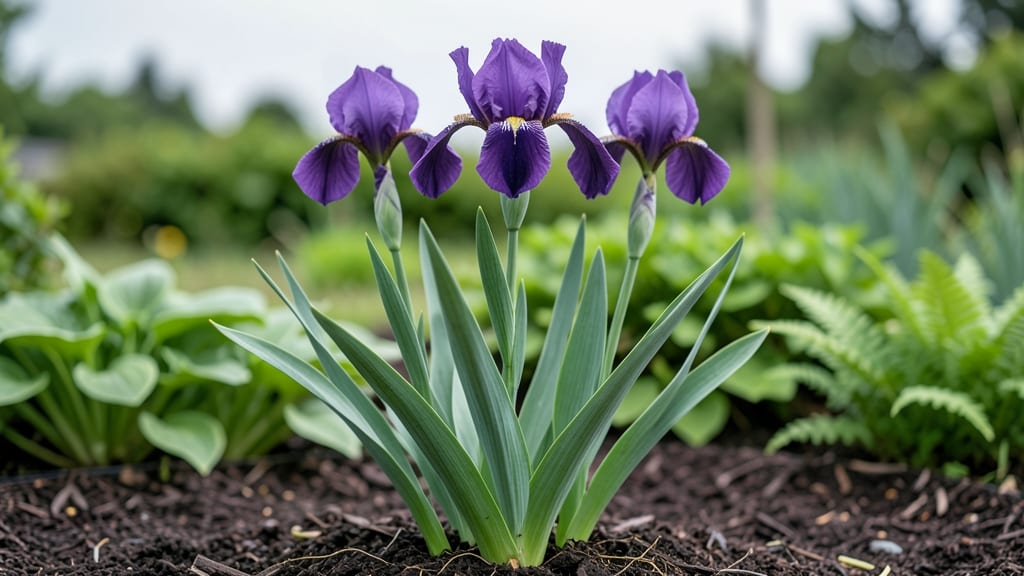
Dutch irises are not true perennials in most climates, as they typically die back after blooming and must be replanted annually. However, they can return in mild winter zones if bulbs survive frost, though they often decline in vigor over time.
Dutch irises behave more like seasonal bulbs than hardy perennials because their underground corms struggle with cold winters and heavy soils. 🌱 Unlike native iris varieties, they lack the deep root systems to regenerate year after year, which is why gardeners often treat them as annuals.
The good news? With proper winter protection—like mulching or lifting bulbs in freezing zones—you can coax them back for multiple seasons, though their peak performance usually fades after 2-3 years.
What sets Dutch irises apart is their reliability as temporary perennials: they deliver stunning spring blooms with minimal care, making them perfect for gardeners who want color without long-term commitment.
The key to extending their lifespan lies in well-draining soil and strategic replanting—many growers divide and refresh bulbs every 1-2 years to maintain vigor. This approach turns their "annual" nature into a manageable seasonal cycle.
💡 In This Article
- Why Dutch Iris Bulbs Fail as True Perennials
- How to Grow Dutch Irises Like a Seasonal Perennial
Why Dutch iris bulbs fail as true perennials
Dutch iris bulbs, or corms, lack the hardy root systems of true perennial irises like bearded or Siberian varieties. These corms store energy for just 1-2 growing seasons before their reserves deplete, causing the plant to senesce after flowering.
Unlike perennial irises that develop extensive rhizomes (horizontal underground stems), Dutch irises rely solely on their corms, which are more sensitive to temperature fluctuations and soil moisture. 🌱 When winter temperatures drop below 20°F, these corms often suffer frost damage, preventing regrowth.
The soil plays a critical role in their survival. Dutch irises thrive in well-draining, sandy soils with a pH between 6.0-7.0, mimicking their native Mediterranean habitats. Heavy clay or waterlogged soils cause corms to rot, while poor drainage prevents the roots from establishing properly.
Even in ideal conditions, Dutch iris corms produce fewer daughter corms than perennial varieties, limiting their ability to propagate naturally. This biological limitation forces gardeners to treat them as annuals or take extra steps to preserve them seasonally.
Comparing Dutch irises to their perennial counterparts reveals key differences in structure and resilience. Bearded irises, for example, develop thick rhizomes that store nutrients for years, allowing them to regrow annually with minimal care.
Dutch irises, however, lack this adaptability—their corms are more delicate, with thinner protective layers that crack under freeze-thaw cycles. This fragility explains why they rarely persist beyond 2-3 years without intervention, even in mild climates.
Another factor is their dormancy cycle. Dutch irises enter dormancy after flowering, shedding their foliage to conserve energy. Unlike perennials that maintain some green growth through winter, Dutch irises rely entirely on their corms for survival.
If these corms aren't protected from extreme cold or pests like voles, they won't regenerate in spring. This dormancy is a survival strategy for their native habitats but becomes a liability in colder regions where winters last longer and are harsher.
For gardeners in USDA Zones 7-9, Dutch irises can sometimes return if left undisturbed, but their vigor declines over time. The corms gradually shrink, producing fewer blooms and weaker stems.
This decline isn't just about age—it's a combination of nutrient depletion, disease buildup, and the corms' inability to replenish their energy stores efficiently. Without division or replanting, they become less reliable each season, much like annuals that must be replanted from seed.
What most gardeners don't realize is that Dutch irises' "annual" nature is more about cultivation practices than biology. With proper care—like lifting and storing corms in cool, dry conditions over winter—they can technically be treated as perennials, though their performance will never match hardy iris varieties.
This makes them a seasonal perennial, offering the beauty of perennials without the long-term commitment. ✨